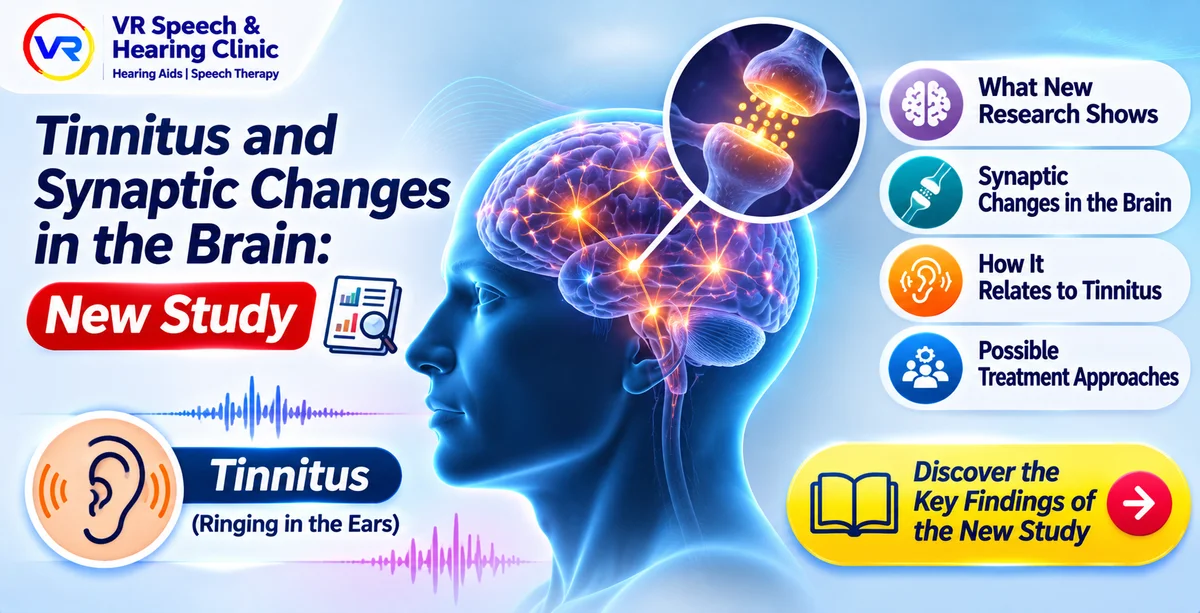
Tinnitus and Synaptic Changes in the Brain: New Study
Tinnitus and the Brain: New Study Finds Synaptic Changes Linked to Ringing in the Ears
If you live with ringing, buzzing, or hissing that nobody else can hear, you may have heard that tinnitus is “all in your head.” A new brain imaging study suggests there is something to that idea, though not in the dismissive way people usually mean it. Researchers have found measurable differences in the connections between nerve cells in people with tinnitus. These findings offer a fresh explanation for why the sound can persist and why it affects people so differently. At VR Speech and Hearing Clinic, we follow research like this closely because it shapes how we understand and support people living with tinnitus.
What Is Tinnitus and Why Does It Happen?
Tinnitus is the perception of sound without any outside source. Some people hear ringing, while others describe humming, clicking, roaring, or a high-pitched whine. It can be occasional or constant, quiet or intrusive.
Common triggers include hearing loss, loud noise exposure, ear infections, earwax buildup, certain medications, head or neck injuries, and stress. For many years, tinnitus was explained mainly as a problem in the ear. Scientists now understand that the brain plays a major role. When the ear sends weaker or altered signals, the brain may turn up its own sensitivity to compensate, and that can create a phantom sound. This new study adds physical evidence to that brain-based view.
How the Researchers Studied Tinnitus
The study was led by a research team from Central South University and Hunan Normal University in China. They compared 28 people with tinnitus to 24 healthy volunteers. Each participant had brain scans that tracked two different things.
The first was a PET scan using a tracer called 18F-SynVesT-1. This tracer attaches to a protein found in synaptic vesicles, the tiny packets that nerve cells use to pass messages. Because of this, it works as an indirect indicator of how many synapses are present in a given brain area. The second was a standard PET scan that measures overall energy use, or metabolism, in the brain. Participants also had MRI and EEG testing to look at brain structure and electrical activity.
Using several tools together let the team compare how much brain tissue was working harder with how the connections themselves had changed.
Chronic Tinnitus: Greater Synaptic Density Across Many Regions
In people with long-standing tinnitus, the tracer showed higher synaptic density in 14 brain regions. These areas are tied to hearing, emotion, and thinking, which may help explain why tinnitus is more than just a sound for many people. It can affect mood, concentration, and the ability to relax.
Only one region, the left inferior frontal gyrus, showed lower synaptic density. The energy-use scans pointed to many of the same areas, but the synapse tracer revealed a broader and more detailed pattern. This suggests it could be a more sensitive way to study how the brain adapts to tinnitus over time.
Acute Tinnitus: The Pattern Runs the Other Way
People with recent-onset tinnitus showed a different picture. In this group, synaptic density was lower in five brain regions. The researchers interpret this as a two-stage process: the brain may first lose some connections after tinnitus begins, then build new ones as the condition becomes chronic.
This matters because it suggests tinnitus is not a fixed condition. The brain appears to keep changing as the months go by, which fits with the idea that early support could make a difference.
Tinnitus Severity and Emotional Distress
The study also found a link between how much tinnitus bothered people and what the scans showed. Participants with higher scores on the Tinnitus Handicap Inventory, a common questionnaire that measures how much tinnitus interferes with daily life, had lower synaptic density in limbic regions. The limbic system helps manage emotion and stress responses.
In plain terms, the emotional burden of tinnitus may be reflected in real physical differences in the brain. That is a validating message for anyone who has felt their distress was being brushed aside.
Wider Brain Network Changes
Beyond the PET scans, the team analyzed how different brain regions communicate with each other. They found stronger functional connectivity, especially in people with recent-onset tinnitus. This points to a brain that is reorganizing itself, possibly trying to adapt to a constant internal sound.
EEG microstate analysis, which tracks how large brain networks switch on and off in fractions of a second, also showed consistent changes in people with tinnitus. Together, these results support the view that tinnitus involves widespread networks rather than one small area of the auditory system.
Why These Findings Matter
According to the researchers, this is the first human imaging study to offer direct evidence in living people that synapses change in tinnitus. A few implications stand out:
Tinnitus may be better understood as a neurobiological condition that evolves, not just an ear problem or a psychological one.
The difference between acute and chronic stages supports models of maladaptive neuroplasticity and altered central gain, in which the brain overcompensates for reduced input.
The tracer used here is already used in Alzheimer’s and epilepsy research, so future tinnitus studies may be able to build on existing methods.
Objective brain markers could eventually help researchers design treatments that target synaptic function, instead of only masking the sound or managing the reaction to it.
Limitations to Keep in Mind
This research should be read with caution. The paper is a preprint, which means it has not yet been peer reviewed. The sample size is small, with fewer than 30 people in the tinnitus group. The tracer is also an indirect measure: it correlates strongly with synaptic density in animal and postmortem studies, but it does not count synapses the way a microscope would.
None of this changes what is available to you today. There is no new test or treatment based on these findings yet. What the study offers is a clearer scientific direction, and more validation will be needed before it affects clinical care.
What You Can Do About Tinnitus Now
While research continues, there are practical steps that help many people:
Get a hearing evaluation. Untreated hearing loss is one of the most common companions of tinnitus, and addressing it can reduce how noticeable the sound is.
Have your ears checked. Earwax, infections, or fluid can contribute to tinnitus and may be easy to treat.
Protect your hearing. Use ear protection around loud noise and keep headphone volume moderate.
Use sound enrichment. Soft background sound, such as a fan, nature sounds, or specialized masking, can make tinnitus less prominent, especially at bedtime.
Manage stress and sleep. Because tinnitus and emotional distress feed each other, relaxation techniques and good sleep habits can help.
Seek counseling and support. Structured approaches that help you change how you react to tinnitus can lower its impact on daily life.
See a professional promptly if tinnitus appears suddenly, affects only one ear, pulses with your heartbeat, or comes with dizziness or sudden hearing loss.
How VR Speech and Hearing Clinic Can Help
Tinnitus is different for every person, so a one-size-fits-all approach rarely works. At VR Speech and Hearing Clinic, our team starts by listening to your experience, then completes a thorough hearing assessment to understand what may be contributing to your symptoms. From there, we can discuss options such as hearing aids when hearing loss is present, sound-based therapy, counseling, and practical strategies for sleep and concentration.
Research like this synaptic density study reminds us that tinnitus is real, measurable, and deserving of proper care. If ringing in your ears is interfering with your life, we encourage you to book a consultation and take the first step toward relief.
Frequently Asked Questions
1. Does this study prove what causes tinnitus?
No. It shows an association between tinnitus and differences in synaptic density, but it cannot show cause and effect. The study is also an early preprint that has not been peer reviewed.
2. What are synapses and why do they matter for tinnitus?
Synapses are the junctions where nerve cells pass signals to each other. If they change in number or strength in hearing, emotion, and attention areas, the brain may process sound differently and keep a phantom sound going.
3. Is there a cure for tinnitus based on these findings?
Not yet. The research points toward possible future treatments that target synaptic function, but current care focuses on managing tinnitus and reducing its impact.
4. Can hearing aids help with tinnitus?
Often, yes. Many people with tinnitus also have hearing loss, and amplifying external sound can make tinnitus less noticeable. A hearing evaluation can show whether this applies to you.
5. Why does tinnitus affect my mood and sleep?
The study found that higher tinnitus distress was linked to lower synaptic density in limbic regions, which handle emotion. This helps explain why tinnitus can raise stress, anxiety, and sleep problems.
6. When should I see a hearing professional about tinnitus?
Make an appointment if tinnitus lasts more than a few days, interferes with daily life, or affects one ear. Seek urgent care if it comes with sudden hearing loss, dizziness, or weakness in the face.