Swimmer's Ear: Symptoms, Causes, Treatment & Prevention
You step out of the pool, finish a long shower or get through a sweaty workout, and a few hours later one ear starts to itch. By the next day it feels tender, full and a little muffled. If that sounds familiar, you may be dealing with swimmer's ear, a common infection of the outer ear canal that can affect children and adults alike.
The good news is that swimmer's ear is usually simple to treat when it is caught early, and it is very preventable. In this guide, the team at VR Speech and Hearing Clinic explains what it is, how to recognise it, why it happens, when to get help and how to keep your ears healthy and dry.
What Is Swimmer's Ear?
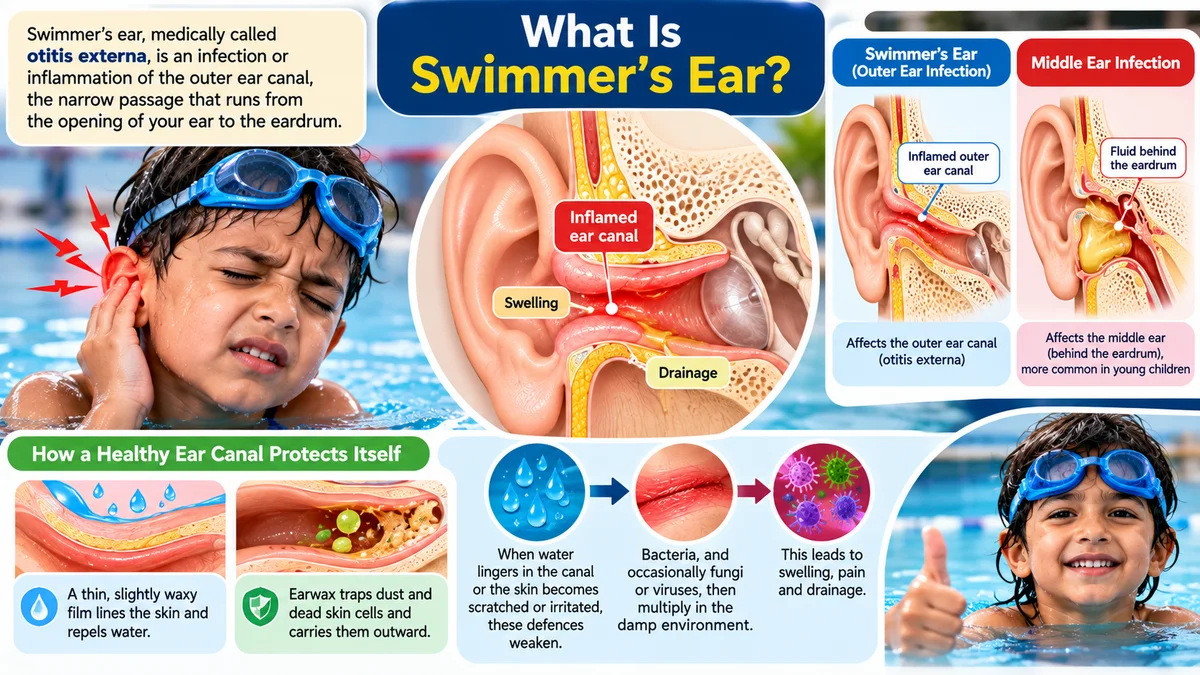
Swimmer's ear, medically called otitis externa, is an infection or inflammation of the outer ear canal, the narrow passage that runs from the opening of your ear to the eardrum. It is different from a middle ear infection, which develops behind the eardrum and is more common in young children.
A healthy ear canal protects itself. A thin, slightly waxy film lines the skin and repels water, while earwax traps dust and dead skin cells and carries them outward. When water lingers in the canal or the skin becomes scratched or irritated, these defences weaken. Bacteria, and occasionally fungi or viruses, then multiply in the damp environment, leading to swelling, pain and drainage.
Swimmer's Ear Symptoms
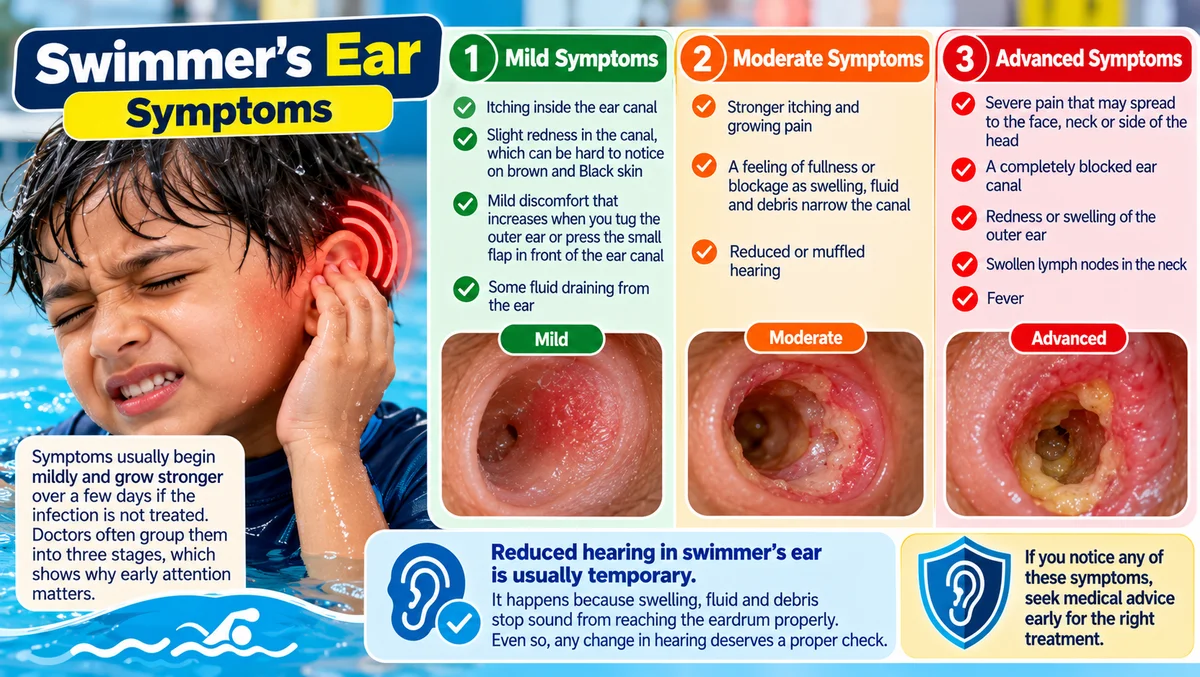
Symptoms usually begin mildly and grow stronger over a few days if the infection is not treated. Doctors often group them into three stages, which shows why early attention matters.
Mild symptoms
Itching inside the ear canal
Slight redness in the canal, which can be hard to notice on brown and Black skin
Mild discomfort that increases when you tug the outer ear or press the small flap in front of the ear canal
Some fluid draining from the ear
Moderate symptoms
Stronger itching and growing pain
A feeling of fullness or blockage as swelling, fluid and debris narrow the canal
Reduced or muffled hearing
Advanced symptoms
Severe pain that may spread to the face, neck or side of the head
A completely blocked ear canal
Redness or swelling of the outer ear
Swollen lymph nodes in the neck
Fever
Reduced hearing in swimmer's ear is usually temporary. It happens because swelling, fluid and debris stop sound from reaching the eardrum properly. Even so, any change in hearing deserves a proper check.
What Causes Swimmer's Ear?
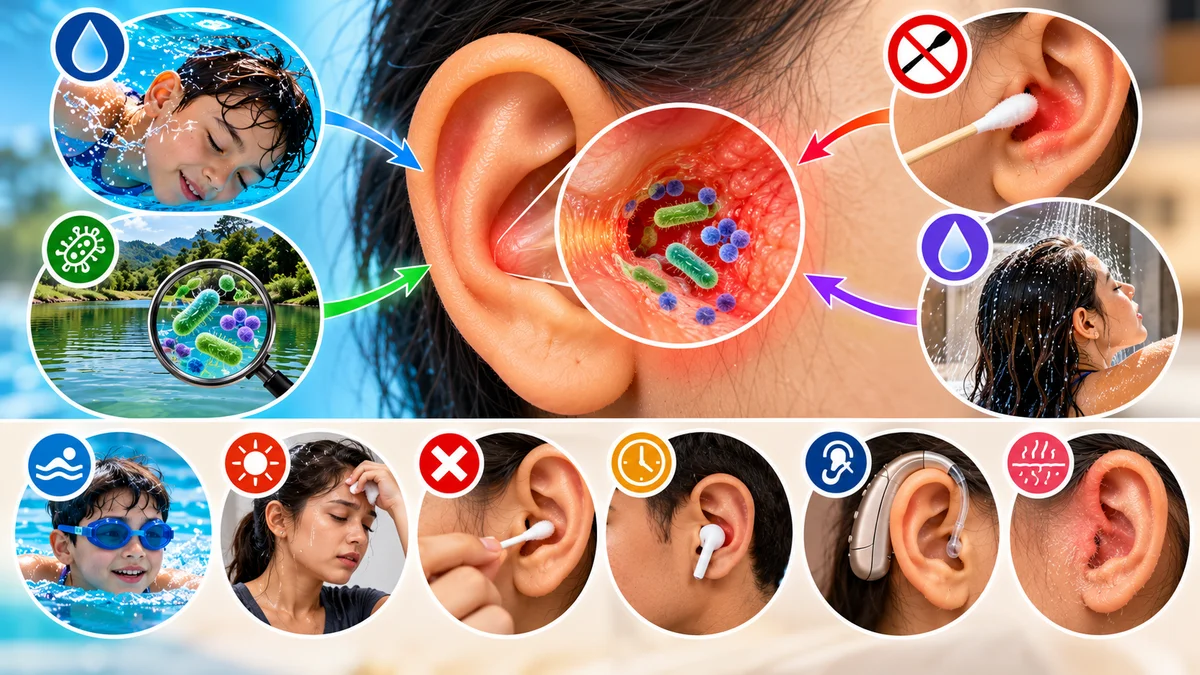
Most cases are caused by bacteria. Fungal and viral infections are less common. Three situations often set the stage:
Trapped moisture. Water left in the ear after swimming, bathing or heavy sweating creates a warm, damp space where germs thrive.
Contaminated water. Lakes, rivers and poorly maintained pools can carry bacteria that find their way into the ear.
Damaged skin. Scratching the canal with cotton buds, hairpins, keys or fingernails can create tiny breaks that let bacteria in.
You do not have to swim to get swimmer's ear. Humid weather, long showers and everyday ear-cleaning habits can all trigger it.
Who Is at Higher Risk?
You may be more likely to develop swimmer's ear if you:
Swim often, especially in lakes or rivers
Sweat heavily or live in humid weather
Clean your ears with cotton buds, pins or fingernails
Wear earbuds, in-ear headphones or hearing aids for long periods, which can cause tiny breaks in the skin
Have eczema or another itchy skin condition
If you use hearing aids, keep the earmoulds clean and dry, and mention any ongoing itching or soreness to your audiologist. A small adjustment in fit can make a big difference to comfort.
When to See a Doctor
Do not wait for the pain to become unbearable. Even mild symptoms are worth a medical check, because early treatment is quicker, simpler and lowers the risk of complications.
Get urgent medical help if you have severe pain or a fever, or if the pain keeps getting worse, the ear swells shut or redness spreads around the ear. Older adults and people with diabetes or a weakened immune system should be especially quick to seek care, since they face a higher risk of rare but serious complications.
How Swimmer's Ear Is Diagnosed and Treated
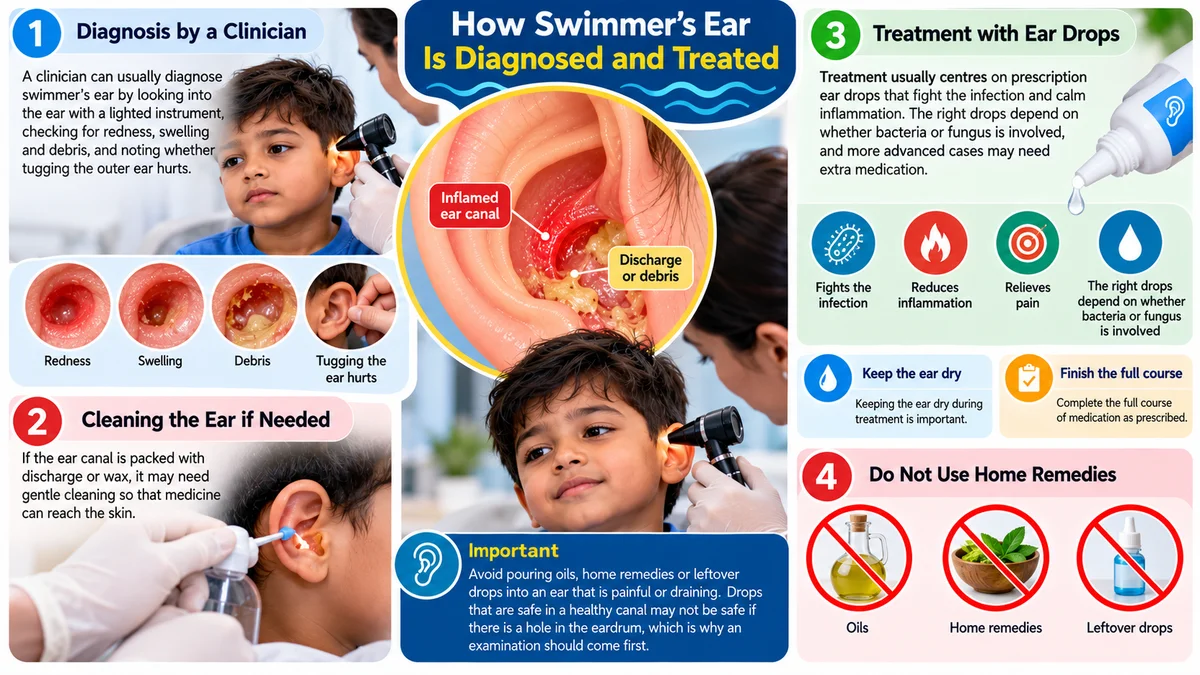
A clinician can usually diagnose swimmer's ear by looking into the ear with a lighted instrument, checking for redness, swelling and debris, and noting whether tugging the outer ear hurts. If the canal is packed with discharge or wax, it may need gentle cleaning so that medicine can reach the skin.
Treatment usually centres on prescription ear drops that fight the infection and calm inflammation. The right drops depend on whether bacteria or fungus is involved, and more advanced cases may need extra medication. Keeping the ear dry during treatment and finishing the full course are both important.
Avoid pouring oils, home remedies or leftover drops into an ear that is painful or draining. Drops that are safe in a healthy canal may not be safe if there is a hole in the eardrum, which is why an examination should come first.
Possible Complications
Swimmer's ear is not usually serious when treated promptly, but ignoring it can lead to problems:
Short-term hearing loss, which normally improves after the infection clears.
Chronic otitis externa, meaning symptoms that last more than three months. This is more likely when treatment is difficult, for example with allergic reactions, skin conditions such as dermatitis or psoriasis, or a mixed bacterial and fungal infection.
Cellulitis, a deeper skin infection that rarely develops.
Skull base osteomyelitis, a rare infection of the cartilage and bone near the ear that causes worsening severe pain. Older adults and people with diabetes or weak immunity are at higher risk.
Spread beyond the ear, a very rare outcome that can affect nearby nerves or the brain and can be life threatening.
How to Prevent Swimmer's Ear
Prevention is simple and mostly comes down to keeping your ears dry and leaving them alone.
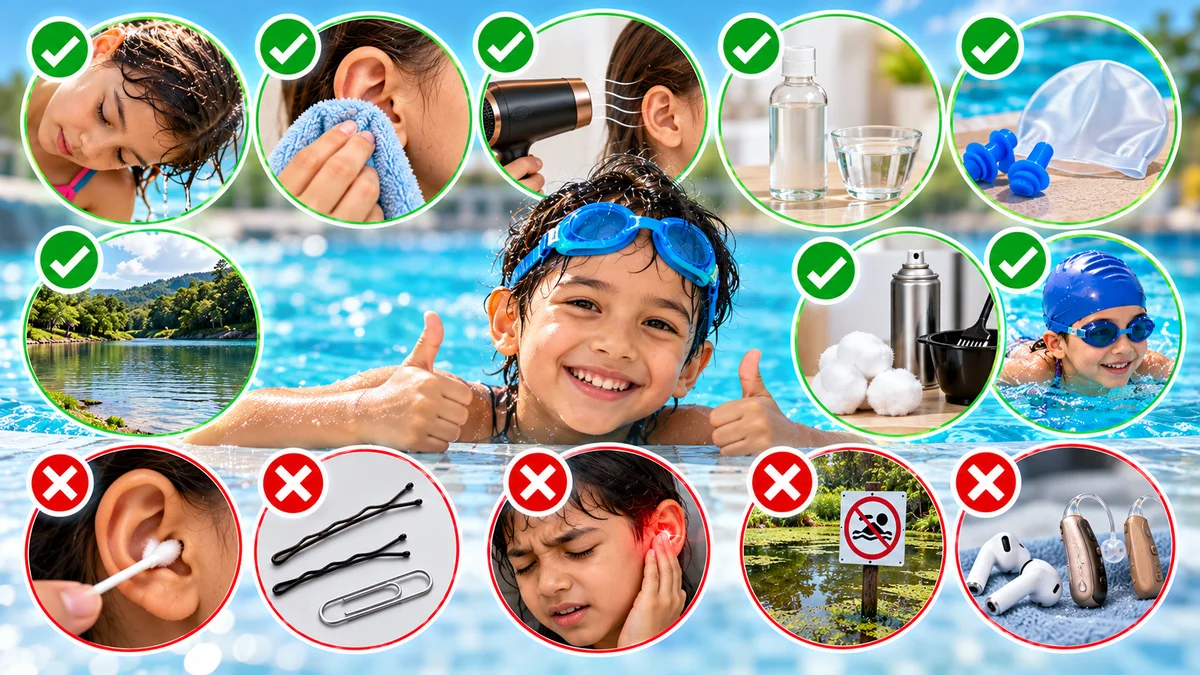
Drain the water. After swimming or bathing, tilt your head to each side so the ear faces down and let the water run out.
Dry the outer ear only. Wipe it gently with a soft towel. You can also use a hair dryer on its lowest setting, held at least one foot (about 30 cm) from the ear.
Consider preventive drops. If you are sure your eardrum is intact, a mix of equal parts white vinegar and rubbing alcohol can help dry the canal and discourage germs. About one teaspoon (5 ml) per ear before and after swimming is commonly advised, then let it drain out. Check with a healthcare professional first if you have had ear surgery, ear tubes or a perforated eardrum.
Wear earplugs or a swim cap to keep water out.
Choose your water wisely. Skip lakes and rivers with posted warnings about high bacteria levels.
Shield your ears from chemicals. Place cotton balls in your ears while using hair spray or hair dye.
Be careful after infections or surgery. Ask your healthcare professional before swimming again.
Never dig. Cotton buds, paper clips and hairpins can push debris deeper and scratch the skin.
Keep earbuds and hearing aids clean, and give your ears regular breaks from long headphone sessions.
Safe Earwax Care
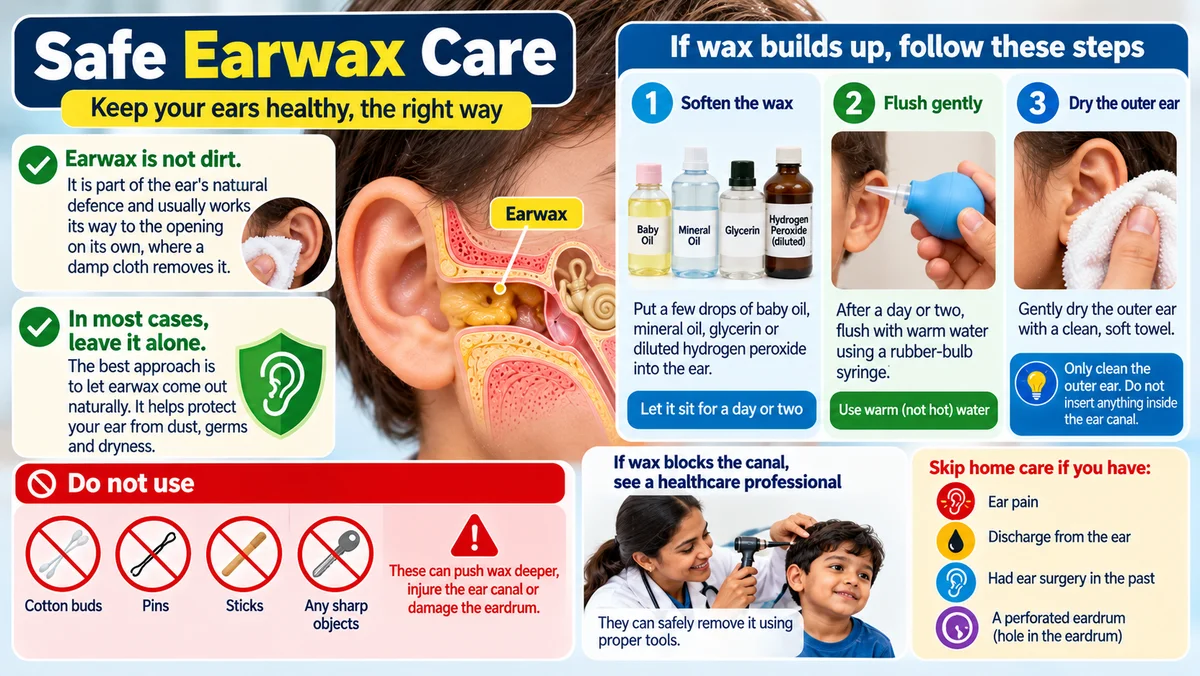
Earwax is not dirt. It is part of the ear's natural defence and usually works its way to the opening on its own, where a damp cloth removes it. In most cases the best approach is to leave it alone.
If wax builds up or blocks the canal, see a healthcare professional rather than digging it out. For gentle home care, put a few drops of baby oil, mineral oil, glycerin or diluted hydrogen peroxide into the ear. After a day or two, flush with warm water using a rubber-bulb syringe, then dry the outer ear. Skip this if you have ear pain, discharge, past ear surgery or a perforated eardrum.
Why Visit VR Speech and Hearing Clinic?
Repeated ear problems, fullness that will not go away, hearing that stays muffled after an infection, or irritation from hearing aids are all good reasons to book an evaluation. At VR Speech and Hearing Clinic, our team can assess your hearing, talk through your symptoms and guide you toward the right medical care when an infection needs treatment. We can also share practical ear care advice for swimmers, children and hearing aid users, so problems are less likely to return.
Final Thoughts
Swimmer's ear is painful and annoying, but it is also one of the most preventable ear problems. Keep your ears dry, avoid putting anything inside them and act early if itching, pain or blocked hearing appears. If you are worried about your ears or your hearing, get in touch with VR Speech and Hearing Clinic for a professional check-up.
This article is for general education only and does not replace advice from a qualified healthcare professional.
Frequently Asked Questions (FAQs)
1. What is the difference between swimmer's ear and a middle ear infection?
Swimmer's ear affects the outer ear canal, and pulling the outer ear usually hurts. A middle ear infection sits behind the eardrum, often follows a cold and is more common in young children. A clinician can tell them apart with an examination.
2. Can swimmer's ear go away on its own?
Very mild irritation sometimes settles, but swimmer's ear can worsen quickly if untreated. It is safer to have even mild symptoms checked early rather than waiting.
3. How long does swimmer's ear last?
Many people feel better within a few days of starting treatment, and a course of ear drops commonly runs for about a week. Timing varies with severity, so follow your clinician's advice.
4. Is swimmer's ear contagious?
It does not spread from person to person. However, several swimmers using the same contaminated water can each develop it.
5. Can I swim with swimmer's ear?
It is best to avoid swimming until your clinician confirms the infection has cleared, as water keeps the canal damp and can slow healing.
6. Can earbuds or hearing aids cause swimmer's ear?
They can contribute. Long use can trap moisture and cause tiny skin breaks, so keep them clean and dry and give your ears regular rest.
7. Can swimmer's ear cause hearing loss?
It can cause temporary muffled hearing because of swelling and debris. Hearing normally improves once the infection clears. If it does not, get a hearing assessment.
8. Is it safe to use cotton buds to dry my ears?
No. Cotton buds can scratch the skin and push debris deeper. Tilt your head to drain water and dry only the outer ear with a soft towel.