Starkey Omega AI+ Hearing Aid: Features and Benefits
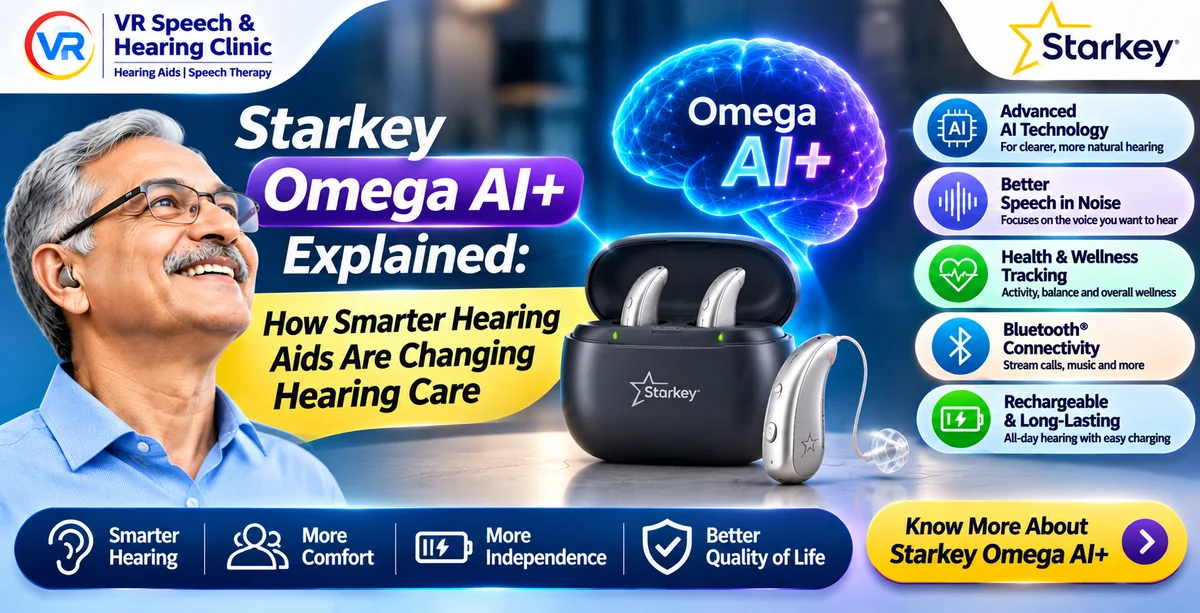
Starkey Omega AI+ Explained: How Smarter Hearing Aids Are Changing Hearing Care
Hearing aids have moved well beyond simple amplification. The latest example is the Starkey Omega AI+, a flagship device launched in October 2026 at Starkey Day in Minneapolis. The company introduced it to roughly 700 hearing care professionals, and the message was clear: better technology only matters if it improves real-world listening and makes life easier for both patients and audiologists.
Here is what the Omega AI+ offers and why it matters if you are thinking about hearing aids.
What Is the Starkey Omega AI+?
Omega AI+ replaces the earlier Omega AI as Starkey’s top hearing aid. It runs on a faster processing chip and uses retrained deep neural networks (DNNs), which are AI systems that learn from large numbers of speech and noise examples. It also adds a new dual compression system, a redesigned feedback manager and an improved Edge Mode that can stay on all the time.
Starkey describes the product around three pillars: intelligent hearing, health and fitness monitoring, and personal assistance. Clear hearing remains the foundation, with wellness and convenience features built on top.
Four Neural Networks, Four Jobs
Starkey’s chief technology officer explained that the ears collect sound but the brain gives it meaning. The new Quad DNN Architecture takes inspiration from that partnership. Four specialised networks handle different tasks:
Speech enhancement and noise reduction
Directionality
Spatial awareness, known as DNN 360
Dynamic listening, through the new DNN Dual Compressor
Working together, they aim to keep speech clear, sound comfortable and surroundings natural as the environment changes.
The DNN Dual Compressor: Clearer Speech, Natural Sound
Hearing loss often shrinks the range between sounds that are too soft to hear and sounds that feel too loud. Hearing aids manage this with compression. Fast compression helps you catch the brief parts of speech, while slow compression keeps sound smooth and natural. Manufacturers have traditionally picked one or the other for different programs.
Starkey says its DNN Dual Compressor is the first to combine both using a neural network. A slow compressor runs continuously, and faster processing steps in when the system detects speech. The network is also trained to tell speech from other quickly changing sounds such as keyboard clicks. That should reduce the “pumping” effect that happens when a hearing aid reacts to noises it shouldn’t.
Better Speech in Noise Without Losing Awareness
Understanding speech in a crowd is one of the biggest reasons people buy hearing aids. But focusing too narrowly on one voice can cut you off from important sounds like traffic, a doorbell or someone approaching.
DNN 360 addresses this by combining directional processing with spatial awareness. It uses sound information, motion sensor data and the wearer’s likely intent to decide how to respond. Starkey’s chief hearing health officer put it simply: speech clarity should not come at the cost of spatial awareness.
Omega AI+ also brings DNN 360 to rechargeable custom hearing aids. Custom devices sit differently in every ear, so the training had to account for microphone rotation, shell shape and faceplate angle. In Starkey’s research, listeners needed 2.1 dB less favourable noise conditions to feel the same listening effort compared with the earlier directional system.
Edge Mode That Can Stay Switched On
Edge Mode is Starkey’s extra boost for difficult listening situations. In Omega AI+ it uses stronger DNN-based noise management and can remain active continuously. Whether it should is a fitting decision. Some people want to switch it on only in noisy places, while others prefer constant support. The audiologist decides with the patient, which keeps the personal touch in the process.
Smarter Feedback Control
Anyone who has worn hearing aids knows the whistle of feedback. Starkey redesigned its feedback system to build a personalised profile for each wearer. It considers canal depth, venting, audiogram, prescription targets, gain settings and the measured feedback path.
Starkey reports 11 dB of additional gain margin over its previous system, plus reductions in mid-frequency feedback and feedback artifacts under test conditions. In fitting tests involving head and jaw movement and a phone held close to the ear, feedback occurred 2.2 times less often at the first fit. For patients, that means fewer annoying whistles. For clinicians, it means smoother appointments.
Speed and Battery Life
Omega AI+ puts neural and conventional signal processing on a single chip. Starkey says this gives about 5 milliseconds of processing delay, compared with roughly 8 to 13 milliseconds or more in other devices it tested. Lower delay helps reduce the clash between direct and amplified sound, especially in open fittings. The efficient design also supports up to 51 hours of battery life per charge in the RIC RT model.
TeleHear: Spotting Problems Before They Become Returns
The first two weeks with new hearing aids can be difficult, and the clinic often has no visibility into how the patient is coping. Starkey’s TeleHear portal aims to close that gap. Its upcoming Patient Insights tools use historical device data to spot patterns linked to returns, such as falling wear time or repeated volume changes. The portal can then suggest programming adjustments and counselling so the audiologist can step in early.
Health and Convenience Features
Starkey has built hearing aids that do more than hearing for several years, starting with activity tracking and translation, then adding fall alerts, balance tools and respiratory rate monitoring. Omega AI+ adds:
Sleep Quality Tracking: The My Starkey app shows sleep scores, estimated sleep cycles and body position. It requires overnight wear, so it will not suit everyone, and Starkey stresses it is not a diagnostic tool.
Hearing Aids Left Behind Alert: A handy reminder, especially for new users.
Auracast support: This lets you tune into public broadcast audio in airports, theatres, places of worship and conference halls. Starkey calls it a matter of access rather than streaming.
What the Clinical Evidence Says
Starkey reports that Omega AI+ went through five clinical studies with 130 participants and about 30,000 hours of field wear before launch. In one study, participants rated DNN 360 an average of 1.2 points higher out of 10 on the SSQ12 questionnaire than their own hearing aids. In Edge Mode, wearers reported better comfort, lower loudness discomfort and less listening effort compared with the everyday program.
Keep in mind that these figures come from the manufacturer’s own testing. Your results will depend on your hearing loss, your lifestyle and, above all, the quality of your fitting.
What It Means for Hearing Aid Buyers in India
Omega AI+ shows where the industry is heading: AI-driven sound processing, health features and strong support from the clinic. If you are considering a premium hearing aid, a good fitting matters as much as the technology inside it. Ask your audiologist about the following:
A proper hearing test and a device matched to your audiogram
Whether a custom or RIC style suits your ears and lifestyle
Follow-up visits and programming support after the first fitting
Availability, warranty and service for Starkey products in your city
Models and features can differ by country, so confirm local availability and pricing with a qualified professional.
Final Thoughts
The Starkey Omega AI+ is built on a straightforward idea: innovation should improve the patient experience and help professionals deliver better care. With four specialised neural networks, dual compression, smarter feedback management, sleep tracking and early-warning tools for clinics, it is a serious step in the shift from simple amplification to intelligent, personalised hearing care. As Starkey’s CEO put it, the heart of the business still comes down to service and care.
FAQs
1. What is the Starkey Omega AI+ hearing aid?
It is Starkey’s latest flagship hearing aid, launched in October 2026. It replaces the Omega AI and uses a faster chip, four deep neural networks, dual compression and improved feedback control.
2. What is Quad DNN Architecture?
It is a system of four AI networks that handle speech enhancement and noise reduction, directionality, spatial awareness and dynamic listening.
3. What does the DNN Dual Compressor do?
It combines slow and fast compression. The slow one keeps sound natural, and the fast one engages when speech is detected so soft speech sounds are easier to hear.
4. Can Omega AI+ track sleep?
Yes. The My Starkey app provides sleep scores, estimated sleep cycles and body position for RIC wearers who wear the devices overnight. It is not meant for diagnosis.
5. What is Edge Mode?
Edge Mode is a feature for difficult listening environments. In Omega AI+ it can stay active continuously, depending on what you and your audiologist decide.
6. Does Omega AI+ work with Auracast?
Starkey demonstrated Auracast access through the My Starkey app, which lets users choose available public broadcasts in venues that support it.
7. How long does the battery last?
Starkey says the RIC RT model can last up to 51 hours per charge.
8. Is Omega AI+ available in India?
Availability varies by market. Please check with a qualified audiologist or authorised Starkey provider near you.