Speech Therapy: What It Is, Who Needs It and How It Works
Communication connects us to the people we love, our work, and our daily routines. When speaking, understanding, or finding the right words becomes hard, life can feel frustrating and isolating. The good news is that these challenges are common and treatable. Speech therapy helps children and adults build stronger communication skills at any stage of life.
This guide explains what speech therapy is, who can benefit, which conditions it treats, and what to expect from your first visit.
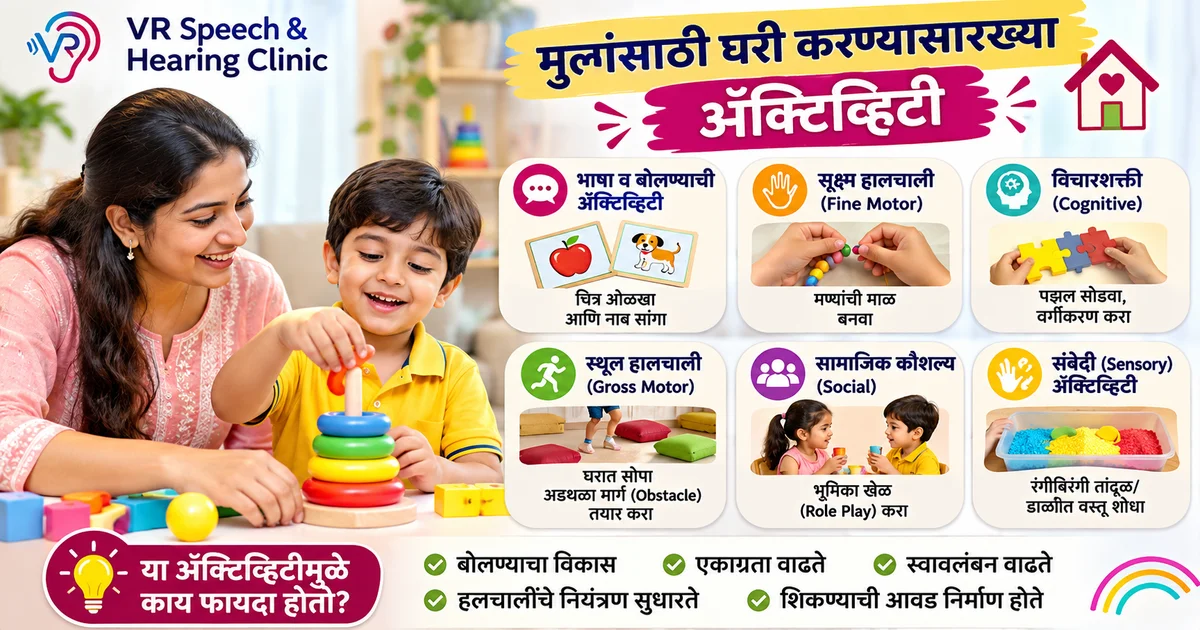
Ebook Download स्पीच थेरपी ॲक्टिव्हिटी बुक | मुलांच्या भाषा व संवाद विकासासाठी
What Is Speech Therapy?
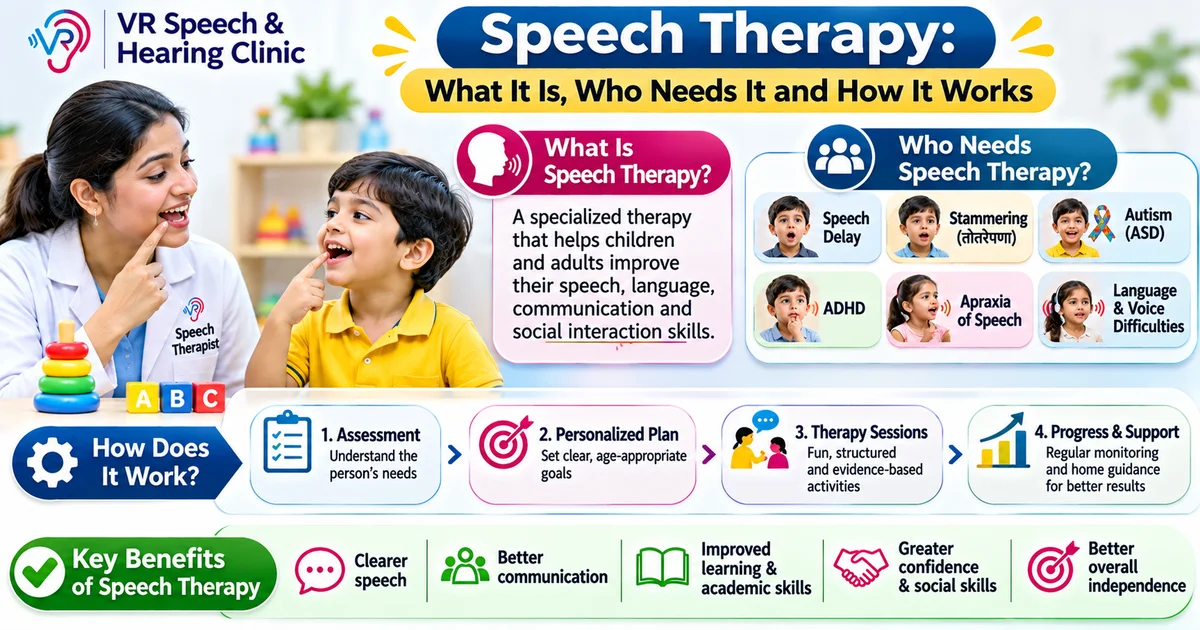
Speech therapy is a clinical treatment that improves how you speak, understand language, and express your ideas. It goes beyond pronouncing words correctly. It covers voice quality, fluency, comprehension, social communication, and even certain thinking skills such as memory and attention. Many people also receive help with swallowing difficulties through the same type of care.
A trained professional designs a plan around your goals. A young child may work on first words and sounds, while an adult recovering from a stroke may focus on rebuilding speech and language. No two plans look alike.
Who Provides Speech Therapy?
Speech therapy is delivered by a speech-language pathologist, often called an SLP or speech therapist. These professionals are trained to assess, diagnose, and treat communication and swallowing disorders. They test your abilities, identify the root of the difficulty, and choose exercises and strategies that fit your age, needs, and daily life.
A speech therapist often works alongside doctors, audiologists, teachers, and family members, so progress carries over from the clinic into everyday situations.
Signs You or Your Child May Need Speech Therapy
Many people wait too long because they assume a problem will fix itself. Some speech and language differences do resolve with age, but early support usually leads to better results.
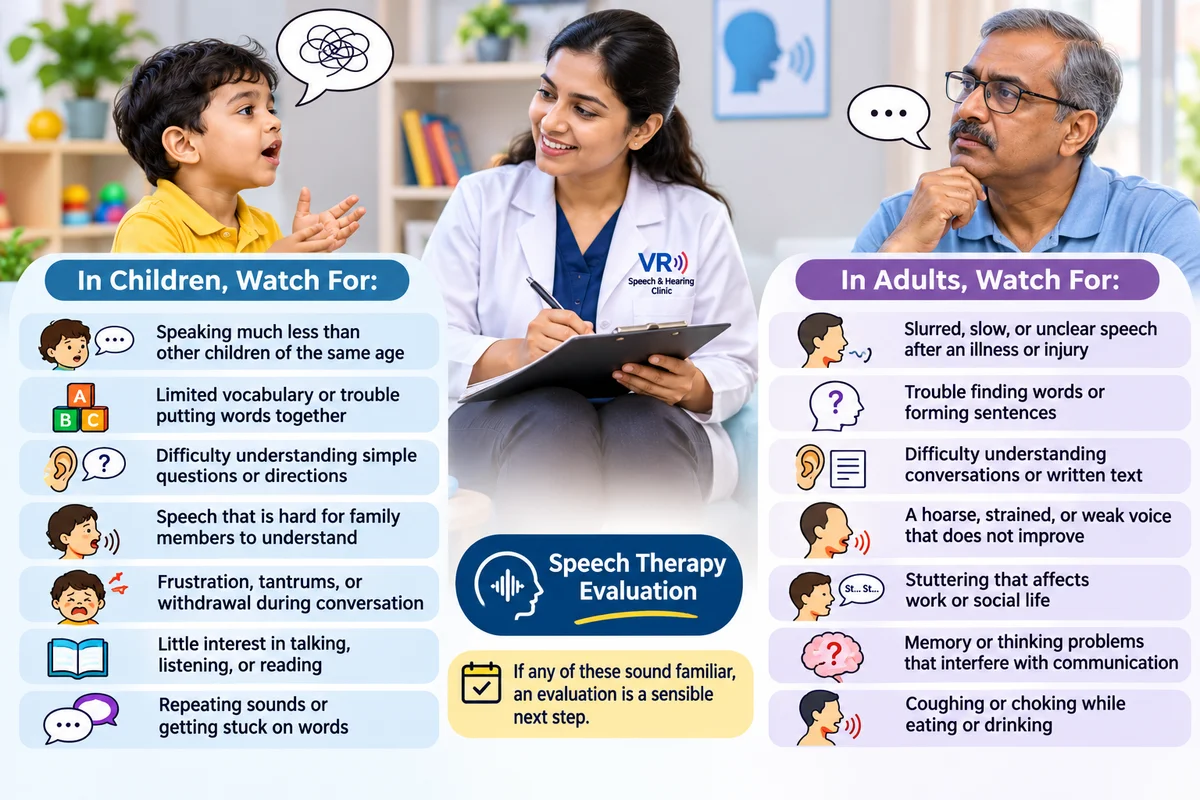
In children, watch for:
Speaking much less than other children of the same age
Limited vocabulary or trouble putting words together
Difficulty understanding simple questions or directions
Speech that is hard for family members to understand
Frustration, tantrums, or withdrawal during conversation
Little interest in talking, listening, or reading
Repeating sounds or getting stuck on words
In adults, watch for:
Slurred, slow, or unclear speech after an illness or injury
Trouble finding words or forming sentences
Difficulty understanding conversations or written text
A hoarse, strained, or weak voice that does not improve
Stuttering that affects work or social life
Memory or thinking problems that interfere with communication
Coughing or choking while eating or drinking
If any of these sound familiar, an evaluation is a sensible next step. It does not commit you to treatment, and it gives you clear answers.

Conditions Treated With Speech Therapy
Speech therapy supports a wide range of communication challenges. Common ones include:
Articulation disorders. A person has trouble producing certain sounds, such as saying “wabbit” for “rabbit.” Therapy trains the mouth and tongue to form sounds correctly.
Fluency disorders. Stuttering and cluttering interrupt the rhythm and flow of speech. Therapy teaches techniques that make speaking smoother and more comfortable, and it also builds confidence.
Apraxia of speech. The person knows what to say, but the brain struggles to coordinate the muscle movements needed to say it. Therapy uses repetition and structured practice to build those pathways.
Dysarthria. Weak or poorly controlled speech muscles cause slurred or slow speech. It can follow a stroke or accompany conditions such as Parkinson’s disease, multiple sclerosis, or ALS.
Aphasia. Damage to the language areas of the brain, often from stroke or head injury, affects speaking, understanding, reading, and writing. Therapy helps people regain skills and find new ways to communicate.
Language delays and disorders. Children may have trouble understanding language (receptive) or using it (expressive). Therapy builds vocabulary, grammar, and comprehension.
Voice disorders. Hoarseness, a weak voice, or vocal strain can result from overuse, medical conditions, or nerve problems. Therapy teaches healthy voice habits.
Resonance disorders. Conditions that affect the mouth, nose, or palate, such as cleft palate, can change how speech sounds. Therapy works alongside medical care to improve clarity.
Cognitive-communication disorders. Brain injury or neurological conditions can affect memory, attention, and problem-solving, which makes conversation harder. Therapy builds strategies to manage these challenges.
Swallowing disorders. Difficulty swallowing can make eating unsafe. Therapists teach exercises and techniques that improve safety and comfort.
The Link Between Hearing and Speech
Speech and hearing are closely connected. We learn to speak by hearing the world around us, so untreated hearing loss can slow language development in children and cause communication problems in adults.
That is why a hearing test is often part of the evaluation process. If a child is slow to talk, an audiologist can check whether hearing is the cause. If hearing is normal, the speech therapist can look deeper at language and speech skills. Having speech and hearing care under one roof, as at VR Speech and Hearing Clinic, makes this process simpler for families.
What Happens in a Speech Therapy Session?
Your first visit usually starts with a detailed conversation about your concerns, medical history, and goals. The therapist then assesses speech, language, voice, hearing-related skills, or swallowing, depending on your needs. You will leave with a clear picture of what is happening and a recommended plan.
After that, sessions are practical and goal-focused.
For children, therapy feels like play. Therapists use games, stories, songs, picture cards, and toys to build skills without pressure. Children learn best when they are relaxed and engaged.
For adults, therapy is more targeted and may include:
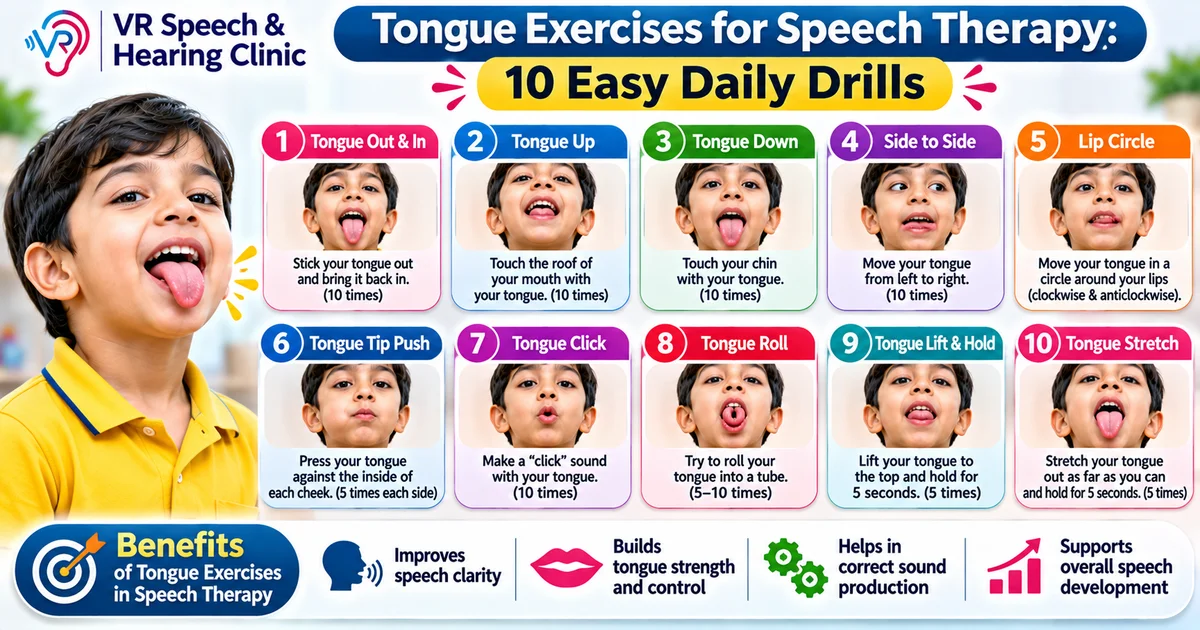
Tongue, lip, and jaw exercises to improve strength and coordination
Reading aloud and conversation practice
Breathing and voice exercises
Memory and word-finding activities
Strategies for stuttering or slow speech
Swallowing techniques and safe eating routines
Between sessions, you will usually receive simple practice activities. Regular practice at home often makes the biggest difference.
Benefits of Speech Therapy
Speech therapy is a well-established and effective treatment, but success looks different for each person. For one child it may mean saying clear first words. For an adult it may mean ordering a meal or speaking confidently on the phone again.
Common benefits include:
Clearer speech and better understanding
Stronger vocabulary and language skills
Improved school readiness and classroom participation
Greater confidence and self-esteem
More independence in daily life
Better voice quality
Safer, easier swallowing
Healthier relationships and social connection
How Long Does Speech Therapy Take?
There is no single timeline. Duration depends on:
Age at the start of therapy
The type and severity of the disorder
Whether an underlying medical condition is involved
How often you attend sessions
How consistently you practice at home
Some children outgrow mild delays with a few months of support. Others need longer, steady therapy. Adults recovering from a stroke or injury often improve gradually as the brain heals and skills are retrained. Your therapist will review progress regularly and adjust the plan as needed.
How Families Can Support Progress at Home
You do not need special equipment to help. Simple habits go a long way:
Talk, read, and sing with your child every day
Give them time to respond without finishing their sentences
Repeat words correctly in a gentle, natural way instead of criticizing
Limit background noise and screen time during conversation
Practice the exercises your therapist recommends
Celebrate small wins, since progress is built step by step
For adults, patience matters just as much. Practice in low-pressure settings first, then move on to real-life situations.
When to Seek Professional Help
Contact a healthcare provider or speech-language pathologist as soon as you notice a change in how you or your child speaks, listens, or understands. Sudden changes in speech, such as slurring, confusion, or trouble finding words, can signal a medical emergency like a stroke and need immediate care.
For children, you do not have to wait for a referral or for them to “grow out of it.” An early check can ease your worries or start support at the best time.
Take the First Step With VR Speech and Hearing Clinic
Communication challenges can feel overwhelming, but you do not have to face them alone. At VR Speech and Hearing Clinic, care starts with listening to your concerns and building a plan that fits your goals, your pace, and your daily life. Whether you are a parent worried about your child’s speech or an adult looking to regain confidence, professional support can make a real difference.
Book an evaluation today and take the first step toward clearer, more confident communication.
FAQs
1. What does a speech therapist do?
A speech therapist, or speech-language pathologist, diagnoses and treats problems with speech, language, voice, fluency, cognition-communication, and swallowing. They create personalized plans using exercises, activities, and coaching.
2. How do I know if my child needs speech therapy?
Warning signs include limited vocabulary, speech that is hard to understand, trouble following directions, frustration when communicating, and talking far less than other children their age. A professional evaluation can confirm whether therapy is needed.
3. Is speech therapy only for children?
No. Adults benefit too, especially after a stroke, brain injury, or neurological illness, or when dealing with stuttering, voice problems, or swallowing difficulties.
4. What age is best to start speech therapy?
There is no perfect age, but starting early often leads to stronger results. Adults can also make meaningful progress at any age.
5. Does speech therapy really work?
Yes. Speech therapy is a proven treatment that has helped many people improve communication. Results depend on the condition, consistency of practice, and individual goals.
6. How long does speech therapy last?
It varies. Some people need a few months, while others need ongoing support for a year or more. Your therapist will track progress and update your plan.
7. Can hearing loss affect speech?
Yes. Hearing loss can delay language development in children and affect clarity and understanding in adults. A hearing test is often part of a complete speech evaluation.
8. What happens during a first speech therapy appointment?
The therapist reviews your history, discusses your concerns, performs an assessment, and explains the findings and recommended next steps.
9. Can speech therapy help with swallowing problems?
Yes. Speech-language pathologists are trained to evaluate and treat swallowing disorders using exercises and safe-eating strategies.
10. How can I support therapy at home?
Practice recommended exercises, read and talk daily, give your child time to respond, and celebrate progress. Consistency matters most.