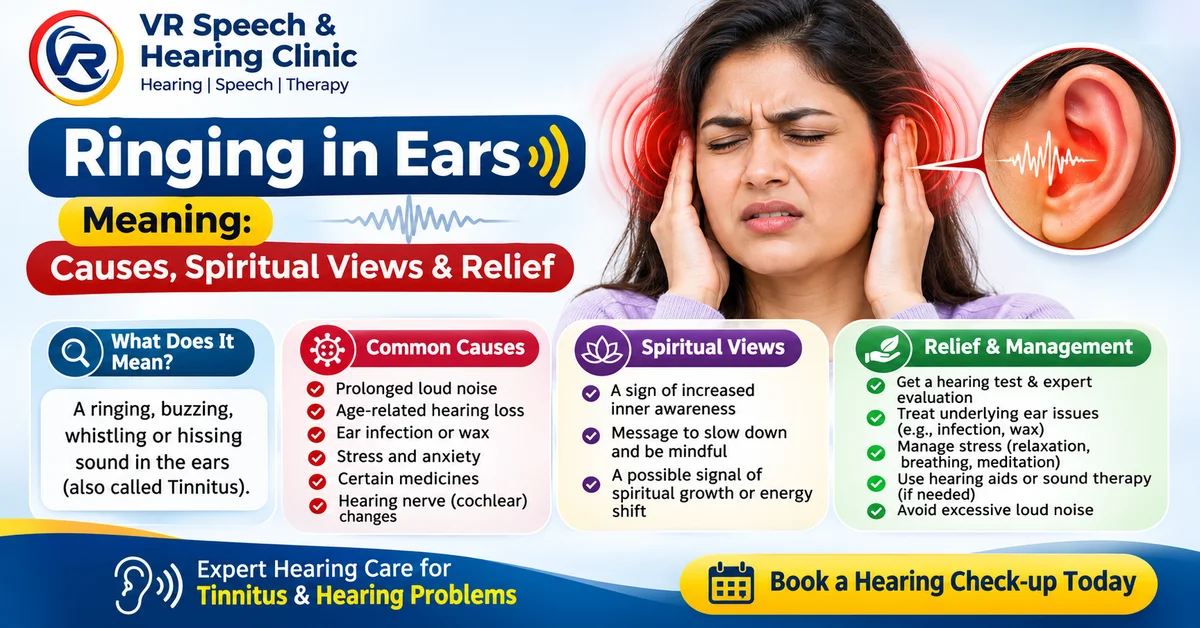
Ringing in Ears Meaning: Causes, Spiritual Views & Relief
What Does It Mean When Your Ears Ring?
Have you ever heard a high-pitched ring, buzz, or hiss in your ears when the room is quiet? You are not alone. About one in five people notice this at some point, and the question that follows is almost always the same: what does it mean? Doctors call the sensation tinnitus, and in most cases it points to a physical cause such as noise exposure or hearing loss. At the same time, many cultures attach spiritual meanings and superstitions to ringing in the left or right ear.
This guide covers both sides. You will learn the medical causes of ringing in the ears, the folklore and spiritual beliefs, the warning signs that need a doctor, and practical ways to find relief.
What Does Ringing in the Ears Mean Medically?
Tinnitus is the perception of sound when no outside source is making it. It is not a disease on its own. It is a symptom, a signal that something in the ear, the hearing nerve, or the brain's hearing pathways is out of balance. People describe it as ringing, but it can also sound like buzzing, roaring, clicking, hissing, humming, or whistling. The volume and pitch can be soft or loud, steady or occasional, and other people usually cannot hear it.
The most common underlying factor is some degree of hearing loss, which many people do not realize they have. Short bursts of ringing after a loud concert are common and usually fade within hours or days. Ringing that lingers deserves attention.

Common Causes of Ringing in the Ears
Many different things can set off ringing in the ears. The most frequent include:
Loud noise exposure: Concerts, power tools, headphones at high volume, and noisy workplaces can damage the tiny hair cells in the inner ear.
Age-related hearing loss: Hearing naturally declines over time, and tinnitus often comes with it.
Earwax buildup: A blocked ear canal can cause ringing, muffled hearing, or a feeling of fullness.
Ear infections and fluid: Middle ear infections, colds, and allergies can trigger temporary ringing.
Medications: Some drugs, including high doses of aspirin and certain antibiotics and diuretics, can cause or worsen tinnitus. Never stop a prescribed medicine without medical advice.
Head and neck injuries: Head trauma and whiplash can affect the ear or the nerves that carry sound.
Jaw problems: Temporomandibular joint (TMJ) disorders are linked with ear ringing.
High blood pressure and blood vessel problems: These can create a rhythmic sound in time with the pulse.
Meniere's disease: An inner ear condition that combines ringing, dizziness, and hearing loss.
Stress, anxiety, poor sleep, and caffeine: These can make existing tinnitus seem louder.
Less common causes include nerve-related conditions and, rarely, a benign growth called an acoustic neuroma.
Types of Tinnitus
Doctors group tinnitus in a few useful ways:
Non-pulsatile tinnitus: A continuous ringing or buzzing. This is the most common form and is usually tied to hearing loss.
Pulsatile tinnitus: A whooshing or thumping that beats with your heartbeat. It affects only about one in ten people with tinnitus and may be related to blood flow or blood vessel changes. Sometimes a doctor can hear it during an exam.
One-sided (unilateral) tinnitus: Ringing in only one ear, which deserves earlier medical review.
Temporary versus chronic tinnitus: Short episodes often pass on their own, while chronic tinnitus can last for months or years.

Left Ear vs. Right Ear Ringing: Spiritual Meaning and Superstitions
Long before modern medicine explained tinnitus, people looked for meaning in sudden ringing. Folklore from many cultures treats ear ringing as an omen, and today the topic is popular in spiritual circles. These ideas are cultural beliefs rather than medical findings, and they differ widely from one tradition to another.
Common superstitions. The best-known belief says that when your ears ring, someone is talking about you. In many versions, ringing in the right ear means the words are kind, while ringing in the left ear means they are critical. Other versions reverse the sides, and some treat the left ear as a sign of good luck, which shows how inconsistent these beliefs are.
Spiritual interpretations. Some spiritual traditions link the left ear to intuition, the inner voice, and the past, and the right ear to messages from the outside world and the future. Others see sudden ringing as a message from spirit guides or angels, a sign of heightened awareness, or a reminder to pause during a period of change.
A balanced view. There is no scientific evidence that ringing carries a message, and the symptom has well-documented physical causes. If you find meaning in these traditions, you can treat them as a moment for reflection, but do not let them replace a hearing check. Ringing that persists, comes with hearing changes, or affects only one ear is a health signal first.
Ringing in One Ear vs. Both Ears
Tinnitus usually affects both ears. Ringing in just one ear is a reason to see a doctor sooner rather than later. It may point to an ear-specific problem such as impacted wax or an infection, but it can also signal sudden sensorineural hearing loss, where prompt treatment improves the chance of recovery, or an acoustic neuroma. One-sided ringing with muffled hearing should be assessed as soon as possible, because treatment for sudden hearing loss is time sensitive.
When to See a Doctor
Ringing is often harmless, but see a doctor if:
It lasts longer than a week
It started after a cold and has not improved within a week
You notice hearing loss or dizziness along with it
It affects only one ear
It beats in time with your pulse
You have ear pain or discharge
It followed a head injury
It is causing anxiety, low mood, or trouble sleeping
Seek urgent care the same day if you lose hearing suddenly, especially in one ear, or if ringing comes with severe dizziness, weakness in the face, or confusion.
How Tinnitus Is Diagnosed
A doctor will ask about the sound, how long it has lasted, noise exposure, and the medicines you take. They will examine your ears for wax, infection, or fluid and check your blood pressure. A hearing test (audiogram) is the key step, since hearing loss is the most common link. If the ringing is one-sided or pulsatile, imaging such as MRI or CT may be recommended to look at the ear, nerves, and blood vessels. An audiologist or an ear, nose, and throat (ENT) specialist can lead further assessment.

Treatment and Relief for Ringing in the Ears
There is no scientifically proven cure for tinnitus, but many people get real relief. The best approach depends on the cause.
Treat the underlying cause: Removing wax, treating infections, reviewing medications, managing blood pressure, and addressing jaw problems can reduce or end the ringing.
Hearing aids: If hearing loss is present, hearing aids often make tinnitus less noticeable.
Sound therapy: Background sound from a fan, white noise machine, or soft music masks the ringing, especially at night.
Counseling and cognitive behavioral therapy: These help you react less strongly to the sound, which lowers stress and improves sleep.
Tinnitus retraining therapy: A structured program that combines sound and counseling to help the brain tune the noise out.
Lifestyle changes: Cut back on caffeine if it seems to worsen symptoms, manage stress, sleep well, and avoid complete silence in the bedroom.
Be cautious about supplements and miracle cure products, because the evidence for them is weak. Get a hearing check before trying any treatment.
How to Protect Your Ears
You cannot prevent every case, but you can protect your hearing:
Keep headphone volume moderate and take listening breaks
Wear earplugs at concerts, in workshops, and when using loud tools
Treat ear infections and colds promptly
Keep blood pressure under control
Clean the outer ear gently and avoid cotton swabs inside the canal
Ask your doctor about hearing-related side effects of any new medication
Conclusion
Ringing in the ears has a clear medical meaning: it is a symptom, most often linked to hearing loss, noise damage, or a treatable ear problem. Folklore and spiritual beliefs add another layer of interest, but they are not a substitute for care. Protect your hearing, pay attention to warning signs, and get checked if the sound persists, affects one ear, or comes with dizziness or hearing changes.
This article is for general information only and does not replace advice from a qualified healthcare professional.
Frequently Asked Questions (FAQs)
1. What does it mean when your ears ring?
Medically, ringing in the ears is called tinnitus. It is a symptom, often linked to hearing loss, loud noise exposure, earwax, infection, or certain medicines. Many cultures also hold superstitions about it, but those are beliefs rather than medical explanations.
2. What does ringing in the left ear mean?
There is no single answer. Folklore variously says it means someone is criticizing you, that you are receiving an intuitive message, or that good luck is coming. Medically, one-sided ringing should be checked by a doctor, especially with hearing loss.
3. What does ringing in the right ear mean?
In many superstitions, a ringing right ear means someone is speaking kindly of you or that news is on its way. Medically, it has the same possible causes as ringing in the left ear, and persistent one-sided ringing needs a medical check.
4. Is ringing in the ears dangerous?
Usually it is not dangerous, but it can signal an underlying problem. See a doctor if it lasts more than a week, affects one ear, pulses with your heartbeat, or comes with dizziness or hearing loss.
5. How long does ringing in the ears last?
It varies. Ringing after a loud event often fades in hours or days, while tinnitus linked to hearing loss or other conditions can last for months or become long term.
6. Can stress or anxiety cause ringing in the ears?
Stress and anxiety do not usually create tinnitus on their own, but they can make it louder and harder to ignore. Tinnitus can also cause stress, so the two can feed each other.
7. How can I stop ringing in my ears at night?
Background sound from a fan, white noise machine, or soft music can mask the ringing. Relaxation routines, limiting caffeine late in the day, and treating any hearing loss can also help.
8. Which doctor should I see for ringing in the ears?
Start with a primary care doctor, an audiologist, or an ENT specialist. A hearing test is usually the first step in finding the cause.