Rechargeable vs Battery Hearing Aids: Which Is Better?
Rechargeable vs Battery Hearing Aids: Which One Should You Choose?
Choosing a hearing aid is a big decision, and one of the most common questions patients ask at VR Speech and Hearing Clinic is whether they should go for a rechargeable hearing aid or a traditional battery-operated one. Both options work well for hearing loss, but they differ in convenience, cost, maintenance, and lifestyle fit. This guide breaks down everything you need to know so you can make an informed choice with confidence.
Understanding the Basics
Hearing aids need a power source to function, and manufacturers currently offer two main options: disposable button-cell batteries and built-in rechargeable batteries, usually lithium-ion. Disposable batteries have been the standard for decades, while rechargeable technology has become increasingly popular over the last several years due to improvements in battery life and charging speed.
At VR Speech and Hearing Clinic, our audiologists assess your daily routine, dexterity, vision, and hearing loss severity before recommending one type over the other. There is no universal "best" option — only what suits you best.
How Battery Hearing Aids Work
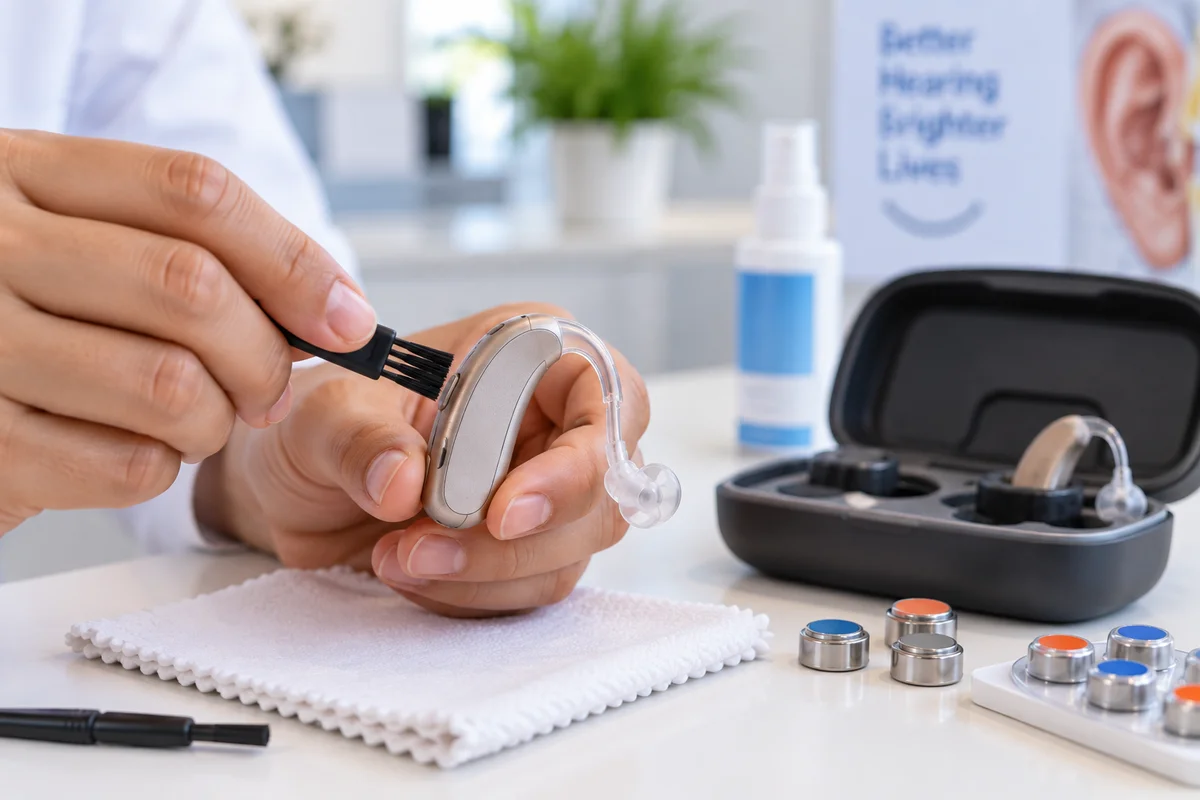
Battery hearing aids use small, disposable zinc-air batteries that come in standard sizes such as 10, 13, 312, and 675. These batteries are activated when you peel off a small sticker tab, exposing them to air, which triggers a chemical reaction that powers the device.
Advantages of Battery Hearing Aids
Battery-powered hearing aids are widely available and can be purchased at pharmacies, supermarkets, and hearing clinics, making replacements easy no matter where you are. They also tend to be more affordable upfront since the hearing aid itself often costs less than a rechargeable model. Another benefit is that batteries can be swapped instantly, so if one dies while you're out, you simply insert a new one and continue using your device without waiting for it to charge.
For people who travel frequently or live in areas with inconsistent electricity, disposable batteries offer peace of mind since there's no dependency on a charging dock or power outlet.
Disadvantages of Battery Hearing Aids
The most obvious downside is the ongoing cost of replacement batteries, which adds up over the life of the device. Battery hearing aids also require regular handling — opening the battery door, removing the tab, and inserting a new battery every few days to a couple of weeks depending on usage and device type. This can be challenging for people with arthritis, tremors, low vision, or reduced fine motor skills. Additionally, disposed batteries contribute to environmental waste, and forgetting to carry spares can leave you without hearing support at an inconvenient time.
How Rechargeable Hearing Aids Work
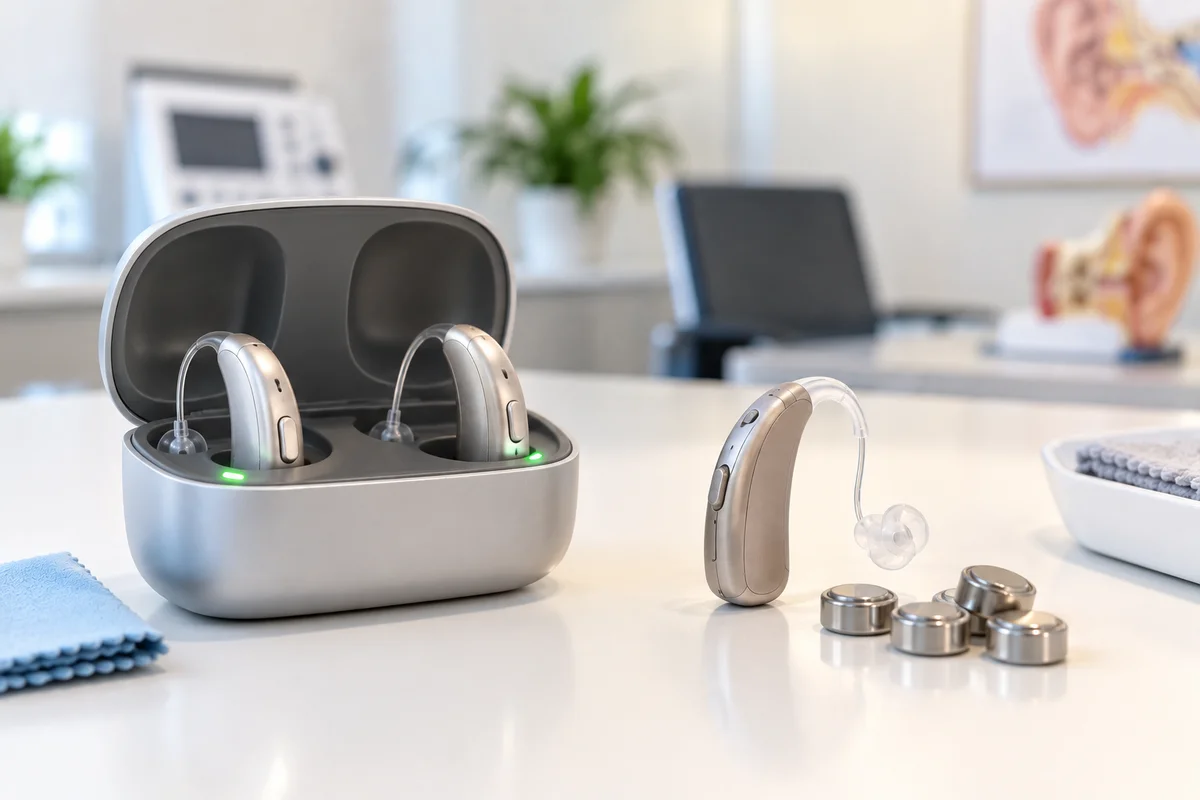
Rechargeable hearing aids use an internal lithium-ion battery that is charged using a docking station, similar to charging a smartphone or wireless earbuds. Most modern rechargeable hearing aids offer a full day of use, typically 18 to 24 hours, on a single charge, and many devices offer quick-charge features that provide several hours of use from just a few minutes of charging.
Advantages of Rechargeable Hearing Aids
The biggest appeal is convenience. There is no need to buy, carry, or replace tiny batteries, and no fumbling with small battery doors or tabs. Simply place your hearing aids in the charging case overnight, and they're ready to use the next morning. This makes rechargeable hearing aids especially popular among elderly users, people with limited dexterity, and those who prefer a low-maintenance routine.
Rechargeable hearing aids are also more environmentally friendly since they eliminate the need for disposable batteries. Many models are sealed, which offers better resistance to moisture, dust, and earwax, potentially increasing device durability and reducing repair visits.
Disadvantages of Rechargeable Hearing Aids
The initial cost of rechargeable hearing aids is generally higher than battery-operated models. The batteries are usually built into the device, meaning that after several years, when the battery no longer holds a full charge, the device may need professional servicing or battery replacement at a clinic rather than a simple do-it-yourself swap. Users must also remember to charge their devices nightly, and if you forget or travel without your charger, you could run out of power without an easy backup option.
Rechargeable vs Battery Hearing Aids: A Side-by-Side Comparison
When comparing convenience, rechargeable hearing aids clearly win since they require no manual battery replacement. In terms of upfront cost, battery-powered hearing aids are usually less expensive to purchase. However, when you consider long-term cost, rechargeable hearing aids often save money over time since you're not continuously buying batteries.
Ease of use favors rechargeable devices, particularly for users with vision or dexterity challenges, while battery hearing aids offer better flexibility for travel and emergencies since spare batteries are cheap and available almost everywhere. Environmentally, rechargeable hearing aids are the more sustainable choice, and in terms of durability, sealed rechargeable devices often withstand moisture and dust better than battery-compartment models.
Which One Is Right for You?
The right choice depends on several personal factors. If you value simplicity and want a hassle-free daily routine, rechargeable hearing aids are likely a better fit. If you travel to remote areas, worry about consistent access to electricity, or prefer having full control over swapping power sources instantly, battery hearing aids may suit your lifestyle better.
People with arthritis, tremors, or vision difficulties often find rechargeable hearing aids far easier to manage since there are no small batteries or tabs to handle. On the other hand, active users who are frequently outdoors for extended periods without access to charging might prefer the flexibility of carrying spare batteries.
Budget is another important consideration. If the upfront cost is a concern, battery-operated hearing aids may be the more accessible starting point. If long-term value and convenience matter more, investing in a rechargeable model may pay off over the years.
Expert Guidance at VR Speech and Hearing Clinic
Choosing between rechargeable and battery hearing aids isn't just about the device — it's about matching the technology to your hearing loss, lifestyle, and comfort level. At VR Speech and Hearing Clinic, our experienced audiologists conduct thorough hearing evaluations and walk you through the pros and cons of each option based on your specific needs.
We offer a wide range of hearing aid brands and models, including both rechargeable and battery-powered options, so you can try different devices and find the one that feels right. Our team also provides ongoing support, including battery guidance, device maintenance, troubleshooting, and regular hearing check-ups to ensure your hearing aids continue performing at their best.
Final Thoughts
Both rechargeable and battery hearing aids are reliable, effective solutions for hearing loss, and the "better" option truly depends on your individual needs. Rechargeable hearing aids offer unmatched convenience and are increasingly the preferred choice for most users, while battery-powered hearing aids continue to serve those who prioritize flexibility and lower upfront costs. Consulting with a qualified audiologist ensures you choose a hearing aid that not only fits your hearing profile but also seamlessly fits into your daily life.
FAQs
1. Are rechargeable hearing aids better than battery hearing aids?
Rechargeable hearing aids offer more convenience and long-term savings, while battery hearing aids offer flexibility and lower upfront cost. The better option depends on your lifestyle and needs.
2. How long do rechargeable hearing aid batteries last?
Most rechargeable hearing aids provide 18 to 24 hours of use on a full charge, and the internal battery typically lasts several years before needing replacement.
3. How often do you need to change batteries in battery-powered hearing aids?
Battery life varies by hearing aid type and usage, but disposable batteries typically need replacement every few days to a couple of weeks.
4. Are rechargeable hearing aids more expensive?
Yes, rechargeable hearing aids usually have a higher upfront cost, but they can be more cost-effective over time since you don't need to keep buying disposable batteries.
5. Can rechargeable hearing aid batteries be replaced?
In most cases, the internal battery is not user-replaceable and requires professional servicing at a hearing clinic once it no longer holds an adequate charge.
6. Which type of hearing aid is best for elderly users?
Rechargeable hearing aids are often recommended for elderly users since they eliminate the need to handle small batteries, which can be difficult for those with limited dexterity or vision.