Otitis Media: Symptoms, Causes, Types & Treatment Guide
What Is Otitis Media and Why Does It Matter?
Otitis media is inflammation or infection of the middle ear, the air-filled space behind the eardrum. It is one of the most common reasons children see a doctor, and pediatricians in the United States diagnose around 15 million cases every year. Adults can get it too. Most episodes clear up within a few days, but some become repeated or long-lasting and can affect hearing, sleep, speech, and school performance.
This guide explains the types of otitis media, the symptoms to watch for, the causes, how doctors diagnose it, the treatment options, and the steps that help prevent it.
How the Middle Ear Works
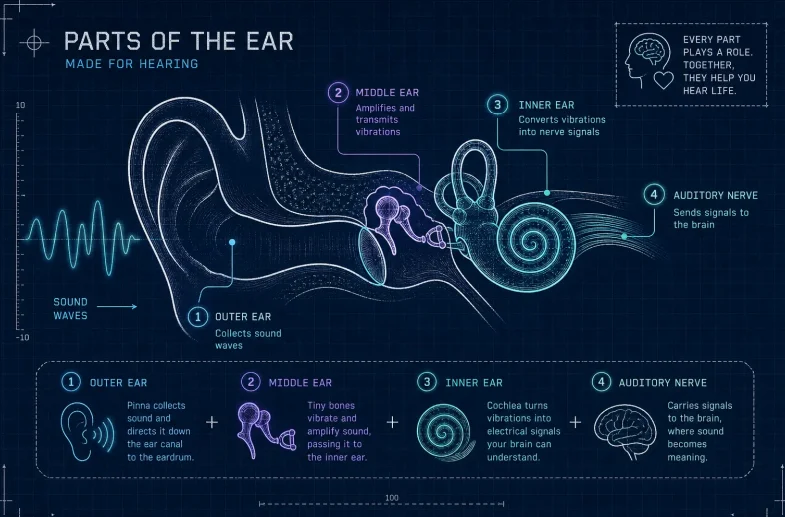
The middle ear holds three tiny bones that pass sound vibrations from the eardrum to the inner ear. A narrow passage called the eustachian tube connects this space to the back of the nose and throat, balancing air pressure and draining fluid. When a cold, allergy, or sinus problem swells the tube, fluid becomes trapped behind the eardrum. Viruses or bacteria can then multiply in that fluid, causing pain, pressure, and muffled hearing.
Children are affected far more often than adults because their eustachian tubes are shorter and flatter, and their immune systems are still developing. The condition peaks between 6 months and 2 years of age.
Types of Otitis Media
Doctors use several names depending on whether infection is active, whether fluid is present, and how long the problem lasts.
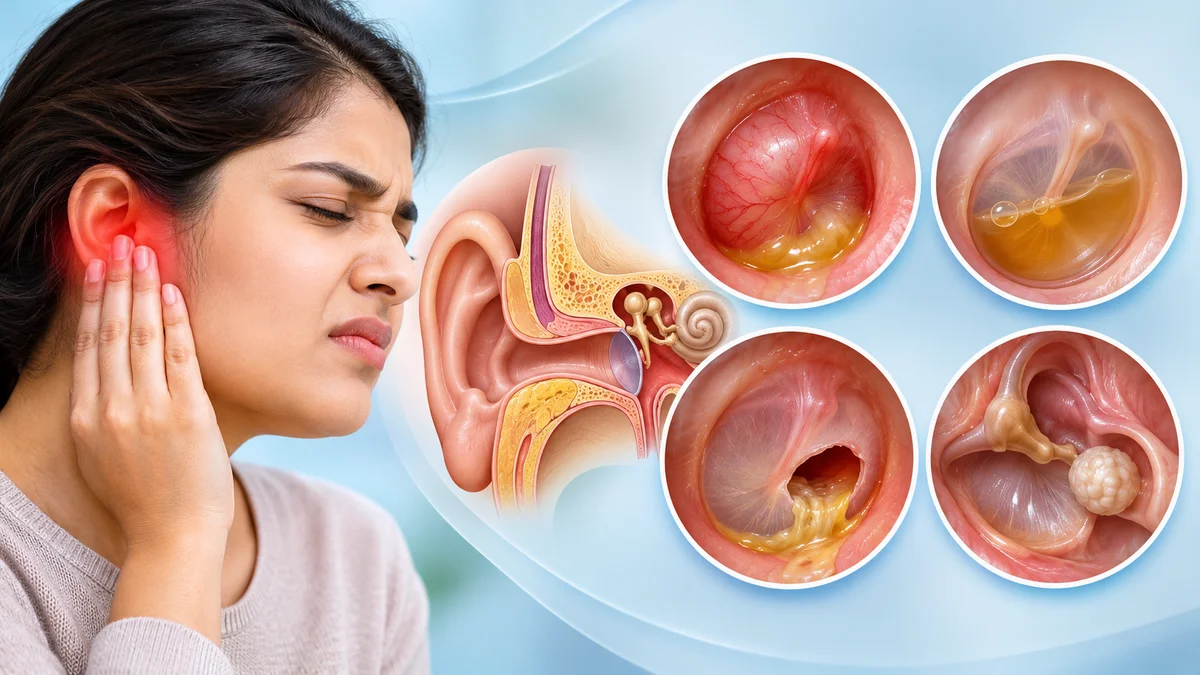
Acute otitis media (AOM): The classic ear infection. It starts suddenly, with infected fluid and a red, bulging eardrum, usually along with ear pain and sometimes fever.
Otitis media with effusion (OME): Often called glue ear or serous otitis media. Fluid sits behind the eardrum without signs of active infection. It may cause little pain but can dull hearing for weeks or months.
Chronic suppurative otitis media (CSOM): A hole in the eardrum that does not heal, with persistent or recurring pus draining from the ear. A perforation that stays open after about six weeks is considered chronic.
Cholesteatoma and adhesive otitis media: Long-standing eustachian tube problems can pull the eardrum inward until it sticks to structures in the middle ear, or allow a growth of skin cells and debris called a cholesteatoma to form. Both need specialist care.
Symptoms of Otitis Media
Symptoms depend on the type and the age of the person, and they often appear soon after a cold.
Babies and young children with an acute ear infection:
Tugging or rubbing the ear
Fussiness and crying more than usual
Trouble sleeping or feeding
Fever
Not reacting to sounds as usual
Adults and older children:
Ear pain and a feeling of fullness
Muffled or reduced hearing
Yellow, brown, or white drainage, which can mean the eardrum has torn
Otitis media with effusion: Often painless. Look for hearing difficulty, turning the volume up, delayed speech, poor concentration, irritability, or clumsiness and balance problems.
Chronic suppurative otitis media: Repeated cloudy or foul-smelling discharge and gradual hearing loss, often with little pain.

Causes and Risk Factors
Most ear infections begin after a cold or other upper respiratory infection. The most common bacteria involved are Streptococcus pneumoniae, Haemophilus influenzae, and Moraxella catarrhalis. The ear infection itself is not contagious, but the cold germs that trigger it are.
Common risk factors include:
Age between 6 months and 2 years
Daycare attendance and frequent contact with other children
A family history of ear infections
Secondhand smoke and poor air quality
Allergies and enlarged adenoids
Pacifier use and bottle-feeding while lying flat
Craniofacial differences such as cleft palate
A weakened immune system
Adults usually develop otitis media when the eustachian tube is blocked by allergies, a sinus infection, or smoking, or when immunity is low.
Possible Complications
Most episodes heal without lasting harm. Possible complications include temporary hearing loss, speech and language delay in young children, a torn eardrum, and cholesteatoma. In rare cases the infection spreads to the mastoid bone behind the ear (mastoiditis), the inner ear, the facial nerve, or the brain, causing problems such as dizziness, facial weakness, meningitis, or abscess. Prompt treatment greatly lowers these risks.
How Otitis Media Is Diagnosed
Doctors diagnose otitis media from symptoms and an ear exam with an otoscope, a lighted instrument that shows whether the eardrum is red, swollen, cloudy, or perforated. Tympanometry or acoustic reflectometry can confirm fluid behind the eardrum. When fluid is found, a hearing test is recommended, because fluid can cause conductive hearing loss. If a cholesteatoma or mastoiditis is suspected, an ear, nose, and throat (ENT) specialist may order a CT or MRI scan. In some cases, fluid is sampled to identify the germ.
Treatment Options for Otitis Media
Treatment depends on the type, the patient's age, and how severe the symptoms are.
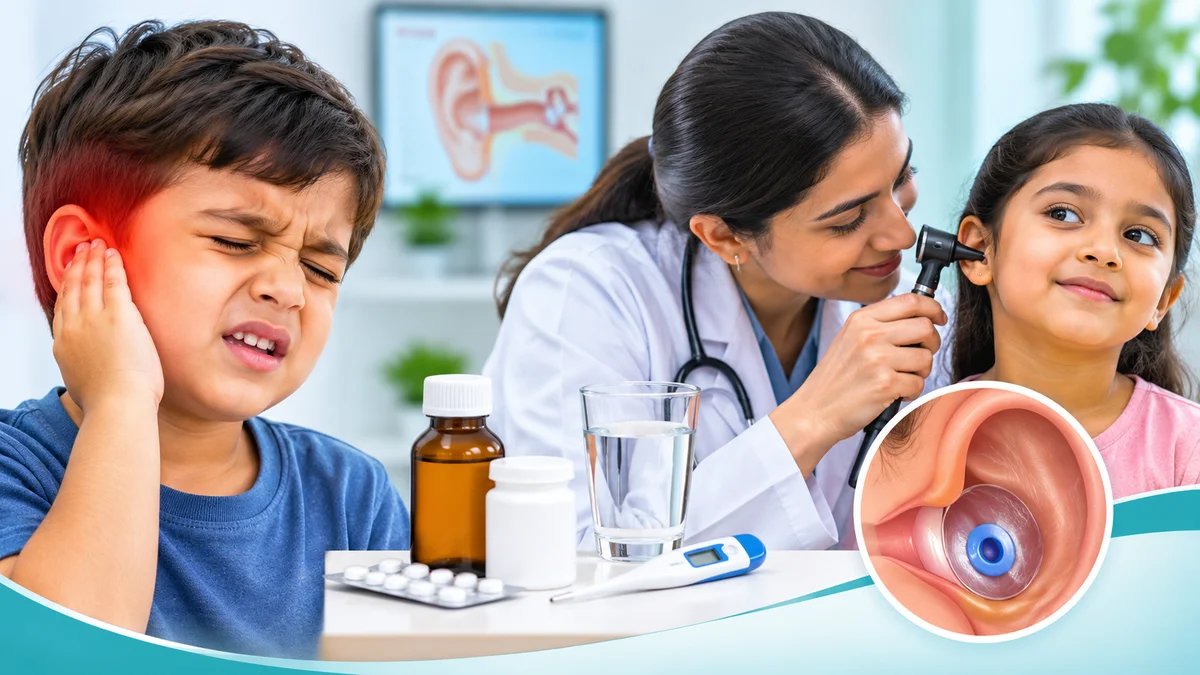
Acute otitis media. Many infections improve on their own in about three days, so doctors often use watchful waiting for 48 to 72 hours in suitable children while managing pain. Antibiotics are more likely to be advised for babies under 6 months, children with moderate to severe symptoms or a high fever (39°C or above), children aged 6 to 23 months with infection in both ears, and cases that do not improve within 48 to 72 hours. If antibiotics are prescribed, finish the course as directed.
Pain relief. Acetaminophen (paracetamol) or ibuprofen can ease pain and fever, but follow the product label and your doctor's advice on doses, especially for infants. Never give aspirin to children under 16, because of the risk of Reye's syndrome. Pain-relieving ear drops should be used only when the eardrum is intact and a doctor has recommended them.
Otitis media with effusion. Doctors usually monitor the ear and check hearing. Antibiotics, decongestants, mucolytics, and alternative therapies such as acupuncture or homeopathy do not help. A nasal balloon (autoinflation) may offer short-term hearing improvement. If fluid persists with hearing loss, ear tubes (tympanostomy), sometimes combined with adenoid removal, can be considered. Tubes usually stay in place for 12 to 18 months.
Chronic suppurative otitis media. Treatment focuses on keeping the ear dry, cleaning away discharge, and using antibiotic ear drops, often a fluoroquinolone such as ciprofloxacin. Severe cases may need oral antibiotics. Surgery to repair the eardrum or remove a cholesteatoma may be required. With proper treatment, about nine in ten patients become free of infection.
Home Care and Comfort Measures
While the infection settles, rest, plenty of fluids, and a warm compress held against the outer ear can help with comfort. Do not put cotton swabs, oils, or homemade remedies into the ear, particularly if there is discharge. Swimming is generally fine if the eardrum is intact and there is no drainage, but keep the ear dry if there is a perforation. Air travel is safe; chewing or swallowing during descent eases pressure, and babies can suck on a bottle.
When to See a Doctor Urgently
Seek medical care promptly if:
A baby younger than 3 months has a fever of 38°C (about 100.4°F) or higher
Pain is severe, or fever exceeds 40°C (104°F)
There is swelling, redness, or tenderness behind the ear
Blood or pus drains from the ear
Facial weakness, dizziness, stiff neck, confusion, or unusual drowsiness appears
Symptoms do not improve within two to three days, or fever returns after improving
How to Prevent Otitis Media
You cannot prevent every ear infection, but these steps lower the risk:
Keep vaccinations up to date, including pneumococcal and flu vaccines
Breastfeed if possible
Feed bottles with the baby's head raised
Avoid tobacco smoke around children
Wash hands often and avoid sharing cups and utensils
Manage allergies and treat colds early
Limit pacifier use in older babies
Treat any ear infection promptly
Otitis Media vs. Otitis Externa
Otitis media is not the same as otitis externa, often called swimmer's ear. Otitis externa affects the outer ear canal and usually hurts more when you pull the earlobe, while otitis media occurs behind the eardrum and often follows a cold. Treatments differ, so a proper exam matters.
Conclusion
Otitis media ranges from a short-lived infection to a long-term ear problem, but the outlook is very good with the right care. Learn the early signs, use antibiotics only when they are needed, protect hearing by following up on fluid that will not clear, and see a doctor quickly if any warning sign appears.
This article is for general information only and does not replace advice from a qualified healthcare professional.
Frequently Asked Questions (FAQs)
1. Can otitis media go away on its own?
Yes. Many cases of acute otitis media improve within about three days without antibiotics, which is why doctors sometimes wait and treat pain first. Children who are very young, very unwell, or not improving need medical review.
2. Is otitis media contagious?
The ear infection itself is not contagious, but the cold and flu viruses that often lead to it spread easily, especially in daycare and school settings.
3. What is the difference between acute otitis media and otitis media with effusion?
Acute otitis media is an active infection with pain, fever, and a red, bulging eardrum. Otitis media with effusion is fluid behind the eardrum without signs of infection, and it mainly causes muffled hearing.
4. How long does otitis media last?
An acute infection usually settles in a few days to a week. Fluid from otitis media with effusion can linger for weeks or months, and chronic suppurative otitis media can continue until it is treated.
5. Can adults get otitis media?
Yes. Adults develop it less often than children, usually when allergies, a sinus infection, smoking, or a weak immune system block the eustachian tube. Persistent one-sided symptoms in an adult should be checked by a doctor.
6. Can otitis media cause hearing loss?
Yes. Fluid, a perforated eardrum, or damage to the middle ear bones can reduce hearing. The loss is often temporary, but repeated or chronic disease can cause lasting problems, which is why a hearing test is advised when fluid persists.
7. When are ear tubes needed?
Ear tubes may be considered for frequent infections or for fluid that persists and affects hearing. An ENT specialist places them in a short procedure, and they usually stay for 12 to 18 months.