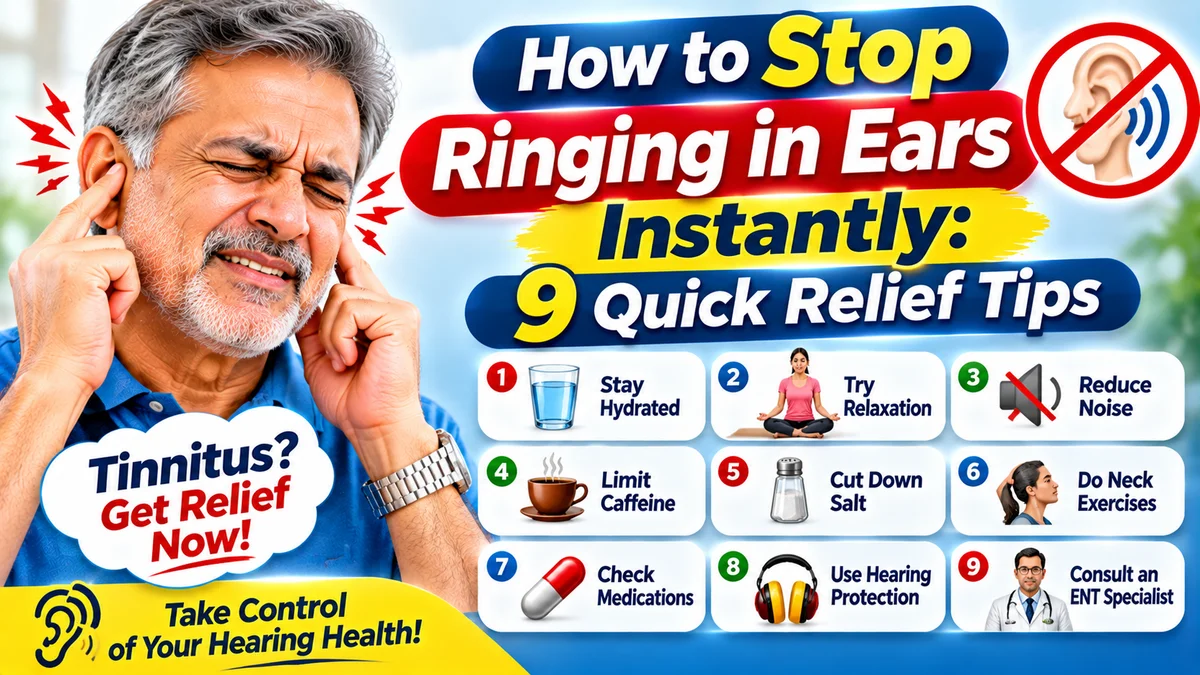
How to Stop Ringing in Ears Instantly: 9 Quick Relief Tips
That high-pitched buzz, hiss, or ring that appears out of nowhere can be unsettling, especially when you are trying to work, sleep, or simply enjoy a quiet moment. If you are searching for how to stop ringing in ears instantly, you are not alone. Millions of people experience this sound, known as tinnitus, at some point in their lives. The good news is that there are simple, safe steps you can take right now to calm the noise and feel more comfortable. In this guide, the audiology team at VR Speech and Hearing Clinic explains what causes ringing in the ears, which quick relief methods really work, and when it is time to book a professional hearing evaluation.
What Is Ringing in the Ears?
Ringing in the ears, medically called tinnitus, is the perception of sound when no external source is present. It is not a disease on its own. It is a symptom, and the sound can appear as ringing, buzzing, hissing, humming, clicking, or even roaring. It may be soft or loud, constant or occasional, and it can affect one ear or both.
Tinnitus often happens when the delicate hair cells in the inner ear, or the pathways that carry sound to the brain, are disturbed. The brain then fills the gap with a phantom sound. Understanding this helps explain why most relief techniques focus on calming the nervous system and reducing the contrast between the ringing and your surroundings.
Can You Really Stop Ringing in Ears Instantly?
Here is the honest answer. Temporary ringing, such as the kind you notice after a loud concert, often fades on its own within minutes to a couple of days. For ongoing tinnitus, there is no single switch that turns it off instantly for everyone. However, you can often reduce how loud the ringing feels, and how much it bothers you, within minutes using the methods below. Think of them as quick relief strategies rather than a permanent cure. If the ringing keeps returning, a hearing specialist can find the cause and build a long-term plan.
9 Quick Ways to Calm Ringing in the Ears Right Now
1. Move Away From the Noise and Rest Your Ears
If the ringing started after loud sound exposure, step away from the source immediately. Go to a quiet space and let your ears recover for several hours. Avoid headphones, earbuds, and noisy environments during this time. Your ears need rest to settle after being overstimulated.
2. Add Gentle Background Sound
Complete silence makes tinnitus more noticeable. Turn on a fan, soft music, rain sounds, ocean waves, or white noise. This technique, known as sound masking, gives the brain something else to focus on and can make the ringing fade into the background. Keep the volume low, just enough to blend with the ringing rather than cover it completely.
3. Slow Down Your Breathing
Stress and anxiety make tinnitus feel louder. Sit comfortably and breathe in slowly through your nose for four seconds, hold for four seconds, and breathe out for six seconds. Repeat for two to five minutes. Deep breathing activates your body’s relaxation response, lowers tension, and often reduces how intense the ringing feels.
4. Relax Your Jaw, Neck, and Shoulders
The muscles and joints around the jaw and neck are closely linked with the ears. Clenching your teeth, grinding them at night, or holding tension in your neck can trigger or worsen ringing. Gently massage the area in front of your ears, roll your shoulders back, and stretch your neck from side to side. Let your teeth part slightly and rest your tongue on the floor of your mouth.
5. Check for Earwax or Blocked Ears
Excess earwax can press against the eardrum and cause ringing, a full feeling, or muffled hearing. Do not use cotton swabs, hairpins, or ear candles, because these can push wax deeper or damage the ear. Instead, visit a qualified professional who can safely examine and clean your ears.
6. Help Your Ears Equalize Pressure
If your ears feel blocked after a cold, flight, or sinus congestion, swallowing, yawning, or chewing gum may help open the Eustachian tubes that balance pressure in the middle ear. Avoid blowing forcefully with your nose pinched, as too much pressure can harm the ear.
7. Cut Back on Common Triggers
Certain things can make ringing flare up, including caffeine, nicotine, alcohol, and very salty foods. Some medicines, such as high doses of aspirin and certain antibiotics, can also cause tinnitus. Never stop a prescribed medicine on your own. Speak to your doctor first, and note down any habit or medicine that seems linked to your symptoms so you can share it with your clinician.
8. Distract Your Mind
Your attention strongly affects how loud tinnitus seems. Read a book, listen to a podcast, go for a walk, do light stretching, or work on a hobby. Regular mindfulness and meditation can also train the brain to notice the ringing less over time.
9. Protect Your Sleep
Tinnitus often feels worse at night because the room is quiet. Place a sound machine or a low-volume fan near your bed, keep a regular bedtime, and avoid screens before sleeping. Good rest helps the nervous system settle and reduces how reactive you feel to the sound.
Common Mistakes to Avoid
When the ringing is distressing, it is tempting to try anything. A few well-meant habits can actually make things worse:
Turning up headphone volume to drown out the noise, which can damage hearing further
Sitting in total silence for long periods
Using cotton swabs, ear drops, or home syringing without professional advice
Buying unproven supplements or “miracle cures” advertised online
Ignoring the problem for months and hoping it disappears
Common Causes of Ringing in the Ears
Ringing in the ears can come from many sources. The most common include:
Exposure to loud noise from concerts, headphones, machinery, or traffic
Age-related hearing loss
Earwax buildup or ear infections
Jaw problems such as temporomandibular joint (TMJ) disorders
Stress, anxiety, and lack of sleep
Certain medicines
High blood pressure and other health conditions
Head or neck injuries
Many people with tinnitus also have some degree of hearing loss, even if they have not noticed it yet. That is why a hearing test is one of the most important first steps.
When Ringing in the Ears Needs Urgent Attention
Most tinnitus is not dangerous, but see a doctor or hearing specialist quickly if you notice any of the following:
Sudden hearing loss in one or both ears
Ringing in only one ear
A pulsing or heartbeat-like sound
Dizziness, spinning, or balance problems
Ear pain, discharge, or facial weakness
Ringing after a head injury
Sudden hearing loss is a medical emergency, and early treatment gives the best chance of recovery. Do not wait for it to go away on its own.
How VR Speech and Hearing Clinic Can Help
If ringing in your ears keeps returning, or it affects your sleep, focus, or mood, professional care can make a real difference. At VR Speech and Hearing Clinic, our team takes a complete approach:
Detailed hearing evaluation: tests to check your hearing levels and identify any hidden hearing loss
Tinnitus assessment: understanding the pitch, loudness, and how the sound affects your daily life
Sound therapy: personalised masking and sound enrichment plans
Hearing aids: for people with hearing loss, amplifying outside sounds often makes tinnitus less noticeable
Counselling and coping strategies: guidance to help your brain get used to the sound over time
Referral support: if a medical evaluation is needed, we guide you to the right specialist
Every person’s tinnitus is different, so your plan is built around your hearing profile, lifestyle, and goals.
Simple Habits to Prevent Ringing in the Ears
Follow the 60/60 rule: keep headphone volume at or below 60 percent, and listen for no more than 60 minutes at a time.
Use earplugs or earmuffs at concerts, in workshops, and around loud machinery.
Take regular listening breaks throughout the day.
Manage stress through exercise, sleep, and relaxation.
Get a hearing check every year, especially if you are over 50 or work in a noisy place.
Treat colds, sinus problems, and ear infections promptly.
Final Thoughts
There may be no magic switch that stops ringing in the ears instantly, but there are proven ways to bring quick relief and take back control. Moving away from loud sound, adding gentle background noise, slowing your breathing, relaxing your jaw, and protecting your sleep can all calm the ringing within minutes. If the sound lasts more than a few days, keeps coming back, or comes with hearing loss or dizziness, do not delay. A proper hearing evaluation can uncover the cause and open the door to lasting relief. Book a consultation with VR Speech and Hearing Clinic today and take the first step toward quieter, more comfortable days.
Frequently Asked Questions (FAQs)
1. Can ringing in the ears go away on its own?
Yes. Temporary ringing caused by loud noise, earwax, or a cold often settles within hours or days. If it lasts longer than a week or keeps returning, get your hearing checked.
2. How long does ringing in the ears last after a loud concert?
It usually fades within a few hours to two days. If it continues beyond that, or your hearing feels muffled, see an audiologist as soon as possible.
3. Does ringing in the ears mean I am losing my hearing?
Not always, but the two are often connected. Many people with tinnitus have mild hearing loss they have not noticed, so a hearing test is a sensible first step.
4. Can stress and anxiety cause ringing in the ears?
Yes. Stress does not usually create tinnitus on its own, but it can trigger it or make it seem much louder. Relaxation, exercise, and good sleep often help.
5. Is there a permanent cure for tinnitus?
There is no single cure for every type of tinnitus. However, treating the underlying cause, using sound therapy, wearing hearing aids when needed, and counselling can reduce the noise and its impact significantly.
6. When should I see a hearing specialist for ear ringing? Book an appointment if ringing lasts more than a few days, affects one ear only, pulses with your heartbeat, or comes with dizziness or hearing loss. Sudden hearing loss needs urgent care.