Hidden Risks of Hearing Loss
Hidden Risks of Hearing Loss You Should Not Ignore
Most people think of hearing loss as a simple inconvenience: turning up the television, asking someone to repeat themselves, or struggling to follow a conversation in a noisy restaurant. In reality, the hidden risks of hearing loss go far beyond missed words. Untreated hearing loss is linked to memory problems, falls, loneliness, depression, and strained relationships. Because it usually develops slowly, many people do not realize how much they are missing until the effects spill into other parts of life.
At VR Speech and Hearing Clinic, we see how early attention to hearing can change outcomes. This guide explains the lesser-known health risks of hearing loss, the warning signs to watch for, and the steps you can take today to protect your hearing and your overall wellbeing.
Why Hearing Loss Is More Than an Ear Problem
Hearing happens in the brain as much as in the ears. Your ears collect sound, but your brain turns it into speech, music, and meaningful warnings. When hearing declines, the brain receives weaker and less clear signals. It has to work harder to fill in the gaps, using mental energy that would normally go toward memory, attention, and thinking.
The World Health Organization estimates that more than 1.5 billion people worldwide live with some degree of hearing loss, and that number is expected to climb sharply over the coming decades. Yet people often wait years before seeking help. That delay gives the hidden risks of hearing loss plenty of time to build.
Hearing Loss and Dementia Risk
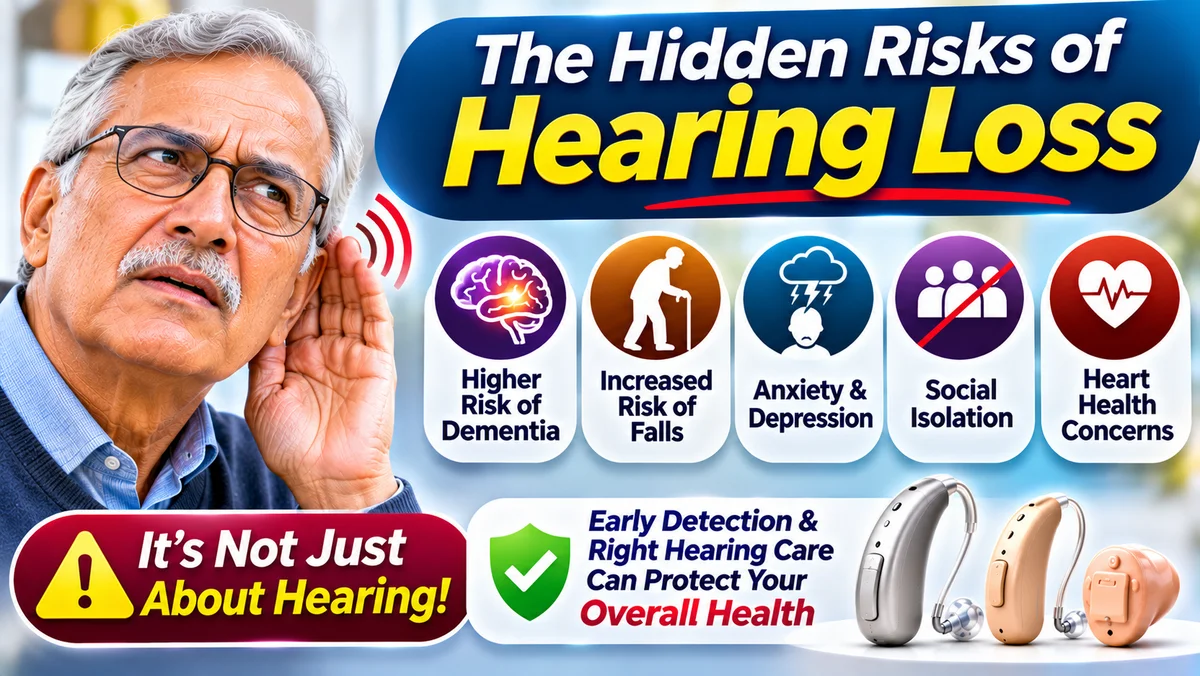
One of the most widely discussed findings in hearing health is the connection between untreated hearing loss and cognitive decline. Research from Johns Hopkins found that adults with mild hearing loss had roughly double the risk of developing dementia compared with people with normal hearing. Moderate loss was linked to about triple the risk, and severe loss to around five times the risk. The Lancet Commission on dementia prevention has also named hearing loss as one of the largest modifiable risk factors for dementia.
Experts point to several possible reasons. The brain may lose volume faster when it receives less sound stimulation, the constant effort of listening may drain mental resources, and social withdrawal may reduce brain-boosting engagement. Encouragingly, a major clinical trial known as ACHIEVE suggested that hearing aids slowed cognitive decline in older adults who were at higher risk. This does not mean hearing aids prevent dementia, but it shows that treating hearing loss may support long-term brain health.
Higher Risk of Falls and Injuries
Balance depends on the inner ear, vision, and awareness of your surroundings. Hearing gives you constant information about the space around you, such as footsteps, traffic, and echoes. Studies have found that even mild hearing loss is associated with a significantly higher chance of falling. People with reduced hearing may also have to divide their attention between listening and walking, which makes tripping more likely.
For older adults, a fall can lead to fractures, hospital stays, and loss of independence. Treating hearing loss and checking balance together can be an important part of fall prevention.
Social Isolation and Loneliness
Conversation is tiring when you cannot hear well. Group settings become confusing, phone calls become stressful, and family gatherings can feel exhausting. Slowly, many people begin avoiding situations that once brought them joy. They decline invitations, stay home more often, and take part less in conversations.
This withdrawal is often mistaken for shyness, disinterest, or simply getting older. In truth, it is frequently a coping response to hearing difficulty. Long-term isolation is itself a serious health concern, linked to heart problems, poorer sleep, and faster mental decline.
Depression, Anxiety, and Emotional Strain
Feeling left out of conversations takes an emotional toll. Adults with untreated hearing loss report higher rates of depression, anxiety, irritability, and low self-esteem. Constantly worrying about mishearing, answering incorrectly, or being judged creates ongoing stress. Listening fatigue, the mental exhaustion that comes from straining to understand speech, can leave people drained by the end of the day.
If you or a loved one has noticed changes in mood alongside changes in hearing, it is worth looking at both. Addressing hearing difficulty often improves confidence and emotional wellbeing.
Strained Relationships and Career Challenges
Hearing loss affects the people around you, too. Partners may feel ignored when requests are missed. Children and grandchildren may grow frustrated by repeating themselves. Misunderstandings can lead to arguments that have nothing to do with the real issue.
At work, missed instructions, difficulty in meetings, and trouble on phone or video calls can hurt performance and confidence. Studies have linked untreated hearing loss to reduced earnings and a higher risk of unemployment. Early support helps people stay productive and engaged in their careers.
Missed Safety Warnings
Smoke alarms, car horns, sirens, doorbells, and a loved one calling for help are all sounds that protect you. When hearing declines, these cues can be missed or heard too late. Crossing the road, driving, and cooking all become riskier. People with hearing loss may also face more hospital visits, partly because of communication problems with medical staff and misunderstandings about treatment instructions.
Hearing Loss Can Signal Other Health Conditions
Healthy hearing relies on good blood flow to the delicate structures of the inner ear. Conditions such as diabetes, high blood pressure, and cardiovascular disease have all been associated with hearing loss. A hearing evaluation can therefore offer useful clues about your general health, and it may prompt a conversation with your doctor about conditions that need attention.
Early Signs of Hearing Loss You Should Not Ignore
Hearing loss rarely announces itself. Watch for these common signals:
Asking people to repeat themselves often
Feeling that others mumble or speak too softly
Struggling to follow conversations in noisy places
Turning the television or phone volume higher than others prefer
Difficulty understanding voices on the phone
Ringing, buzzing, or hissing in the ears, known as tinnitus
Feeling unusually tired after social events
Avoiding group gatherings or restaurants
Family members noticing a problem before you do
Sudden hearing loss in one or both ears, with or without dizziness, needs urgent medical attention. Do not wait to see if it improves on its own.
Why Many People Wait Too Long
Research suggests people often wait seven to ten years between noticing hearing difficulty and seeking help. Common reasons include the slow, gradual nature of hearing loss, the belief that it is a normal part of aging, embarrassment about wearing hearing aids, and the feeling that the problem is not bad enough yet.
Today's hearing aids are small, discreet, and far more advanced than older models, with better speech clarity in noise and comfortable all-day wear. The longer hearing loss goes untreated, the harder it can be for the brain to readjust to sound, so early action matters.
How a Professional Hearing Evaluation Helps
A hearing test is quick, painless, and non-invasive. An audiologist checks how well you hear different pitches and volumes, how clearly you understand speech, and the condition of your ear canal and middle ear. The results show whether hearing loss is present, what type it is, and how significant it is.
Depending on the findings, recommendations may include hearing aids, ear wax removal, a medical referral, hearing protection, communication strategies, or auditory training. Adults should consider regular hearing checks every few years after the age of 50, or sooner if changes are noticed. Children are not exempt either. Untreated hearing loss in young children can delay speech, language, and learning, so any concern about a child's hearing or speech development deserves a prompt evaluation.
Simple Ways to Protect Your Hearing
Not all hearing loss can be prevented, but daily habits make a real difference:
Keep headphone volume moderate and follow the 60/60 rule: no more than 60 percent volume for 60 minutes at a time
Wear earplugs or earmuffs at concerts, in noisy workplaces, and when using power tools
Give your ears quiet breaks after loud exposure
Never insert cotton buds or sharp objects into your ears
Manage blood pressure, diabetes, and other health conditions
Treat ear infections promptly rather than waiting
Schedule regular hearing checks, even when you feel fine
Take the First Step Toward Better Hearing
The hidden risks of hearing loss are real, but they are not inevitable. Early detection and timely treatment can protect your communication, safety, relationships, and brain health. If you or someone you love is showing signs of hearing difficulty, do not wait for it to get worse. Book a hearing evaluation with VR Speech and Hearing Clinic today and take the first step toward clearer conversations and a healthier future.
Frequently Asked Questions
1. Can untreated hearing loss really affect my brain?
Yes. When hearing declines, the brain receives less sound input and must work harder to understand speech. Research links untreated hearing loss with faster cognitive decline and a higher risk of dementia. Early treatment, including hearing aids when recommended, may help support brain health.
2. At what age should I get my hearing tested?
There is no single age. Adults should consider a baseline test by 50, and sooner if they notice signs like asking people to repeat themselves or ringing in the ears. Children should be tested whenever there are concerns about hearing, speech, or learning.
3. Is hearing loss permanent?
It depends on the cause. Some conditions, such as ear wax blockage or fluid from an infection, are temporary and treatable. Hearing loss caused by damage to the inner ear is usually permanent, but it can be managed very effectively with hearing aids and other support.
4. Do hearing aids really reduce the risks of hearing loss?
Hearing aids improve access to sound, which makes conversation easier and helps people stay socially active and mentally engaged. Studies suggest they may also help slow cognitive decline in higher-risk older adults. An audiologist can recommend the right type and fit for your needs.
5. What causes hearing loss besides aging?
Loud noise exposure, ear infections, certain medications, head injuries, genetics, and health conditions such as diabetes and high blood pressure can all contribute. Using headphones at high volume is a growing cause among younger people.
6. How can I tell if a parent or loved one has hearing loss?
Look for frequent requests to repeat things, a loud television, trouble on the phone, withdrawing from conversations, or confusion in noisy places. If you notice these signs, gently encourage them to book a hearing evaluation.