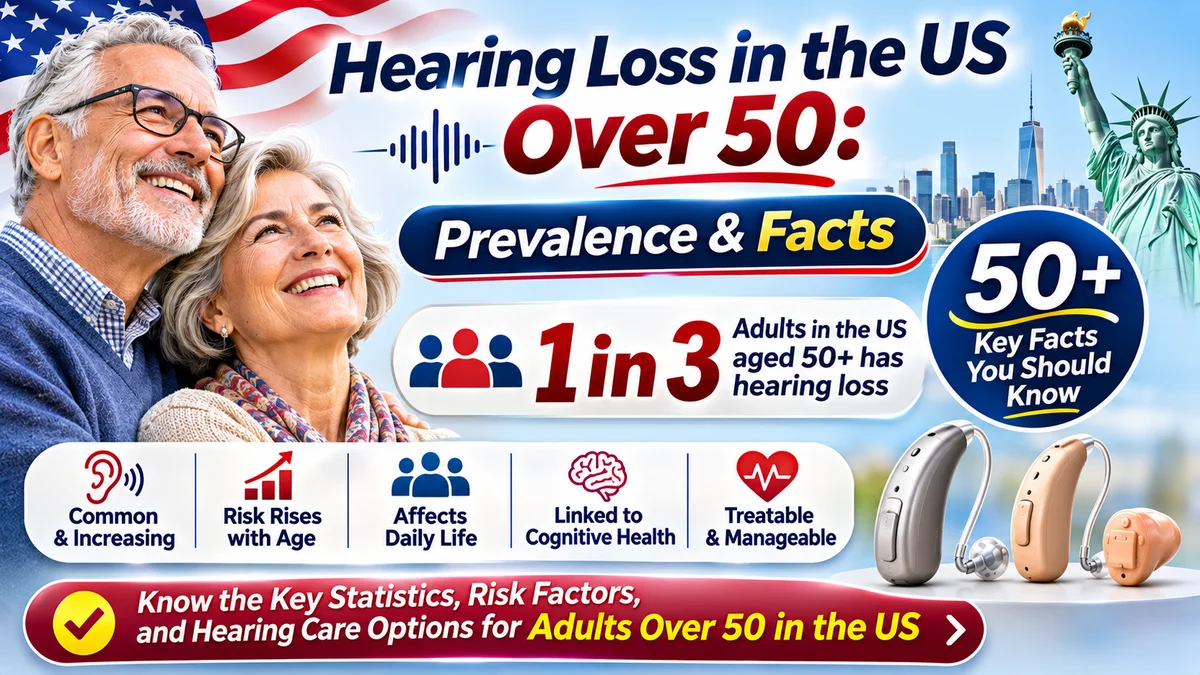
Hearing Loss in the US Over 50: Prevalence & Facts
Hearing Loss Prevalence in the United States Over 50: What the Numbers Tell Us
Hearing loss rarely announces itself. It starts with a missed word in a noisy restaurant, a TV volume that creeps higher, or a feeling that everyone around you has started to mumble. For millions of Americans over 50, these small moments are the first signs of a common and treatable health condition.
At VR Speech and Hearing Clinic, we talk with adults every day who waited years before getting their hearing checked. This guide explains how common hearing loss is after 50, how it changes with age, and why acting early can protect your communication, independence, and overall health.
How Common Is Hearing Loss in the United States?
More than 50 million Americans have some degree of hearing loss, roughly 1 in 7 people in the country. Hearing loss is also described as the third most common chronic physical condition in the United States, ahead of diabetes and cancer. Despite that, it gets far less attention than other chronic conditions. hearinglosselehear
Age is the strongest predictor. Most people with hearing loss are middle-aged or older, which is why the over-50 group matters so much in public health.
Hearing Loss Prevalence by Age After 50
Prevalence climbs steadily with each decade, and the rate of hearing loss roughly doubles with every 10-year increase in age. Exact percentages differ depending on whether a study counts any measurable loss or only “disabling” loss that interferes with daily life. Here is a general picture. oliveunion
Ages 50 to 64. About 8.5 percent of adults aged 55 to 64 have disabling hearing loss. Older NIDCD survey data counted self-reported hearing difficulty and found about 18 percent of adults aged 45 to 64 reported a hearing impairment. The gap between those two numbers shows how many people have mild loss that has not yet become a serious problem. theglobalstatisticsunt
Ages 65 to 74. Estimates range from roughly 22 to 25 percent for disabling loss to about one in three when milder loss is included. Either way, a large share of adults in their late 60s and early 70s are affected. theglobalstatisticsoliveunion
Ages 75 and older. Nearly half of people over 75 have difficulty hearing. By this stage, hearing loss is the norm rather than the exception. oliveunion
Why Does Hearing Loss Increase After 50?
Several factors work together over a lifetime.
Age-related changes (presbycusis). The tiny hair cells in the inner ear do not regenerate. Over decades they wear down, and high-pitched sounds fade first. Consonants like s, f, and th become harder to catch, so speech sounds muffled even when it is loud enough.
Noise exposure. Years of loud work environments, concerts, power tools, hunting, or headphones at high volume add up. Noise damage often shows up in your 50s and 60s, long after the exposure.
Medical conditions. Diabetes, high blood pressure, and cardiovascular disease can reduce blood flow to the inner ear. Chronic ear infections and some medications can also contribute.
Genetics and lifestyle. Family history, smoking, and general health all influence when and how quickly hearing changes.
Not all the news is discouraging. NIH researchers found that hearing loss among adults aged 20 to 69 dropped from 16 percent to 14 percent between the early 2000s and 2011–2012. Possible reasons include fewer manufacturing jobs, wider use of hearing protection, and less smoking. Because the older population keeps growing, the total number of people needing hearing care is still rising. nihnih
The Treatment Gap: Most People Never Get Help
Hearing loss is common, yet it is badly undertreated. About 28.8 million U.S. adults could benefit from hearing aids, but fewer than 1 in 5 of them use them. hearingloss
People wait for many reasons:
They assume hearing loss is a normal part of aging that cannot be helped.
They believe their hearing is “not that bad.”
They worry about stigma, cost, or how hearing aids look.
Hearing declines so gradually that the brain adapts without them noticing.
Waiting has a cost. The average age of first-time hearing aid wearers is reported to be around 70, which means many people live with untreated loss for years. During that time, the brain gets less practice processing sound, and adjusting to amplification can take longer. oliveunion
Hearing Loss Affects More Than Your Ears
Untreated hearing loss reaches into almost every part of life for adults over 50.
Communication and relationships. Straining to follow conversation is exhausting. Many people withdraw from social events, avoid phone calls, or let others speak for them. Family members often feel the frustration too.
Work and income. Many adults over 50 are still working. Only 57.1 percent of adults with hearing loss are employed, compared with 73.3 percent of hearing adults. hearingloss
Safety. Missing a car horn, a smoke alarm, or a spoken warning raises everyday risks.
Emotional wellbeing. Hearing difficulty is closely linked with isolation, anxiety, and low mood.
Brain health. Research increasingly connects hearing and cognition. A 2023 study in The Lancet found that hearing aid use was linked to a 48 percent reduction in cognitive decline over three years in at-risk older adults. Hearing aids are not a cure for dementia, but keeping the brain engaged with sound is a smart protective step. elehear
Early Signs You Should Not Ignore
Consider a hearing evaluation if you notice any of the following:
Asking people to repeat themselves often
Trouble following conversation in restaurants or group settings
Turning the TV or radio up louder than others prefer
Feeling that people mumble
Difficulty understanding women’s and children’s voices
Ringing, buzzing, or hissing in the ears (tinnitus)
Feeling tired after long conversations
Avoiding social situations you once enjoyed
Any one of these is reason enough to book a test. You do not need to wait for a major problem.
What to Do If You Are Over 50
Baseline hearing tests are as sensible as routine vision and blood pressure checks. Experts commonly recommend regular screening for adults over 50, and sooner if you have noise exposure, a family history, or symptoms.
A comprehensive hearing evaluation measures how well you hear different pitches and how clearly you understand speech. It also looks for medical causes that may need attention. If hearing loss is found, your audiologist can walk you through options, from hearing aids to assistive listening devices and communication strategies. Over-the-counter hearing aids are now available for some adults with mild to moderate loss, but a professional evaluation helps you choose the right solution and rules out other conditions.
How VR Speech and Hearing Clinic Can Help
Our clinic helps adults over 50 understand their hearing, get answers, and find solutions that fit their lifestyle. We focus on clear explanations and personalized care. You will not be rushed or pushed toward anything you do not need. Whether you suspect a problem or just want a baseline, an appointment is a simple first step toward clearer conversations and a more connected life.
Final Thoughts
Hearing loss is one of the most common health conditions affecting Americans over 50, and its prevalence rises sharply with age. Yet it remains one of the most undertreated. The numbers show you are far from alone, and they show that early action makes a difference. If you or someone you love has noticed changes in hearing, schedule an evaluation with VR Speech and Hearing Clinic today.
Frequently Asked Questions
What percentage of Americans over 50 have hearing loss?
It depends on age and how loss is defined. Roughly 1 in 12 adults in their late 50s and early 60s has disabling loss, about 1 in 4 to 1 in 3 people in their late 60s and early 70s, and nearly half of those over 75.
Is hearing loss a normal part of aging?
Age-related hearing loss is very common, but “common” does not mean you have to live with it. Most cases can be managed with hearing aids, assistive devices, and communication strategies.
At what age should I get my hearing tested?
Many experts suggest a baseline test around age 50, or earlier if you have noise exposure, a family history, tinnitus, or noticeable changes. After that, repeat testing every few years or as advised.
Can hearing loss be prevented?
Age-related changes cannot be fully prevented, but you can slow damage by wearing hearing protection around loud noise, keeping headphone volume moderate, managing blood pressure and diabetes, and not smoking.
Do hearing aids really help?
Yes, for most people with hearing loss. Modern devices improve speech clarity, reduce listening effort, and support social engagement. Success depends on proper fitting and follow-up care.
What are the first signs of hearing loss?
Common early signs include asking people to repeat themselves, difficulty in noisy places, a rising TV volume, and tinnitus.