Hearing Aids in Aurangabad: Price, Types, Govt Schemes & Buying Guide
If you are searching for a kaan ki machine (कानाची मशीन) or hearing aid in Aurangabad, now officially Chhatrapati Sambhajinagar, you probably have a few practical questions. Do I really need one? What will it cost? Which type is right? Can the government help pay? And how do I avoid wasting money on the wrong device? This guide answers each of them in plain language, so you can decide with confidence whether you are buying from us or anywhere else.

The short answer
Start with a hearing test, not a device. The right hearing aid depends on your audiogram (the test result), not on a brand name or a discount.
Prices in Aurangabad range widely. Entry-level digital aids start at roughly ₹10,000–₹25,000 per ear, mid-range aids sit around ₹25,000–₹1,50,000, and premium models go beyond ₹1,50,000 per ear. Always ask whether a quote is per ear or for a pair.
Hearing aids carry no GST in India. The Government of India confirmed in Parliament in July 2026 that hearing aids remain fully exempt.
Government help exists. Under the ADIP scheme, eligible families can receive a hearing aid free or at half cost (details below).
Fitting matters as much as the device. Look for a qualified audiologist, real-ear measurement, a trial period and follow-up visits.
Do you need a hearing aid? Signs to watch for
Hearing loss usually creeps in slowly, so family members often notice it before the person affected does. You may benefit from a hearing check if you:
Often ask people to repeat themselves, or feel people mumble
Struggle to follow conversations in groups, markets, restaurants or on the phone
Turn the TV or phone volume up higher than others prefer
Feel tired after long conversations because of the effort of listening
Hear ringing, buzzing or whistling in the ears (tinnitus)
Miss everyday sounds such as the doorbell, a pressure cooker whistle or birdsong
In children, watch for delayed speech, not responding when called from behind, or a sudden drop in school performance. Children should be tested early; do not wait for them to “grow out of it”.
When to see a doctor urgently: sudden hearing loss in one or both ears (over hours or a few days), hearing loss with severe dizziness, ear discharge, or ear pain. These need prompt medical assessment, ideally by an ENT specialist, because some causes are treatable if caught early.
What happens in a hearing test
A proper hearing evaluation is painless and usually takes 30 to 60 minutes. It typically includes:
Case history – when you first noticed the problem, noise exposure, family history, medicines, and where you struggle most.
Otoscopy – a look inside the ear canal to check for wax, infection or blockage. Wax alone can cause noticeable hearing loss.
Pure-tone audiometry – you listen for beeps at different pitches through headphones (and sometimes a small bone vibrator) to map the softest sounds you can hear.
Speech audiometry – checks how clearly you understand words, not just whether you detect sound.
Tympanometry – measures how well the eardrum and middle ear are moving.
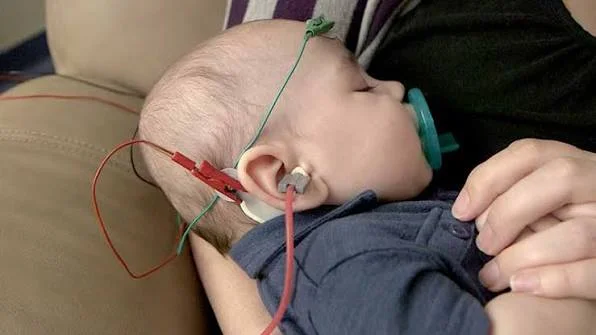
For babies, young children and people who cannot respond reliably, specialised tests such as OAE and BERA are used. You leave with an audiogram and a clear explanation of what it means. If your ears need medical attention rather than a device, an honest clinic will tell you so and refer you to an ENT.
Degrees of hearing loss and what usually helps
Audiologists describe hearing loss by how much louder sounds must be before you hear them, measured in decibels (dB HL). The grades below follow the World Health Organization’s 2021 classification, based on the average of your better ear.
Grade | Average level (dB HL) | What you may notice | Typical options |
|---|---|---|---|
Mild | 20 to under 35 | Difficulty with soft speech and in noise | Entry or mid-level RIC, ITE or CIC aids |
Moderate | 35 to under 50 | Conversation is hard without raising your voice | RIC or BTE aids |
Moderately severe | 50 to under 65 | Normal conversation is largely missed | BTE or RIC with a stronger receiver |
Severe | 65 to under 80 | Only very loud speech is heard | Power BTE aids; assessment for other options |
Profound | 80 and above | Little or no speech heard unaided | Power BTE; cochlear implant assessment |
These are general guides. Your word-understanding scores, ear shape, hand dexterity, lifestyle and budget all affect the final recommendation.
Types of hearing aids available in Aurangabad
Type | How it sits | Best suited for | Things to know |
|---|---|---|---|
BTE (Behind-the-Ear) | Behind the ear, with a tube and ear mould | Mild to profound loss; children and seniors | Durable, powerful, easy to handle; most visible |
RIC / RITE (Receiver-in-Canal) | Slim body behind the ear, speaker in the canal | Mild to severe loss; most working adults | Discreet and natural sound; very popular choice |
ITE (In-the-Ear) | Custom shell filling the outer ear | Mild to severe loss | Easy to insert, longer battery life, larger controls |
ITC / CIC (In/Completely-in-Canal) | Custom, small, mostly inside the canal | Mild to moderate loss | Discreet; small size limits features and battery |
IIC (Invisible-in-Canal) | Deep in the canal | Mild loss with suitable ear canals | Almost invisible; not suitable for every ear |
CROS / BiCROS | Systems for one-sided deafness | Hearing loss or deafness in only one ear | Routes sound from the poorer ear to the better one |
Pocket / body-worn | Wired unit carried in a pocket | Very low budgets, simple use | Basic amplification; limited fine-tuning |
A note on “invisible” aids: smaller is not automatically better. Tiny aids can be harder to handle for older users and cannot always fit the stronger components needed for greater hearing loss. Comfort and clarity should come before appearance.
Hearing aid price in Aurangabad: what to expect in 2026
Prices vary by brand, technology level, style and features. The table below gives indicative market ranges per ear, compiled from published Indian price guides and clinic price lists. Your exact price depends on the model, so always ask for a written quote that states the model, whether it is per ear or a pair, and what is included.
Budget (per ear) | What you typically get | Suits |
|---|---|---|
Roughly ₹10,000–₹25,000 | Basic digital aids with essential amplification and limited automation | Mild to moderate loss, mostly quiet settings |
Roughly ₹25,000–₹60,000 | Entry-to-mid digital aids with better noise reduction and directional microphones; some rechargeable options | Everyday conversation, TV, family settings |
Roughly ₹60,000–₹1,50,000 | Advanced aids with Bluetooth, rechargeable batteries, phone apps and better speech-in-noise performance | Active users, frequent meetings and social outings |
₹1,50,000 and above | Premium and AI-driven aids, discreet custom styles, the most advanced sound processing | Demanding listening situations, users who want maximum automation |
Very low-cost devices below about ₹10,000 are generally basic and may offer little fine-tuning. A device that is not matched to your hearing test can leave you worse off than a modest aid that is fitted properly.
What makes hearing aids cost more
Technology level – more channels, faster processing, advanced noise handling and automatic adjustment raise the price.
Style – custom-made small aids need ear impressions and cost more than standard BTE models.
Features – Bluetooth streaming, rechargeable batteries, phone apps, tinnitus support and fall detection add cost.
Brand and warranty – established brands with strong India service networks and longer warranties are priced higher, but repairs are easier.
Service included – fittings, follow-ups and programming are part of the value, not an optional extra.
Costs to plan for beyond the device
Custom ear moulds, where needed (often a few thousand rupees)
Batteries (for non-rechargeable models) or a charger
Cleaning supplies, wax filters and domes
Servicing and repairs after the warranty ends
Good news: no GST, and EMI may help
Hearing aids and their parts are exempt from GST in India, as the Ministry of Finance reiterated in the Rajya Sabha on 28 July 2026. If a bill adds GST on a hearing aid, ask the seller to explain. VR Speech & Hearing Clinic also offers EMI-based payment options; ask about current plans when you book.
“Best price” does not mean “lowest price”
A lower sticker price can hide missing services. When comparing quotes, check whether each includes a full hearing test, programming, real-ear verification, a trial period, follow-up visits, warranty length and who will repair the device locally. A fairly priced aid that you wear every day is a far better investment than a cheaper one left in a drawer.
Which technology level do you actually need?
More expensive does not always mean better for you. A person who mainly talks with family at home may do very well with a mid-range aid. Someone who attends meetings, eats out often or takes many calls may gain more from advanced noise handling and Bluetooth. Ask your audiologist to demonstrate the difference using your own listening situations before you decide.
Rechargeable aids remove the need to handle tiny batteries, which helps many seniors and people with limited finger movement. Battery models are usually less expensive and the batteries are easy to find locally, but they need regular changes.
Popular hearing aid brands
Well-known brands sold in India include Signia, Phonak, ReSound, Widex, Oticon, Starkey, Unitron, Rexton and Hansaton. Each has strengths, and the “best” brand is the one that suits your hearing loss, ear and budget and that your audiologist can fit and service well. A multi-brand clinic can compare options with you rather than steering you toward a single product.
Government help: ADIP scheme and free hearing aids
Many families do not know that government support exists. The main route is the ADIP scheme (Assistance to Persons with Disabilities for Purchase/Fitting of Aids/Appliances) run by the Department of Empowerment of Persons with Disabilities. According to the department, it was last revised on 26 September 2024.
Key points from the official scheme details:
You need a UDID card or enrolment number showing at least 40% disability, plus Aadhaar.
Family income up to ₹22,500 per month qualifies for 100% assistance; income of ₹22,501 to ₹30,000 qualifies for 50%.
Assistance covers aids costing up to ₹15,000 in full; for aids costing ₹15,001 to ₹30,000, assistance is up to ₹15,000. The department states aids are provided once in three years.
Aids are supplied through implementing agencies such as ALIMCO, national institutes, NGOs, district disability rehabilitation centres and approved hospitals.
How to start:
Get your hearing tested and documented by a qualified audiologist.
Apply for the disability certificate and UDID card through the UDID portal (swavlambancard.gov.in).
Collect your income proof and Aadhaar.
Contact the District Disability Rehabilitation Centre or District Social Welfare Office, or watch for ADIP distribution camps in your area.
Devices supplied through such schemes are typically basic models. Families who want more advanced features may choose to pay privately. Rules and income limits can change, so confirm current details with the official source before applying. Our guides on government hearing aid subsidies, ADIP and NHPM and free hearing aid camps in Maharashtra explain more. The clinic can also guide eligible patients through the documentation.
How to choose a hearing aid clinic: a practical checklist
In India, hearing aids are sometimes sold with little or no testing. Before you buy anywhere, ask:
Who will test and fit my hearing aid? Look for a qualified audiologist (BASLP or MASLP) registered with the Rehabilitation Council of India (RCI), and ask to see the registration number.
Will I get a full hearing test and a printed audiogram? A sale without testing is a red flag.
Is real-ear measurement used? This verifies that the aid delivers the right amount of sound inside your own ear, instead of relying on generic settings.
Can I try before I commit? Ask for the trial period and refund or exchange terms in writing.
What is included in the price? Fitting, programming, follow-ups, warranty, and cleaning visits.
Is the quote per ear or per pair? And which exact model and technology level?
Where will repairs happen? Local servicing saves weeks of waiting.
Are several brands available? Choice makes honest comparison possible.
Our separate guide on how to choose a hearing aid clinic in India goes deeper.
What to expect when you get a hearing aid
1. Consultation and test. Your audiologist reviews your audiogram, explains your options and discusses your lifestyle and budget.
2. Trial and fitting. The aid is programmed to your hearing, ear moulds or domes are chosen, and real-ear measurements check the fit. You practise inserting, removing, cleaning and charging it.
3. Adjustment period. Sounds may seem too sharp or loud at first because your brain has been missing them. Most people need a few weeks to a few months to adapt. Wear your aids a little longer each day, start in quiet rooms, and note situations that sound wrong.
4. Follow-up and fine-tuning. Programming is adjusted after you have lived with the device. Good follow-up often separates a successful fit from a disappointing one.
5. Regular check-ups. Hearing changes over time, so annual hearing checks and cleanings keep the device performing well.
One aid or two?
If both ears have hearing loss, two aids are usually recommended. Hearing with both ears helps you judge where sounds come from and understand speech in noise. Your audiologist may suggest one aid if only one ear is affected, or a CROS system if one ear cannot be helped by amplification.
Realistic expectations
A hearing aid does not restore normal hearing, in the same way glasses may not give perfect eyesight. It makes sounds audible and speech clearer, but busy, noisy places remain challenging. Counselling and clear communication habits in the family help a great deal.
Caring for your hearing aids
Wipe them daily with a soft, dry cloth and keep them away from water, steam and hair sprays.
Replace wax filters and domes as advised.
Store them in a dry case overnight; open the battery door on battery models.
Keep them away from pets and small children.
Book periodic professional cleaning and check-ups.
With good care, hearing aids commonly last around five to seven years, although technology improves and your hearing may change. Warranties differ by brand and model, so check the terms.
Special situations
Hearing aids for senior citizens
Age-related hearing loss is the most common type in older adults. Rechargeable BTE or RIC aids with simple controls and a clear instruction session often work well. Involve a family member in the fitting so they can help with cleaning, charging and troubleshooting. For related reading, see our guide on age-related hearing loss in Marathi.
Hearing aids for children
Children need early testing and careful, regular follow-up as they grow, because ear moulds need frequent replacement and hearing can change. Babies can be fitted with hearing aids in the first months of life. Fitting combined with speech therapy gives the best chance for language development and school success. Children with severe to profound loss who gain little from hearing aids should be assessed for cochlear implant candidacy.
Tinnitus and blocked-ear feelings
Ringing or a blocked sensation can accompany hearing loss and sometimes needs medical review. Some modern hearing aids include sound-therapy features that make tinnitus less noticeable. For blocked ears, see our guide on causes and home remedies for blocked ears and do not insert objects into the ear.
Why treating hearing loss matters
Untreated hearing loss affects more than sound. It can lead to social withdrawal, frustration within families, reduced confidence at work, and delayed speech and learning in children.
There is also a link with brain health. The 2024 Lancet Commission on dementia lists hearing loss among 14 modifiable risk factors, estimating that it accounts for about 7% of dementia cases worldwide. In the ACHIEVE trial, treating hearing loss slowed cognitive decline over three years in older adults at higher risk of decline, though not across the entire study group. It is important to be clear: hearing aids are not proven to prevent dementia. But the evidence gives another good reason not to ignore hearing problems.
In India, an often-cited estimate puts about 63 million people, around 6.3% of the population, as having significant hearing impairment. That figure comes from older WHO-based estimates quoted by the Government of India, so the true number today may be higher. Despite this, very few people who could benefit from hearing aids use them.
Protecting the hearing you have
Keep earphone volume moderate, and take listening breaks. A common rule of thumb is no more than 60% volume for no more than 60 minutes at a time.
Wear ear protection around loud machinery, firecrackers, or at loud events.
Avoid cleaning ears with cotton buds, pins or sharp objects.
Treat ear infections and persistent blocked ears promptly.
Get your hearing checked regularly after the age of 50, or earlier if you work in a noisy environment.
Our services at VR Speech & Hearing Clinic
VR Speech & Hearing Clinic is an audiology and speech therapy centre in CIDCO, Chhatrapati Sambhajinagar, led by Vilas Rathod, BASLP. We offer:
Hearing evaluation: pure-tone and speech audiometry, impedance testing, OAE and BERA
Hearing aid selection, trial, fitting and fine-tuning across leading brands and styles
Ear moulds and ear impressions
Paediatric audiology and early intervention
Tinnitus assessment and management
Hearing aid repairs, servicing and cleaning
Speech and language therapy for delayed speech, stuttering, articulation and voice problems, post-stroke communication difficulties, and swallowing difficulties
Guidance on government schemes for eligible patients
Speech and hearing care under one roof means a child or adult can be assessed, fitted and supported by the same team.
Frequently asked questions
What is the price of a hearing aid in Aurangabad?
Prices typically range from around ₹10,000–₹25,000 per ear for basic digital aids to ₹1,50,000 or more per ear for premium models. Mid-range aids commonly fall between ₹25,000 and ₹1,50,000. The right choice depends on your hearing test, lifestyle and budget.
Which hearing aid is best for older people?
There is no single best model. Many seniors do well with rechargeable BTE or RIC aids that have simple controls. Your audiologist will match the device to your hearing level, hand dexterity and daily routine.
Are hearing aids free from the government?
Eligible persons can receive free or part-funded aids under the ADIP scheme if they have at least 40% disability on a UDID card and meet the income criteria: full assistance up to ₹22,500 monthly family income, and 50% from ₹22,501 to ₹30,000.
Is GST charged on hearing aids?
No. Hearing aids and parts used to make them are exempt from GST, as confirmed by the Government of India in July 2026.
Do I need one hearing aid or two?
If both ears are affected, two aids usually give better clarity and sense of direction. Your audiologist will advise based on your test results.
How long does it take to get used to hearing aids?
Most people need a few weeks to a few months. Wearing the aids consistently and attending follow-up fine-tuning sessions makes the adjustment easier.
Will a hearing aid make my hearing normal?
No. It improves audibility and speech clarity, but it does not cure hearing loss, and noisy places can remain difficult.
Can I buy a hearing aid without a hearing test?
It is not advisable. Without testing and professional programming, the device may be uncomfortable or may not match your hearing loss, wasting your money.
How long do hearing aids last?
With good care, commonly around five to seven years. Regular cleaning and servicing extend their working life.
How long does a hearing test take, and is it painful?
A full hearing evaluation usually takes about 30 to 60 minutes and is completely painless.
Do you offer EMI or a home hearing test?
EMI-based payment options and home hearing tests are available. Please call or message us to confirm current availability and plans for your area.
Can children use hearing aids?
Yes. Even infants can be fitted with hearing aids, and early fitting combined with speech therapy gives the best developmental outcomes.
Visit us in Chhatrapati Sambhajinagar (Aurangabad)
VR Speech & Hearing Clinic Second Floor, Vasantrao Naik Chowk, Opposite Hotel Deepali Executive, N-3, CIDCO, Chhatrapati Sambhajinagar (Aurangabad), Maharashtra – 431003
Phone / WhatsApp: 9112717179
Patients also travel to us from Jalna, Beed, Ahmednagar, Nanded, Latur and the wider Marathwada region.
Your hearing is too important to leave to guesswork. Book a hearing consultation, bring any previous test reports, and leave with a clear audiogram, honest advice and a written quote, whether or not you decide to buy from us.
Medical note
This article is for general information and does not replace a medical examination. If you have sudden hearing loss, ear pain, discharge, severe dizziness or one-sided hearing loss, seek prompt medical care.
Sources
Department of Empowerment of Persons with Disabilities, ADIP Scheme page: depwd.gov.in/en/adip-scheme
Lok Sabha and Rajya Sabha replies on assistive-device GST rates, including Rajya Sabha Unstarred Question 1029, 28 July 2026 (Notification 10/2025-Central Tax (Rate))
Dementia prevention, intervention and care: 2024 report of the Lancet Standing Commission
ACHIEVE randomised controlled trial, The Lancet, 2023
Directorate General of Health Services, National Programme for Prevention and Control of Deafness: dghs.mohfw.gov.in
World Health Organization, grades of hearing loss (2021)