Hearing Aids for Children Pune
Hearing Aid for Children in Pune: A Complete Guide for Parents
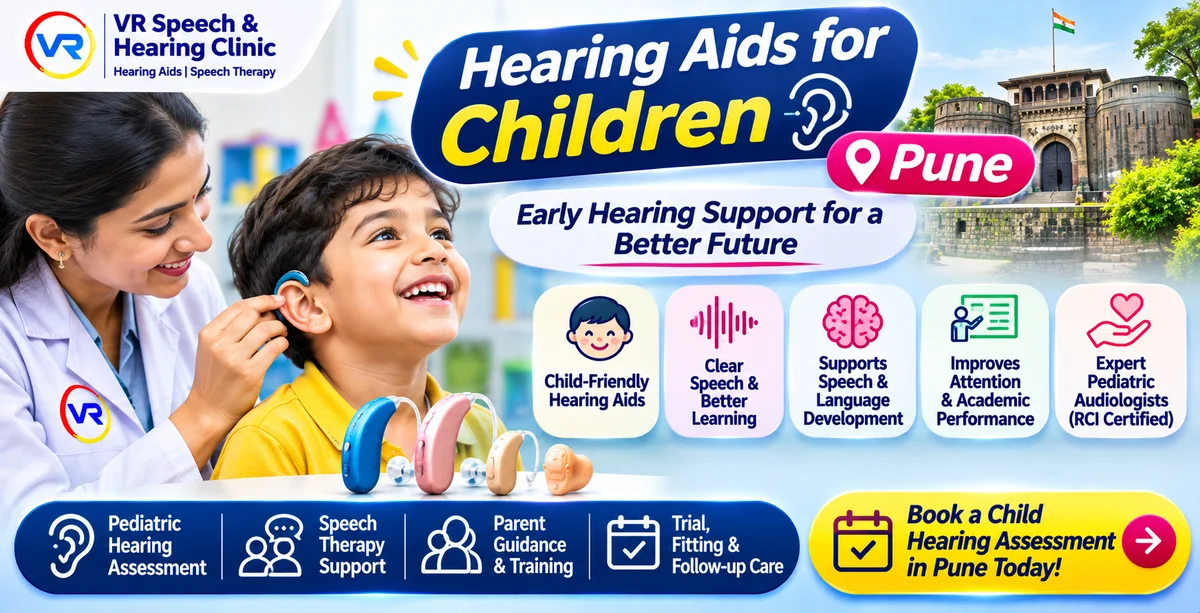
A child’s first few years are when language, learning and social skills develop fastest. Hearing plays a huge part in all of it. If your child cannot hear clearly, speech, school performance and confidence can suffer. The good news is that hearing loss in children can be identified and managed. A properly fitted hearing aid for children in Pune can help your child hear, speak and learn in a way that supports their potential.
At VR Speech and Hearing Clinic, we work with families who are worried about their child’s hearing. This guide explains the warning signs, how testing works, how children’s hearing aids are chosen and what to expect after fitting.
Why Early Detection of Hearing Loss Matters
Children learn language by listening. When sounds are missed or muffled, the brain receives incomplete information during the period when it is most ready to learn. Untreated hearing loss can lead to delayed speech, trouble following instructions, poor school results and frustration or withdrawal.
Early detection and intervention give children the best chance to develop speech and language close to their age level. This is why hearing screening is recommended for newborns, and why parents should act quickly if they notice anything unusual later on.
Signs Your Child May Need a Hearing Test
Hearing loss in children is not always obvious. Some children adapt by watching faces or copying others. Consider a hearing evaluation if your child:
Does not startle at loud sounds or turn toward voices as an infant
Is not babbling by around six to nine months
Has few words or unclear speech for their age
Often says “what?” or asks you to repeat things
Turns the television volume very high
Does not respond when called from another room
Seems inattentive or struggles in class
Has had frequent ear infections or fluid in the ears
Has a family history of childhood hearing loss
One or two of these signs do not always mean hearing loss, but a professional check gives you clarity and peace of mind.
Common Causes of Hearing Loss in Children
Hearing loss in children can be present from birth or develop later. Possible causes include:
Genetic factors or a family history of hearing loss
Complications around birth, such as prematurity, low birth weight or neonatal jaundice
Infections during pregnancy or in early childhood
Recurrent middle ear infections and fluid behind the eardrum
Exposure to loud noise over time
Head injury or certain medicines
Finding the cause helps your audiologist and doctor decide the right treatment path.
How Children’s Hearing Is Tested
Many parents worry that testing will be stressful for a young child. In practice, modern hearing tests are gentle and designed to suit different ages.
Newborns and infants: Painless tests that measure the ear’s or brain’s response to sound, often done while the baby is calm or asleep.
Toddlers: Play-based testing, where the child responds to sounds by dropping a block or placing a toy in a box.
Older children: Standard listening tests with headphones, where the child signals when they hear a tone or repeats words.
The results show the type and degree of hearing loss. This tells us whether a hearing aid is the right solution or whether medical review is needed first.
When Is a Hearing Aid Recommended for a Child?
A hearing aid is generally considered when a child has permanent hearing loss that makes it hard to hear speech clearly. Some children need hearing aids in both ears, while others need only one. The decision depends on the test results, the child’s age and how they respond to sound.
If the hearing loss is caused by a temporary condition, such as fluid in the middle ear, the doctor may first suggest medical treatment. In cases of very severe hearing loss, other options such as cochlear implants may be discussed, and your audiologist can guide you on referrals.
Types of Hearing Aids for Children
Children’s ears grow quickly, so the right style matters. Common options include:
Behind-the-ear (BTE) hearing aids: The most commonly used type for children. They are durable, flexible and can be adjusted as the child grows. The earmould can be replaced as the ear gets bigger.
Receiver-in-canal (RIC) hearing aids: Smaller and discreet, sometimes suitable for older children and teenagers.
Bone conduction devices: Used in certain cases, such as when a child has ear canal malformations or chronic ear drainage.
Modern children’s hearing aids often include safety features such as tamper-resistant battery doors, and some come in fun colours that help children feel comfortable wearing them.
What to Expect During the Fitting Process
Getting a hearing aid is a process, not a one-time event. At VR Speech and Hearing Clinic, the typical steps include:
Detailed hearing assessment to understand the type and level of hearing loss
Ear impressions for custom earmoulds, which ensure comfort and prevent whistling
Selection of a suitable device based on your child’s needs, age, lifestyle and budget
Programming and fitting so the device gives the right amount of amplification
Verification to confirm the hearing aid is delivering sound as intended
Counselling for parents on handling, cleaning, battery care and daily use
Follow-up visits are important. Children’s hearing needs and ear shapes change, so regular adjustments keep the device working well.
The Role of Speech Therapy
A hearing aid makes sounds audible, but a child may still need help learning to use those sounds for speech and language. Speech and language therapy works alongside hearing aids to build listening skills, vocabulary, pronunciation and communication confidence. The earlier therapy begins, the better the progress tends to be.
Parents play a big role too. Talking, reading, singing and playing with your child every day makes a real difference.
Tips to Help Your Child Adjust to Hearing Aids
Start with short wearing periods and slowly increase the time
Stay positive and treat the hearing aid as a normal part of the day
Reduce background noise at home when talking to your child
Keep the device clean and dry, and check batteries regularly
Inform teachers so they can seat your child near the front and speak clearly
Be patient, as adjusting to new sounds takes time
Why Choose VR Speech and Hearing Clinic in Pune?
Choosing the right clinic matters as much as choosing the right device. Families look for a place where their child is treated with patience and where the parents are included in every decision. At VR Speech and Hearing Clinic, our focus is on careful assessment, honest guidance, suitable hearing solutions and continued support through follow-up visits and therapy. We aim to make the experience comfortable for both the child and the parents.
If you are searching for a hearing aid for your child in Pune, a timely consultation is the best first step. Early action can make a lasting difference to your child’s communication and learning.
Frequently Asked Questions
1. At what age can a child start using a hearing aid?
Babies can be fitted with hearing aids within the first few months of life if hearing loss is confirmed. Early fitting supports better speech and language development.
2. How do I know if my child needs a hearing aid?
Only a hearing evaluation can confirm this. Signs such as delayed speech, not responding to sounds or frequent ear infections are reasons to get your child tested.
3. Are hearing aids safe for small children?
Yes. Children’s hearing aids are designed with safety features such as secure battery compartments and soft, comfortable earmoulds.
4. How often should a child’s hearing aid be checked?
Children usually need more frequent follow-ups than adults, especially in the early years, because their ears and hearing needs change as they grow. Your audiologist will advise a schedule.
5. Will my child need speech therapy along with a hearing aid?
Many children benefit from it. Therapy helps them learn to use the sounds they now hear to build speech and language.
6. Can my child wear a hearing aid at school?
Yes. Most children wear their hearing aids throughout the school day. It helps to inform teachers so they can support your child in class.
7. How long do children’s hearing aids last?
With proper care, a hearing aid can last several years, though earmoulds usually need replacing more often as the child grows.
8. How can I book a consultation at VR Speech and Hearing Clinic?
You can contact the clinic directly by phone or visit during working hours to schedule a hearing assessment for your child.