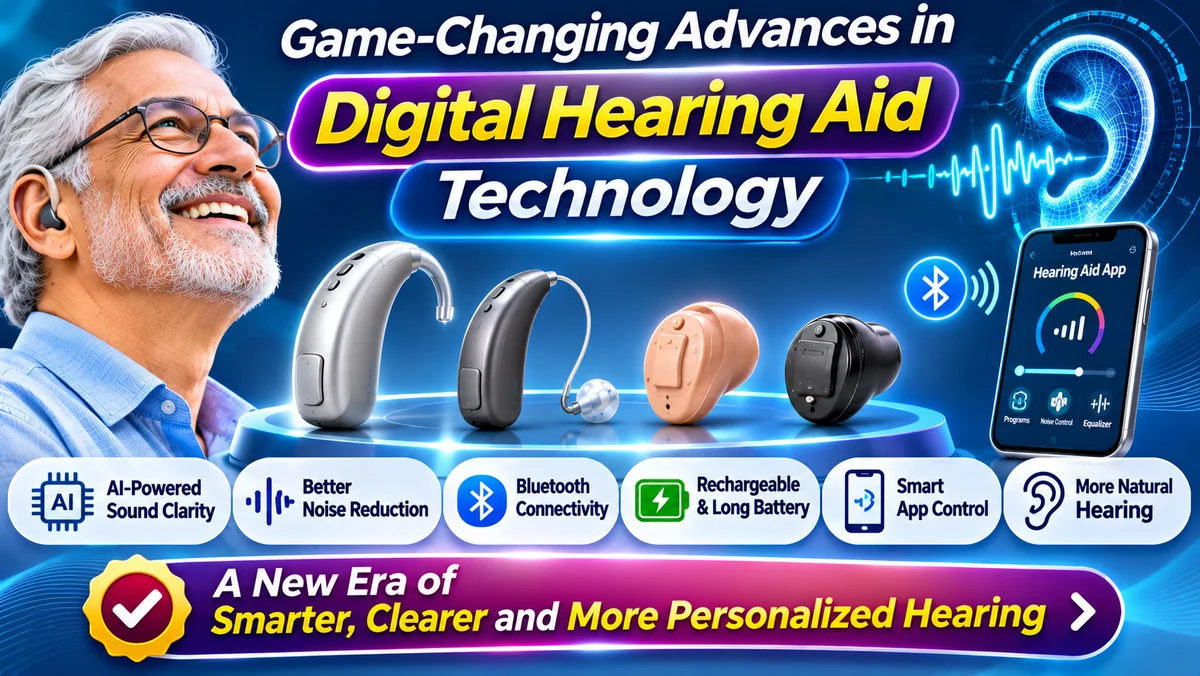
Game-Changing Advances in Digital Hearing Aid Technology
Introduction
Hearing aids have come a long way from the bulky, whistling devices many people remember. Today, digital hearing aid technology combines powerful processors, artificial intelligence, wireless connectivity and rechargeable power in devices small enough to disappear behind the ear. For the millions of people living with hearing loss, these advancements are far more than upgrades. They are changing how people work, connect with family and enjoy everyday life.
At VR Speech and Hearing Clinic, we see this change every day. In this guide, we explain the most important breakthroughs in modern hearing aids, what they mean in real life, and how to choose the right solution for your hearing needs.
What Is Digital Hearing Aid Technology?
A digital hearing aid works like a tiny, specialised computer. Microphones pick up sound, a processor converts it into a digital signal, analyses it, adjusts it to match your personal hearing profile, and then delivers it through a receiver in your ear. Older analogue devices simply made every sound louder. Digital hearing aids are far more selective. They can amplify the soft consonants that make speech understandable, reduce unwanted noise, and adjust automatically as your surroundings change.
This ability to analyse and shape sound in real time is the foundation of every major advancement discussed below.
AI and Machine Learning: Hearing Aids That Learn You
Artificial intelligence is one of the biggest leaps in modern hearing care. Advanced hearing aids now use deep neural networks, trained on millions of real-world sound samples, to recognise speech, traffic, wind, music and background chatter. The device then decides within milliseconds which sounds to bring forward and which to soften.
Many devices also learn from your behaviour. If you regularly turn the volume up in a busy café, the hearing aid notes your preference and begins to apply it automatically. Over time, the device becomes more personal, which means fewer manual adjustments and a more natural listening experience.
For wearers, the result is simple: less effort to listen, and less mental fatigue at the end of the day. When your brain no longer has to work so hard to fill in missing sounds, you have more energy for the conversations that matter.
Clearer Speech in Noisy Places
Understanding speech in noise remains the number one complaint among people with hearing loss. Digital technology has made major progress here through several tools working together:
Directional microphones: Multiple microphones focus on the person in front of you while reducing sound from behind and the sides. Some systems can even follow a moving speaker.
Digital noise reduction: Steady background sounds such as fans, traffic and air conditioning are identified and lowered without muting speech.
Feedback cancellation: The whistling that frustrated earlier generations is now largely controlled by fast processors that detect and cancel feedback before you notice it.
Speech enhancement: Sound processing can emphasise the frequencies that carry the meaning of speech, helping you follow conversations in restaurants, meetings and family gatherings.
No hearing aid restores normal hearing, but these tools make a meaningful difference in everyday communication.
Rechargeable Batteries That Fit Real Life
Tiny disposable batteries once meant fumbling with fiddly parts at the worst possible moment. Rechargeable hearing aids have changed that. Most rechargeable models offer a full day of use on a single overnight charge, including some wireless streaming. Portable charging cases can top up your devices on the go, which is especially helpful when travelling.
Rechargeable systems are also easier for people with limited dexterity or vision, and they reduce the ongoing cost and waste of disposable cells. Many wearers say that charging their hearing aids each night, just like a phone, is one of the most convenient changes they have experienced.
Bluetooth and Direct Streaming
Wireless connectivity has turned hearing aids into personal audio devices. Many modern models connect directly with smartphones, tablets and televisions. Phone calls, video meetings, music, podcasts and navigation prompts can stream straight into both ears in clear stereo sound, without a bulky neckloop or extra gadget.
Emerging wireless standards are also beginning to allow hearing aids to receive broadcast audio in public places such as airports, theatres and places of worship. For people who rely on phones and video calls for work and family contact, direct streaming can be life-changing.
Smartphone Apps and Remote Care
Companion smartphone apps put control in the palm of your hand. You can adjust volume, change listening programmes, fine-tune bass and treble, check battery status and even locate a misplaced device. Some apps also include guided hearing exercises and access to support resources.
Tele-audiology adds another layer of convenience. With remote care, your audiologist can adjust your hearing aid settings after your in-clinic fitting without you needing to travel. This is valuable for people who live far from the clinic, have mobility challenges or lead busy lives. It does not replace in-person care, but it helps keep your devices tuned to your needs between visits.
Smaller, Discreet and More Comfortable Designs
Today’s hearing aids are smaller, lighter and more comfortable than ever. Options include discreet receiver-in-canal styles, custom in-the-ear models and nearly invisible devices that sit deep in the ear canal. Improved materials make them more durable, and many models offer protection against dust, sweat and moisture. Better acoustics and venting also reduce the blocked, plugged-up feeling that some people disliked in the past, and make your own voice sound more natural.
Appearance and comfort matter because they influence whether people wear their devices consistently, and consistent use is the key to getting the full benefit of any hearing aid.
Health and Wellness Features Beyond Hearing
Some of the latest hearing aids go beyond sound. Built-in sensors in certain models can count steps, monitor activity and detect falls, then send alerts to chosen contacts. Others support live translation or conversation transcription through connected apps.
These features reflect a growing understanding that hearing is closely linked to overall health. Research has associated untreated hearing loss with social isolation and a higher risk of cognitive decline, which is why early intervention matters so much.
Tinnitus Support Built In
Many people with hearing loss also experience tinnitus, a ringing or buzzing sensation in the ears. Modern hearing aids often include tinnitus support features such as soothing sounds or customised sound therapy. Amplifying the environmental sounds that tinnitus tends to mask can also bring relief. Because tinnitus has many possible causes, a proper assessment by a hearing professional is always the right first step.
How to Choose the Right Digital Hearing Aid
With so many options available, the best device is the one that matches your hearing loss, lifestyle and budget. Keep these points in mind:
Your hearing test results: The type and degree of hearing loss guide which styles and power levels are suitable.
Your daily environments: If you spend time in noisy restaurants, offices or social events, advanced noise management is worth prioritising.
Connectivity needs: Frequent phone and video calls make Bluetooth streaming especially valuable.
Dexterity and vision: Rechargeable models and simple controls can make daily use easier.
Budget and long-term service: Consider fitting, follow-up care, maintenance and warranty, not only the device itself.
Technology levels vary, and the most expensive option is not automatically the best choice for every person. A professional evaluation ensures you invest in features you will actually use.
Why Professional Fitting Matters
Even the most advanced hearing aid will underperform if it is not fitted and programmed correctly. At VR Speech and Hearing Clinic, our approach begins with a comprehensive hearing evaluation, followed by personalised recommendations based on your needs and goals. We programme your devices using verified fitting methods, teach you to use every feature with confidence, and provide follow-up adjustments as you adapt to new sounds.
Hearing care is a journey, not a one-time purchase. Ongoing support, from cleaning and maintenance to re-tuning when your hearing changes, helps you get the most from your investment. And because hearing and communication are closely connected, our integrated speech and hearing care means your wider communication needs can be considered together.
Conclusion
Digital hearing aid technology has transformed what is possible for people with hearing loss. From AI-powered sound processing and clearer speech in noise to rechargeable power, Bluetooth streaming, smartphone control and tinnitus support, today’s devices are smarter, smaller and far easier to live with.
If you have noticed that you are asking people to repeat themselves, turning the television up, or avoiding busy social settings, do not wait. Book a hearing assessment at VR Speech and Hearing Clinic and take the first step towards clearer, more confident communication.
Frequently Asked Questions
What is the latest technology in digital hearing aids?
The latest digital hearing aids use artificial intelligence to separate speech from noise, learn your listening preferences and adjust automatically. They also offer rechargeable batteries, direct Bluetooth streaming, smartphone app control and, in some models, health tracking and tinnitus support.
Are digital hearing aids better than analogue hearing aids?
Yes, for most people. Analogue devices amplify all sound equally, while digital hearing aids process sound in real time. This allows precise customisation, better noise reduction, feedback control and automatic adjustment, which usually results in clearer and more comfortable listening.
Can AI hearing aids really help in noisy places?
AI-enabled hearing aids can significantly improve speech understanding in noisy settings by recognising speech and reducing competing sounds. Results vary depending on your type of hearing loss and the environment, so a professional trial and fitting is the best way to see how much benefit you can expect.
How long do rechargeable hearing aids last?
Most rechargeable hearing aids provide a full day of use on one overnight charge, although heavy wireless streaming can shorten this. The rechargeable batteries gradually lose capacity over several years, and your audiologist can advise when a replacement is needed.
Do I need a hearing test before buying a hearing aid?
Yes. A hearing test shows the type and degree of your hearing loss and helps rule out medical conditions that may need treatment. Your results guide the choice of device and the programming needed for it to work well for you.
How often should I have my hearing aids checked?
It is wise to have your hearing aids checked and cleaned at least every six months, and your hearing tested once a year. Regular visits keep the devices performing well and allow settings to be updated if your hearing changes.