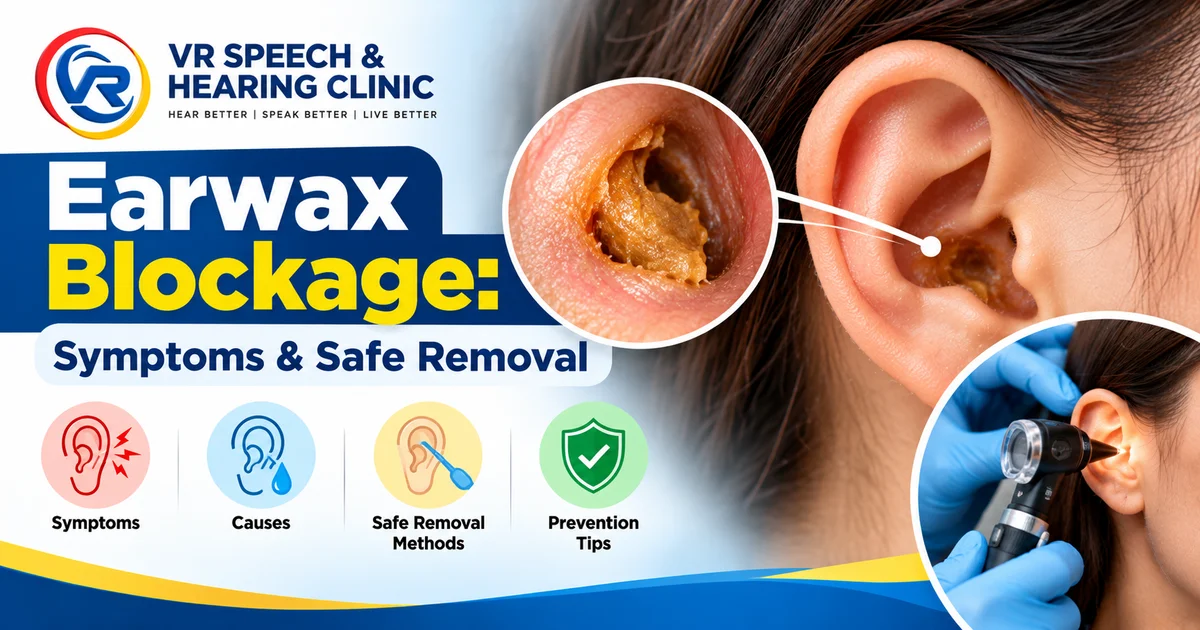
Earwax Blockage: Symptoms & Safe Removal
Earwax Blockage: Symptoms, Causes, Safe Removal and When to See a Hearing Specialist
Do your ears feel stuffed, heavy or oddly muffled? Perhaps voices sound distant, or a faint ringing has crept in. Before assuming the worst, consider a very common and very fixable cause: earwax blockage.
It affects people of every age, and once it is correctly identified it is usually simple to treat. The trick is knowing what to look for and, just as importantly, what never to do. In this guide, VR Speech and Hearing Clinic explains the symptoms, causes and risk factors of earwax blockage, how it is safely removed, and the warning signs that mean you should book an ear check without delay.
What Is Earwax Blockage?
Earwax, medically called cerumen, is produced by glands in the skin of the outer ear canal. It is not dirt, and it is not a sign of poor hygiene. It is part of your ear's built-in protection, trapping dust and debris, keeping the canal skin moist and slowing bacterial growth so the delicate eardrum stays safe.
Normally the ear cleans itself. Old wax drifts slowly toward the opening, helped by jaw movement when you chew and talk, then dries, flakes away or washes out in the shower. An earwax blockage, also known as cerumen impaction, happens when that natural clearing process stalls and wax accumulates until it plugs the canal or causes symptoms.
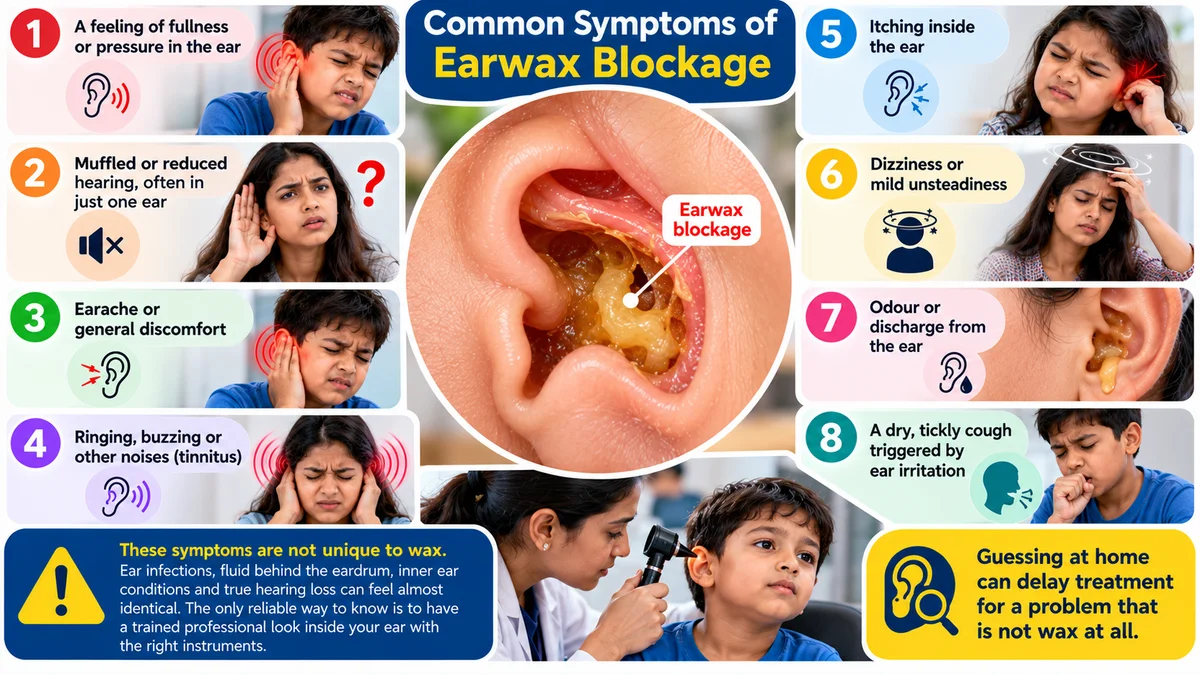
Common Symptoms of Earwax Blockage
A little wax rarely causes trouble. Problems begin when the canal becomes partly or fully plugged. Watch for:
A feeling of fullness or pressure in the ear
Muffled or reduced hearing, often in just one ear
Earache or general discomfort
Ringing, buzzing or other noises (tinnitus)
Itching inside the ear
Dizziness or mild unsteadiness
Odour or discharge from the ear
A dry, tickly cough triggered by ear irritation
These symptoms are not unique to wax. Ear infections, fluid behind the eardrum, inner ear conditions and true hearing loss can feel almost identical. The only reliable way to know is to have a trained professional look inside your ear with the right instruments. Guessing at home can delay treatment for a problem that is not wax at all.
What Causes Earwax to Build Up?
Several factors can tip the balance from healthy wax to a blockage:
Cotton swabs and other objects. This is the most common culprit. Instead of removing wax, swabs, hairpins and similar items usually push it deeper and pack it against the eardrum.
Overproduction or hard, dry wax. Some people naturally make more wax, or wax that is drier and stickier, so it does not move out easily. Wax also tends to become drier with age.
Ear anatomy. A narrow or curved ear canal, extra hair in the canal or bony growths can all slow wax on its way out.
Devices worn in the ear. Hearing aids, earplugs and in-ear headphones can block the natural exit route and nudge wax back inward when worn for long periods.
Who Is More Likely to Get Blocked Ears?
Anyone can develop an earwax blockage, but you may be more prone if you:
Use cotton swabs or other tools to clean your ears
Wear hearing aids, earplugs or earbuds regularly
Are an older adult
Have narrow ear canals, hairy canals or bony growths
Naturally produce a lot of wax
Have had a wax blockage before
Home Habits That Do More Harm Than Good
When ears feel blocked, the urge to dig is strong. Resist it. The skin of the ear canal is thin and the eardrum is fragile, and injuries can lead to pain, bleeding, infection or hearing damage. Avoid:
Cotton swabs, hairpins, keys, pen caps or any object pushed into the canal
Ear candles, which have not been shown to remove wax and can cause burns or even deposit candle wax in the canal
Forceful water jets or pressure devices used without professional advice
Take extra care if you have had ear surgery, have ear tubes, know of a hole in your eardrum or have ear pain or drainage. In these situations, do not put anything in the ear, including drops, until a professional has examined you.
Safe Earwax Removal: How Earwax Blockage Is Treated
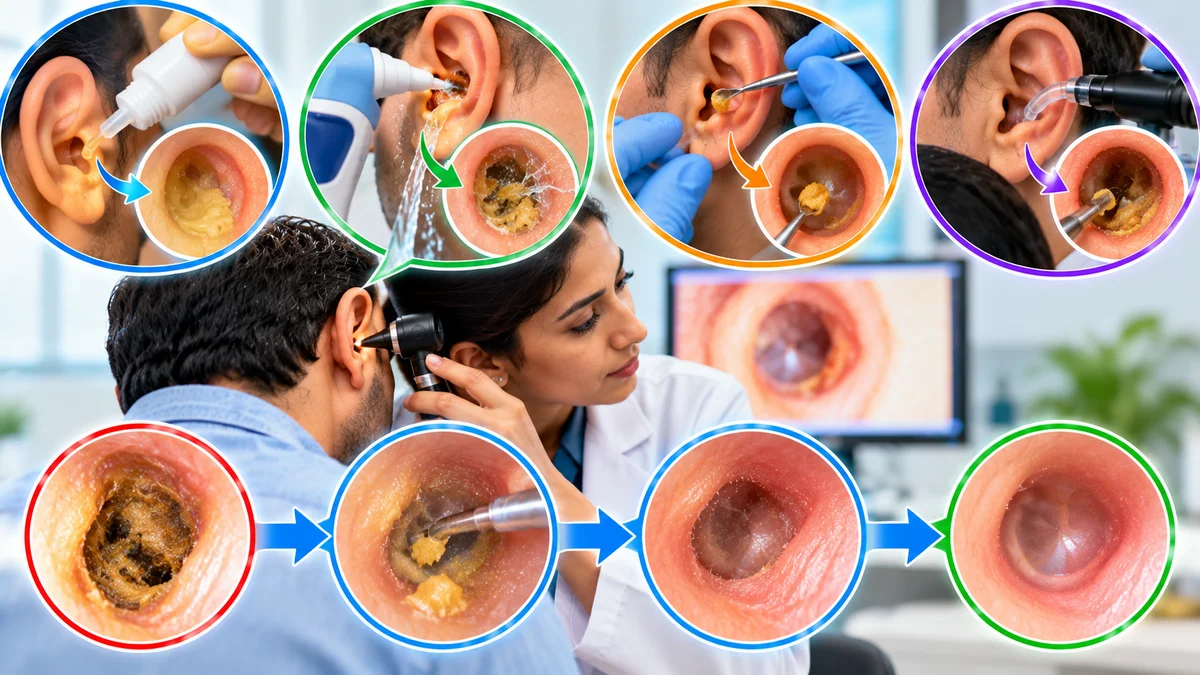
Treatment begins with a proper look inside the ear using a lighted instrument. This confirms that wax is truly the problem and shows how much there is and where it sits. From there, the safest approach depends on your ear. Common options include:
Wax-softening drops. Water-based or oil-based drops can loosen hard wax so it clears on its own or becomes easier to remove.
Ear irrigation. A trained professional gently flushes the canal with warm water to wash the softened wax out. This method is not suitable if there is a perforated eardrum or ear tubes.
Manual removal. Using small, specialised instruments and good lighting, the clinician lifts the wax out directly.
Suction removal. A gentle, low-pressure suction device, often used with magnification, draws wax out without water.
Please do not choose between these yourself. Tell the clinician about any ear surgery, perforation, tubes, discharge or past ear problems so the method can be matched to your ear. Removal is usually quick, and many people notice clearer hearing right away.
Can Earwax Blockage Clear on Its Own?
Sometimes. When a blockage is not causing any symptoms, wax may work its way out without help. But if you are already noticing fullness, muffled hearing, pain or ringing, waiting and hoping is rarely the best plan. An ear check will tell you whether wax is the cause and what to do next.
When to See a Specialist Without Delay
Book an appointment if symptoms last more than a few days or keep coming back. Seek prompt care if you notice:
Sudden hearing loss in one or both ears
Severe or worsening ear pain
Blood, pus or foul-smelling fluid from the ear
Spinning dizziness or loss of balance
Fever together with ear symptoms
These signs can point to conditions other than wax, and some need timely treatment.
Earwax, Hearing Aids and Hearing Tests
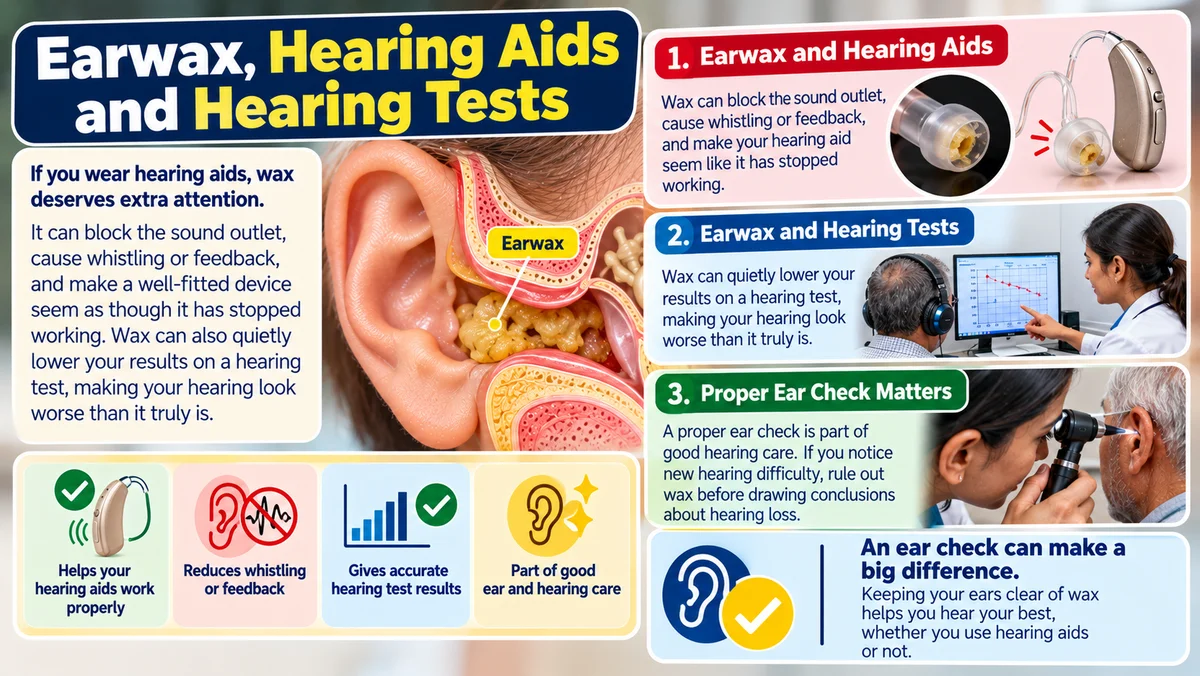
If you wear hearing aids, wax deserves extra attention. It can block the sound outlet, cause whistling or feedback, and make a well-fitted device seem as though it has stopped working. Wax can also quietly lower your results on a hearing test, making your hearing look worse than it truly is. That is why a proper ear check is part of good hearing care, and why anyone noticing new hearing difficulty should rule out wax before drawing conclusions about hearing loss.
Earwax in Children and Older Adults
Children rarely say that an ear feels blocked. Instead you might notice tugging at the ear, the television turned up, no response when called or trouble at school. Never use swabs or tools in a child's ears. A clinician can check and remove wax gently during a visit.
Older adults often produce drier, harder wax, and gradual hearing change is easily blamed on age alone. A simple ear check can reveal whether wax is part of the picture.
What to Expect at Your Ear Wax Appointment
You will first be asked about your symptoms, any history of ear problems or surgery, and whether you use hearing aids or earphones. Your ears are then examined with a lighted instrument. If wax is present, the safest removal method is chosen for you, and afterwards the ear is rechecked. If your hearing still seems off once the wax is gone, further hearing assessment can follow.
How to Prevent Earwax Blockage
Leave your ears alone. Wipe only the outer ear with a soft, damp cloth.
Never insert cotton swabs or other objects into the canal.
Clean hearing aids, earmolds and earbuds regularly, following the maker's instructions.
Give your ears a break from long hours of earbuds.
If you form wax easily, arrange periodic ear checks instead of cleaning at home.
Why Choose VR Speech and Hearing Clinic for Ear Care
Ear care at VR Speech and Hearing Clinic starts with listening to your concerns and carefully examining your ears. If wax is the cause, we explain the safest way to clear it. If it is not, we can assess your hearing and guide you toward the right next step, so you are never left guessing. Whether you are dealing with a blocked ear yourself or are concerned about a child or an elderly parent, our team is here to help.
Final Thoughts
Earwax is a healthy and necessary part of your ear. It only becomes a problem when it builds up, and the safest response is to let a professional handle it, not a cotton swab. If your ears feel blocked, your hearing seems muffled or you are unsure what is going on, book an ear examination with VR Speech and Hearing Clinic today and get back to hearing clearly.
FAQs
1. How do I know if I have an earwax blockage?
Common signs include a full or plugged feeling, muffled hearing, earache, itching, ringing and dizziness. Because other ear conditions cause the same symptoms, an ear examination is the only way to be sure.
2. Can earwax blockage cause hearing loss?
Yes. When wax blocks the ear canal, sound cannot travel properly to the eardrum, which causes temporary hearing loss. Hearing usually improves once the wax is safely removed.
3. Is it safe to remove earwax at home?
It is safest to let a healthcare professional do it. Inserting cotton swabs or other objects often pushes wax deeper and can injure the canal or eardrum. If you have had ear surgery or have a perforated eardrum, never attempt it yourself.
4. Do ear candles remove earwax?
No. Ear candles have not been shown to remove wax, and they carry a risk of burns and of blocking the ear with candle residue.
5. Can earwax cause dizziness or ringing in the ears?
It can. A blocked canal may cause tinnitus and a feeling of imbalance in some people. Since these symptoms can also come from other conditions, they should be checked.
6. How often should I have my ears cleaned?
Most people never need their ears cleaned because ears clear wax naturally. If you wear hearing aids or tend to build up wax, your clinician can suggest how often to have your ears checked.