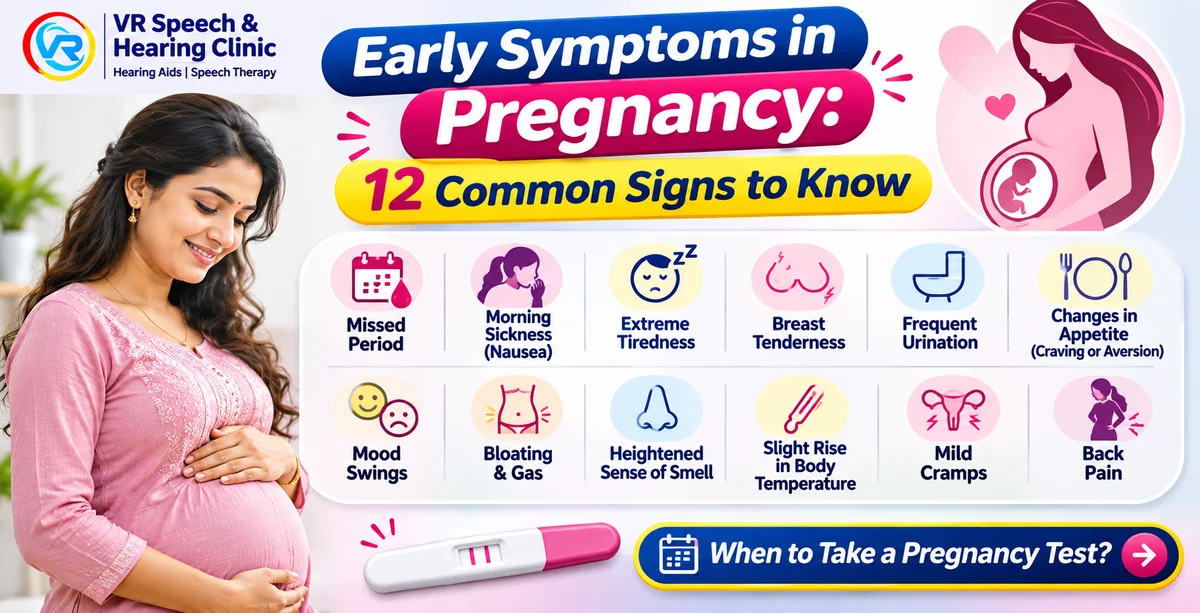
Early Symptoms in Pregnancy: 12 Common Signs to Know
Early Symptoms in Pregnancy: What Your Body May Be Telling You
Finding out you may be pregnant brings excitement, curiosity, and plenty of questions. The first clues often show up before a test turns positive, and they differ from woman to woman. Knowing the early symptoms in pregnancy helps you understand what is happening and decide when to take a test or call your doctor.
At VR Speech and Hearing Clinic, we believe good health information should be clear and easy to trust. This guide covers the most common early pregnancy symptoms, when they usually begin, and the less obvious changes, including those involving your ears and hearing, that many women never expect.
When Do Early Pregnancy Symptoms Start?
Most women notice the first signs of pregnancy between week 4 and week 6, around the time of a missed period. Some feel different as early as one to two weeks after conception. Others have almost no symptoms until later. Both experiences are normal.
These changes are driven mainly by rising hormone levels, especially hCG, progesterone, and estrogen. They support the pregnancy, but they also affect digestion, mood, energy, circulation, and sleep.
1. Missed Period
A missed period is the most reliable early sign for women with regular cycles. If your period is a week or more late and you are sexually active, pregnancy is a strong possibility. Stress, illness, thyroid problems, and hormonal conditions can also delay a period, so a test is the best way to confirm.
2. Nausea With or Without Vomiting
Often called morning sickness, nausea can strike at any time of day. It typically begins around week 6 but can start earlier. Triggers include strong smells, empty stomach, and certain foods. Eating small meals, staying hydrated, and keeping plain snacks nearby can help. If you cannot keep fluids down, contact your doctor.
3. Breast Tenderness and Swelling
Your breasts may feel sore, heavy, or tingly within the first few weeks. The areolas can darken, and veins may look more visible. This is similar to premenstrual tenderness but tends to last longer and feel more intense.
4. Unusual Fatigue
Feeling exhausted is among the most common early symptoms in pregnancy. Progesterone rises sharply, and your body works harder to support the developing baby. Rest when you can, eat iron-rich foods, and keep a steady sleep routine.
5. Frequent Urination
You may find yourself visiting the bathroom more often. Blood volume increases and the kidneys process more fluid, which raises urine output. This can begin as early as week 5 or 6.
6. Light Spotting or Implantation Bleeding
About one in four women notice light spotting roughly 6 to 12 days after conception, when the embryo attaches to the uterine lining. It is usually lighter and shorter than a normal period. Any heavy bleeding or bleeding with severe pain needs prompt medical attention.
7. Mild Cramping
Mild lower abdominal cramps can occur as the uterus begins to stretch and change. Mild, short-lived cramping is usually normal, but severe or one-sided pain should be checked right away.
8. Food Cravings and Aversions
Sudden cravings for certain foods, or a strong dislike of foods you normally enjoy, are common. A heightened sense of smell often goes along with this, which can make everyday odors feel overwhelming.
9. Mood Swings
Hormonal shifts can make you feel emotional, irritable, or teary for no clear reason. This usually settles as your body adjusts, though persistent low mood or anxiety is worth discussing with a healthcare provider.
10. Bloating and Constipation
Progesterone slows digestion, which can cause bloating, gas, and constipation. Fiber, water, and gentle walking often help.
11. Headaches and Dizziness
Changing hormones and blood volume can bring headaches and lightheadedness. Standing up slowly, eating regularly, and drinking enough water can reduce these episodes.
12. Raised Basal Body Temperature
If you track your temperature, it stays elevated for more than two weeks after ovulation when you are pregnant. This is a helpful clue for women who chart their cycles.
Early Pregnancy and Your Ears: Changes Many Women Do Not Expect
Pregnancy affects the whole body, including the ears. Because our clinic focuses on hearing and balance, this is something we want expectant mothers to know about. Some women report:
A feeling of fullness or blocked ears. Hormonal changes and nasal congestion can affect the Eustachian tube, which balances pressure in the middle ear.
Tinnitus. Ringing or buzzing in the ears may appear or become more noticeable during pregnancy.
Dizziness or balance changes. Shifts in blood pressure, blood sugar, and fluid levels can make you feel unsteady.
Mild, temporary changes in hearing. Fluid retention and circulation changes may play a role.
Most of these changes are mild and settle after delivery. However, sudden hearing loss, severe ringing, or persistent spinning dizziness should never be ignored. If you notice any of these, book a hearing evaluation with a qualified audiologist and inform your obstetrician. Early assessment protects both your comfort and your long-term hearing health.
When Should You Take a Pregnancy Test?
For the most accurate result, test on the first day of your missed period or later. Home tests detect hCG in urine, and testing too early can give a false negative. Use first-morning urine for the best concentration, and repeat the test a few days later if the result is negative but your period still has not arrived.
Early Pregnancy Symptoms vs. PMS
Many early signs, such as tender breasts, fatigue, cramping, and mood changes, overlap with premenstrual syndrome. The key differences are a missed period, symptoms that continue or intensify beyond your usual PMS window, and new signs such as nausea or heightened smell. A test and a doctor’s visit give the clearest answer.
When to See a Doctor
Contact a healthcare provider as soon as you get a positive test. Early prenatal care helps ensure a healthy pregnancy. Seek urgent help if you experience:
Severe abdominal or pelvic pain
Heavy vaginal bleeding
Fever or severe vomiting that prevents you from keeping food or water down
Sudden severe headache or vision changes
Fainting or extreme dizziness
Sudden hearing loss in one or both ears
Healthy Habits for the First Weeks
Start taking folic acid as advised by your doctor
Eat balanced meals and stay well hydrated
Avoid alcohol, tobacco, and unprescribed medication
Limit caffeine
Get gentle exercise and enough sleep
Attend all prenatal checkups
Final Thoughts
The early symptoms in pregnancy range from a missed period and nausea to fatigue, tender breasts, and even changes in your ears and balance. Every pregnancy is different, so do not worry if your experience does not match a checklist. Trust your body, take a test when you suspect pregnancy, and speak with a healthcare professional for guidance. If you notice hearing or balance changes along the way, the team at VR Speech and Hearing Clinic is here to help you stay comfortable and well.
FAQs
1. What are the very first signs of pregnancy?
The earliest signs often include a missed period, breast tenderness, fatigue, mild cramping, and nausea. Some women also notice light spotting about one to two weeks after conception.
2. Can I have pregnancy symptoms before a missed period?
Yes. Fatigue, breast soreness, spotting, and mild cramps can appear before your period is due. Because they resemble PMS, a test after the missed period is more reliable.
3. How soon can I take a pregnancy test?
Take it on the first day of your missed period for the most accurate result. Testing earlier may give a false negative.
4. Can pregnancy affect hearing?
It can in some women. Ear fullness, tinnitus, and dizziness are reported during pregnancy. Sudden hearing loss needs urgent evaluation by an audiologist or doctor.
5. How long do early pregnancy symptoms last?
Nausea and fatigue often ease by the second trimester, around weeks 13 to 14, though this varies.
6. Is it normal to have no symptoms in early pregnancy?
Yes. Some women feel almost nothing in the first weeks, and that does not mean anything is wrong.