Early Childhood Intervention Program
Early Childhood Intervention Program: Giving Your Child the Strongest Start in Life
Every parent waits eagerly for a child’s first smile, first word, and first step. But what if those milestones seem delayed? Many families feel worried, confused, or unsure whether to wait and watch. The good news is that you don’t have to wait. An early childhood intervention program can help your child build the skills they need during the most important years of brain development.
At VR Speech and Hearing Clinic, we help young children overcome communication, hearing, and developmental challenges through personalized, family-centered care. This guide explains what early intervention is, why it matters, and how it can change your child’s future.
What Is an Early Childhood Intervention Program?
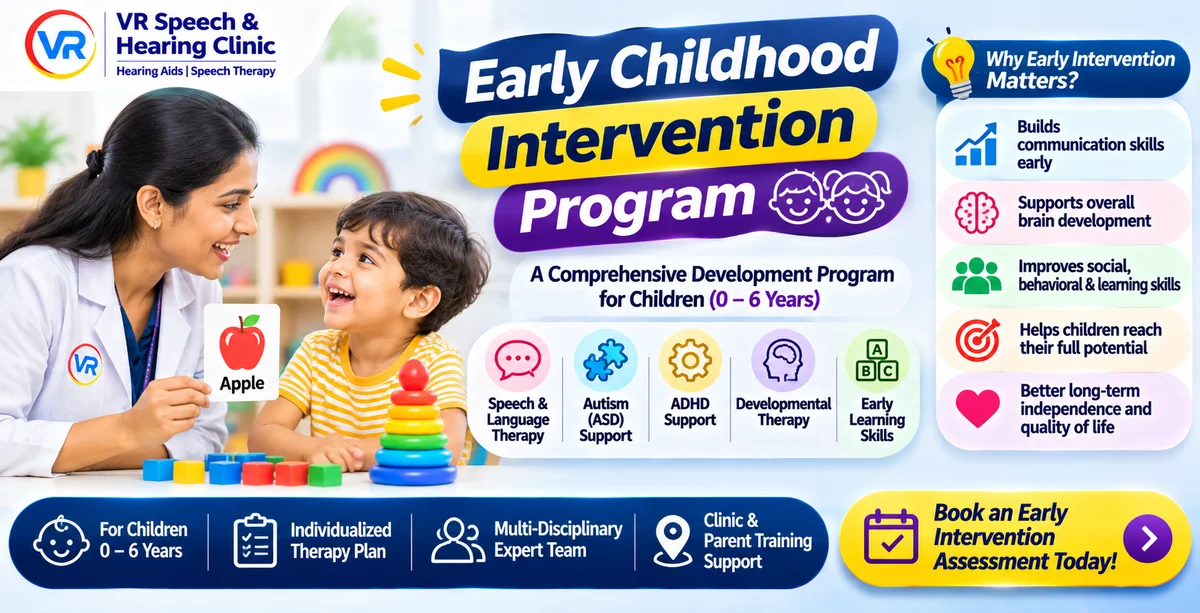
An early childhood intervention program is a set of specialized services and therapies for infants and young children, usually from birth to six years of age, who show developmental delays or are at risk of them. These programs focus on areas such as:
Speech and language development
Hearing and listening skills
Social and emotional growth
Cognitive and learning abilities
Motor and sensory skills
Behavior and daily living skills
The goal is simple: identify concerns early, provide the right support, and help your child reach their full potential. Intervention is not about “fixing” a child. It is about giving them the tools, strategies, and confidence to grow at their best pace.
Why Early Intervention Matters
A child’s brain develops fastest in the first few years of life. During this period, the brain is highly flexible and responds strongly to stimulation, interaction, and therapy. This is why starting support early often leads to better outcomes than starting later.
Here is why early support makes such a difference:
Stronger language foundation. Children who receive speech therapy early are more likely to develop clear speech and strong language skills before starting school.
Better academic readiness. Early communication skills are closely linked to reading, writing, and classroom learning.
Improved social confidence. When children can express themselves, they make friends more easily and feel more secure.
Reduced long-term challenges. Addressing delays early can prevent small difficulties from becoming bigger problems later.
Less stress for families. Parents gain clarity, guidance, and practical tools instead of guessing what to do next.
Research in child development consistently shows that early support improves long-term outcomes. Waiting rarely helps, and acting early gives your child the best possible chance.
Signs Your Child May Need Early Intervention
Every child develops at their own pace, but some signs deserve professional attention. Consider booking an assessment if your child:
Does not respond to loud sounds or their own name
Is not babbling by 12 months
Has no meaningful words by 16 to 18 months
Is not combining two words by age two
Is hard to understand by age three
Has trouble following simple instructions
Avoids eye contact or shows limited interaction
Struggles with feeding, chewing, or swallowing
Shows frequent ear infections or suspected hearing loss
Seems frustrated or withdrawn when trying to communicate
Has lost skills they previously had
Seeing one or two of these signs does not always mean something is wrong. However, a professional evaluation can bring peace of mind or start support right away.
Services Offered at VR Speech and Hearing Clinic
Our early childhood intervention program is designed around each child’s unique needs. We bring together qualified professionals who work as a team with your family.
Comprehensive developmental assessment. We begin with a detailed evaluation of your child’s speech, language, hearing, play, and social skills. This helps us understand strengths, challenges, and the best path forward.
Speech and language therapy. Our therapists help children understand language, express their needs, build vocabulary, and improve clarity of speech through play-based sessions.
Hearing evaluation and support. Hearing plays a central role in speech development. We conduct child-friendly hearing screenings and assessments and guide families on hearing aids, listening training, and follow-up care where needed.
Auditory-verbal and listening training. For children with hearing loss, we focus on making the most of their hearing so they can learn to listen and speak.
Feeding and swallowing support. Some young children face challenges with chewing, swallowing, or mealtime behavior. We provide guidance to make eating safer and more comfortable.
Parent training and counseling. Parents are a child’s first and most important teachers. We coach families with practical strategies to use at home every day.
How the Early Intervention Process Works
We keep the journey clear and stress-free for every family.
Step 1: Initial consultation. We listen to your concerns, ask about your child’s history, and observe how your child plays and communicates.
Step 2: Detailed assessment. Using age-appropriate tools, our team evaluates speech, language, hearing, and developmental skills.
Step 3: Personalized intervention plan. Based on the results, we create clear, achievable goals for your child and explain them in simple language.
Step 4: Regular therapy sessions. Sessions are engaging and play-based, so children learn naturally while having fun.
Step 5: Home practice and progress review. We share simple activities for daily routines and review progress regularly, adjusting the plan as your child grows.
The Power of Parent Involvement
The most successful intervention outcomes happen when families are active partners. Therapy sessions are only a small part of a child’s week. The real progress happens in everyday moments at home.
You can support your child by:
Talking to them throughout the day about what you see and do
Reading picture books together and pointing at objects
Singing rhymes and simple songs
Giving them time to respond instead of rushing
Praising every attempt to communicate
Limiting excessive screen time and encouraging real interaction
Our team will show you exactly how to build these habits so learning becomes part of your daily routine.
Benefits of Choosing Our Early Intervention Program
Families choose VR Speech and Hearing Clinic because we offer:
A child-friendly, welcoming environment
Experienced speech and hearing professionals
Individualized therapy plans, never one-size-fits-all
Honest communication and clear progress updates
A family-centered approach that respects your values and goals
Support at every stage, from first concern to school readiness
We understand that seeking help can feel overwhelming. Our aim is to make you feel heard, supported, and hopeful from your very first visit.
Take the First Step Today
If you have noticed delays in your child’s speech, language, hearing, or behavior, trust your instincts. You don’t need to wait for a diagnosis or for your child to “grow out of it.” Early action is one of the most loving things you can do.
An early childhood intervention program can help your child find their voice, connect with the world, and enter school with confidence. At VR Speech and Hearing Clinic, we are ready to walk this journey with you. Book an appointment today and give your child the best possible start.
FAQs
1. At what age should my child start an early childhood intervention program?
Early intervention can begin as soon as a concern is noticed, even in infancy. The earlier support begins, the better the results are likely to be.
2. How do I know if my child’s speech delay is serious?
Missing age-appropriate milestones, limited babbling, few words, or difficulty understanding speech are warning signs. A professional assessment can tell you whether intervention is needed.
3. Does hearing loss affect speech development?
Yes. Children learn to speak by hearing the sounds around them. Even mild hearing loss can slow speech and language development, so early hearing checks are important.
4. How long does an early intervention program last?
It depends on your child’s needs, goals, and progress. Some children need short-term support, while others benefit from longer-term therapy. We review progress regularly.
5. What happens during a therapy session?
Sessions are play-based and tailored to your child’s age and interests. Therapists use toys, books, songs, and games to build communication and listening skills.
6. Can parents take part in the sessions?
Absolutely. Parent participation is a key part of our program. We teach you strategies to use at home so your child makes faster, lasting progress.
7. Will my child outgrow a speech or hearing problem without therapy?
Some children catch up naturally, but many do not. Waiting can cost valuable time, so it is safer to get an assessment early.