Sensorineural vs Conductive Hearing Loss
Difference Between Sensorineural and Conductive Hearing Loss: A Complete Guide
Hearing is one of the most important senses we have. It connects us to our family, our work and the world around us. When hearing begins to fade, daily life can become frustrating and isolating. Yet many people do not realise that hearing loss comes in different types, and each type has its own causes, symptoms and treatment path.
If you have ever wondered about the difference between sensorineural and conductive hearing loss, this guide explains everything in simple language. Understanding which type affects you is the first step towards getting the right care.
How Normal Hearing Works
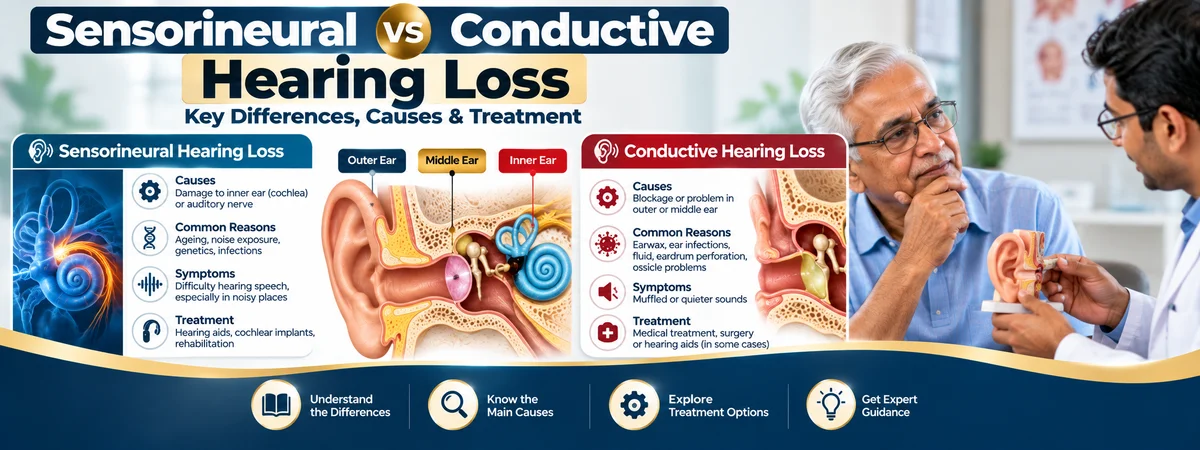
To understand the two types of hearing loss, it helps to know how the ear works. The ear has three main parts.
The outer ear includes the visible ear and the ear canal. It collects sound waves and directs them inward.
The middle ear contains the eardrum and three tiny bones called the malleus, incus and stapes. These bones pick up vibrations from the eardrum and pass them along.
The inner ear contains the cochlea, a snail-shaped organ lined with thousands of tiny hair cells, and the auditory nerve. The hair cells convert vibrations into electrical signals, and the nerve carries those signals to the brain, which interprets them as sound.
A problem at any point along this path can reduce hearing. Where the problem occurs decides the type of hearing loss.
What Is Conductive Hearing Loss?
Conductive hearing loss happens when sound cannot travel properly through the outer ear or middle ear to reach the inner ear. The inner ear itself may work perfectly well, but sound is blocked or weakened on the way.
Think of it like a blocked pipe. The water source is fine, but something is stopping the flow.
Common Causes of Conductive Hearing Loss
Earwax buildup that blocks the ear canal
Middle ear infections (otitis media)
Fluid behind the eardrum, common in children
A perforated or ruptured eardrum
Foreign objects stuck in the ear canal
Otosclerosis, where the stapes bone becomes fixed
Damage or disruption to the middle ear bones
Abnormal growths or tumours in the ear
Eustachian tube dysfunction
Birth defects affecting the outer or middle ear
Symptoms of Conductive Hearing Loss
Sounds seem muffled or faint
A feeling of fullness or pressure in the ear
Your own voice sounds louder inside your head
Ear pain or discharge, especially with infection
Hearing improves in noisy settings
Hearing loss that comes on suddenly or gradually
What Is Sensorineural Hearing Loss?
Sensorineural hearing loss results from damage to the inner ear, specifically the cochlea and its hair cells, or to the auditory nerve pathway leading to the brain. This is the most common type of permanent hearing loss.
Here, sound reaches the inner ear normally, but the signal is not converted or transmitted properly. Hair cells do not regenerate in humans, so this damage is usually permanent.
Common Causes of Sensorineural Hearing Loss
Ageing (presbycusis), the most common cause
Prolonged exposure to loud noise
Genetic or hereditary conditions
Ototoxic medicines that damage the inner ear
Infections such as meningitis, measles or mumps
Head injuries or trauma
Meniere’s disease
Acoustic neuroma, a benign tumour on the hearing nerve
Sudden sensorineural hearing loss, a medical emergency
Complications during pregnancy or birth
Diabetes, high blood pressure and circulation problems
Symptoms of Sensorineural Hearing Loss
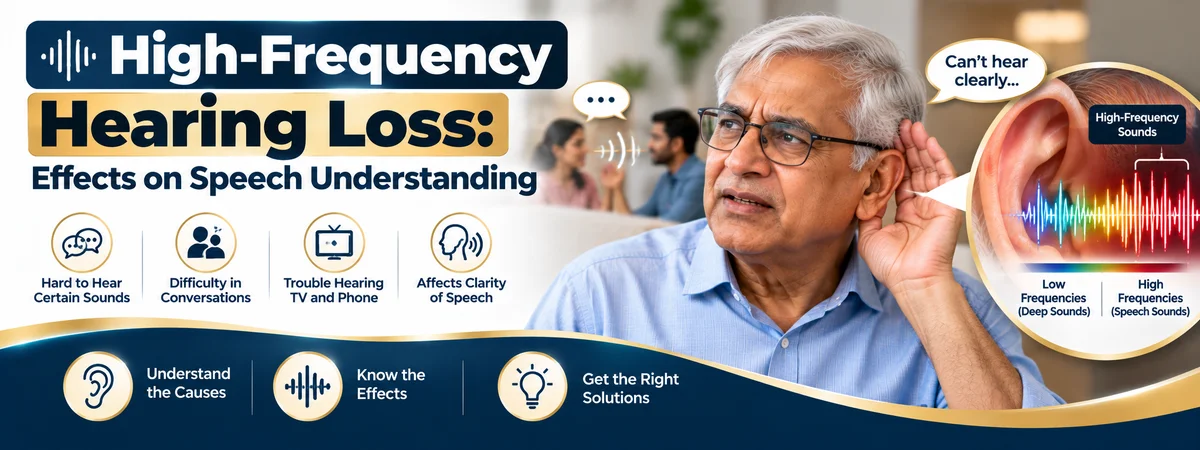
Difficulty understanding speech, especially in noise
People seem to mumble even when they speak clearly
Trouble hearing high-pitched sounds such as children’s voices or birds
Ringing in the ears (tinnitus)
Dizziness or balance problems in some cases
Needing to turn up the television volume
Sounds that are heard but not clearly understood
Key Differences at a Glance
Feature | Conductive Hearing Loss | Sensorineural Hearing Loss |
|---|---|---|
Location of problem | Outer or middle ear | Inner ear or auditory nerve |
Main issue | Sound is blocked | Signal is not processed |
Common causes | Wax, infection, fluid, eardrum damage | Ageing, noise, genetics, nerve damage |
Permanence | Often temporary and treatable | Usually permanent |
Sound quality | Muffled, softer | Distorted, unclear |
Typical treatment | Medicine, minor surgery, hearing aids | Hearing aids, cochlear implants |
Tinnitus | Less common | More common |
What Is Mixed Hearing Loss?
Sometimes a person has both types together. For example, an older adult with age-related inner ear damage may also develop an ear infection or wax blockage. This is called mixed hearing loss. Treatment addresses the conductive part first where possible, followed by support for the sensorineural part.
How Are the Two Types Diagnosed?
A qualified audiologist uses several tests to find the type and degree of hearing loss.
Otoscopy lets the specialist look inside the ear canal and eardrum for wax, infection, fluid or damage.
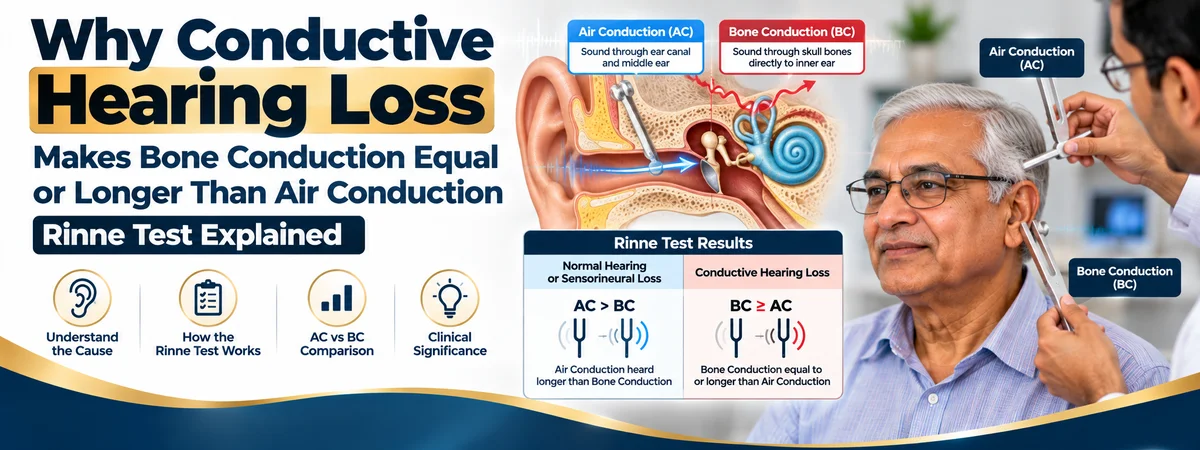
Pure tone audiometry measures the softest sounds you can hear at different pitches. It uses both air conduction (sound through headphones) and bone conduction (vibrations through a small device behind the ear). Comparing the two results shows the type of hearing loss. If bone conduction is normal but air conduction is reduced, the loss is conductive. If both are reduced equally, it is sensorineural.
Tympanometry checks how well the eardrum and middle ear are moving.
Speech audiometry tests how clearly you understand words, not just how loudly you hear them.
Otoacoustic emissions and ABR tests assess inner ear and nerve function, especially in infants and young children.
Treatment Options for Conductive Hearing Loss
Because the inner ear is usually healthy, conductive hearing loss is often reversible. Treatment depends on the cause.
Earwax removal by a professional restores hearing quickly
Antibiotics or medical treatment for infections
Ear tube insertion for chronic fluid in children
Eardrum repair surgery (tympanoplasty)
Surgery for otosclerosis such as stapedotomy
Hearing aids or bone conduction devices when surgery is not suitable
Treatment Options for Sensorineural Hearing Loss
Sensorineural hearing loss cannot usually be cured, but it can be managed very effectively.
Hearing aids amplify sound and are the most common solution for mild to severe loss
Cochlear implants bypass damaged hair cells and stimulate the nerve directly, suitable for severe to profound loss
Assistive listening devices help in classrooms, meetings and phone calls
Auditory training and speech therapy improve listening and communication skills
Tinnitus management to reduce the burden of ringing
Steroid treatment for sudden sensorineural hearing loss, which must be started within days
Can Hearing Loss Be Prevented?
Some forms can be prevented or slowed.
Avoid prolonged exposure to loud music and machinery
Use earplugs or protective earmuffs in noisy workplaces
Keep headphone volume at a safe level
Never insert cotton buds, pins or sharp objects into the ear
Treat ear infections promptly
Control diabetes and blood pressure
Check with your doctor before using medicines that may affect hearing
Get regular hearing checks, especially after age 50
When Should You See a Hearing Specialist?
Do not ignore warning signs. Consult an audiologist if you notice any of the following.
Difficulty following conversations
Frequently asking people to repeat themselves
Ringing, buzzing or fullness in the ears
Sudden hearing loss in one or both ears
Ear pain or discharge
A child not responding to sounds or showing delayed speech
Early detection gives better results, protects communication skills and slows the effect of hearing loss on memory and emotional health.
Expert Hearing Care in Chhatrapati Sambhajinagar
If you or a loved one is struggling to hear, professional testing can bring clarity. VR Speech and Hearing Clinic offers comprehensive audiological evaluation, hearing aid fitting, speech therapy and counselling for children and adults.
Address: VR Speech and Hearing Clinic, Second Floor, Vasantrao Naik Chowk, Opposite Hotel Deepali Executive, N-3, Cidco, Chhatrapati Sambhajinagar, Maharashtra 431003
Book an appointment today to find out which type of hearing loss you have and the best way to treat it.
Frequently Asked Questions (FAQs)
1. What is the main difference between sensorineural and conductive hearing loss?
Conductive hearing loss is caused by a problem in the outer or middle ear that blocks sound from reaching the inner ear. Sensorineural hearing loss is caused by damage to the inner ear or auditory nerve, so the signal is not processed properly.
2. Which type of hearing loss is permanent?
Sensorineural hearing loss is usually permanent because damaged hair cells and nerve fibres do not regrow. Conductive hearing loss is often temporary and can be treated with medicine or surgery.
3. Can hearing aids help both types of hearing loss?
Yes. Hearing aids benefit most people with sensorineural loss and can also help conductive loss when surgery is not possible. A hearing test determines the right device and settings.
4. Can earwax cause hearing loss?
Yes. Excess earwax is one of the most common causes of conductive hearing loss. Professional cleaning usually restores hearing immediately.
5. What is mixed hearing loss?
Mixed hearing loss is a combination of conductive and sensorineural loss in the same ear. It needs a treatment plan that addresses both parts.
6. How is the type of hearing loss identified?
An audiologist uses pure tone audiometry with air and bone conduction, along with tympanometry and speech tests, to identify the exact type and degree.
7. Is tinnitus linked to sensorineural hearing loss?
Tinnitus is more commonly associated with sensorineural hearing loss, though it can occur with other ear problems as well.
8. Can children have these types of hearing loss?
Yes. Children often get conductive loss from ear infections and fluid in the middle ear, while sensorineural loss may be present from birth or caused by infections. Early screening is important.
9. Is sudden hearing loss an emergency?
Yes. Sudden sensorineural hearing loss needs medical attention within a few days. Delay can reduce the chance of recovery.
10. How often should I get my hearing checked?
Adults should have a baseline test and then check every one to three years after age 50, or sooner if they notice changes in hearing.