Conductive vs Sensorineural Hearing Loss: Key Differences Explained
Conductive vs Sensorineural Hearing Loss: What You Need to Know
Hearing loss affects millions of people worldwide, yet many do not realize that not all hearing loss is the same. Understanding the type of hearing loss you or a loved one is experiencing is the first and most important step toward finding the right treatment. At VR Hearing Clinic, we believe that informed patients make better health decisions. This guide explains the two most common types of hearing loss — conductive and sensorineural — in clear, simple terms.
What Is Conductive Hearing Loss?
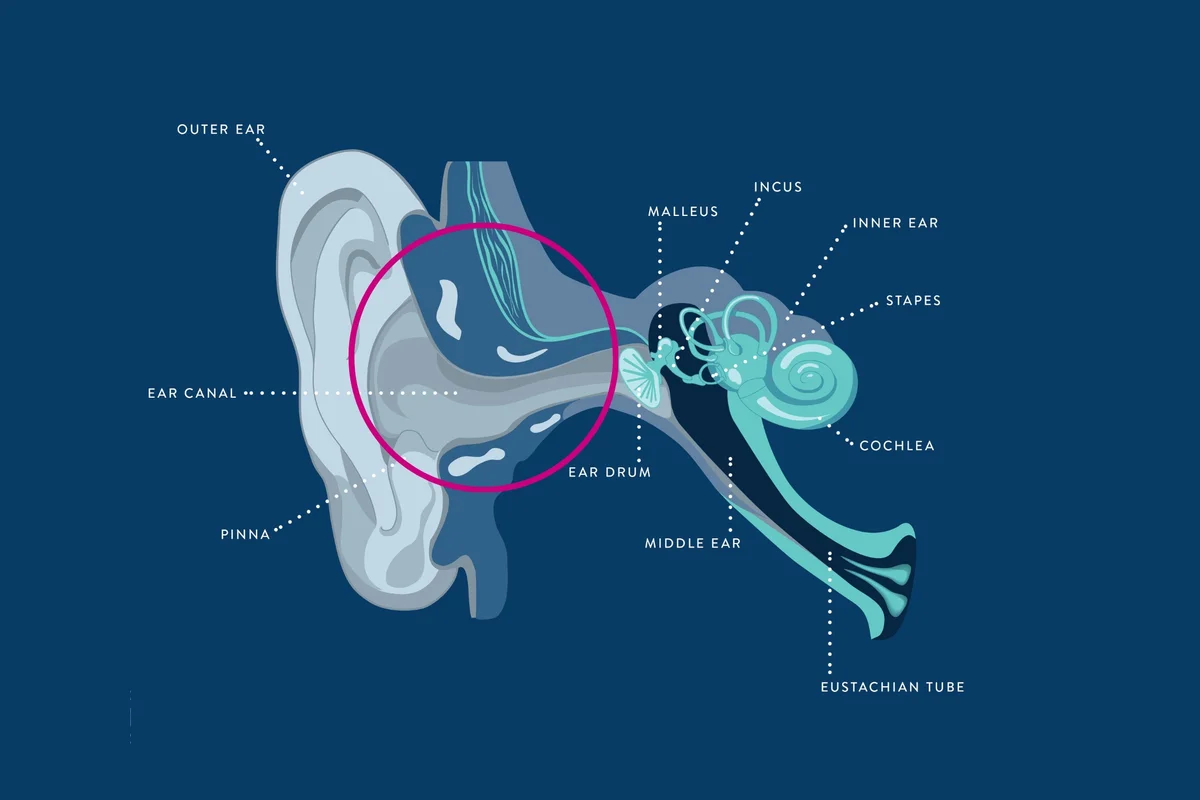
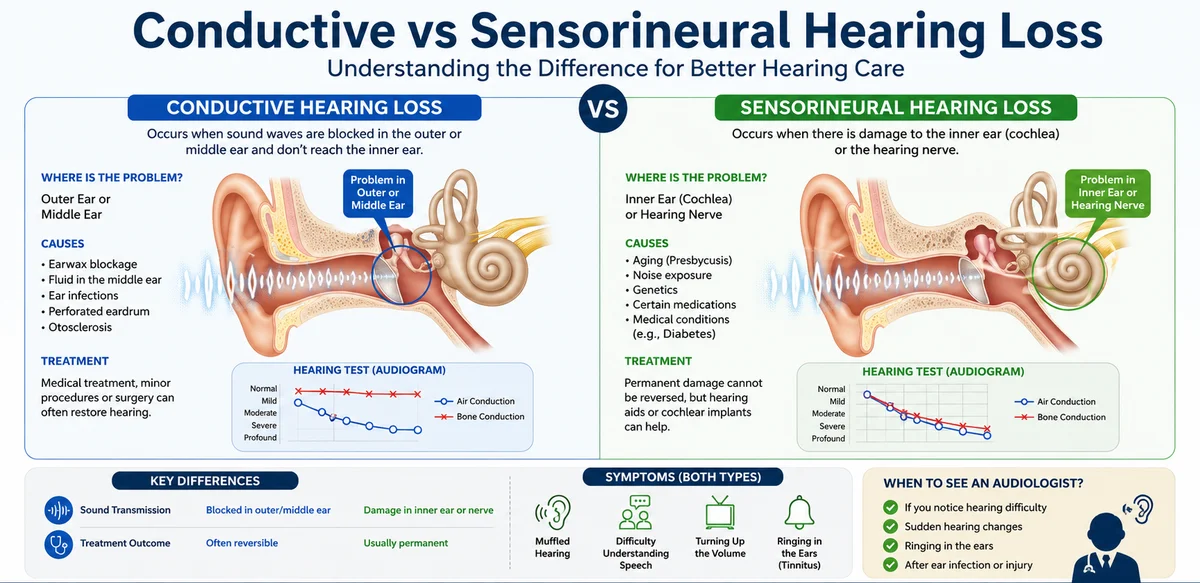
Conductive hearing loss occurs when sound cannot travel efficiently through the outer ear canal to the eardrum and the tiny bones of the middle ear, known as ossicles. In this type of hearing loss, the inner ear itself is often functioning normally — the problem lies in the pathway that conducts sound to it.
Common causes of conductive hearing loss include:
Earwax buildup (cerumen impaction) is one of the most frequent and easily treated causes. When wax accumulates and blocks the ear canal, it muffles incoming sound. Ear infections, particularly otitis media (middle ear infection), can cause fluid to accumulate behind the eardrum, reducing its ability to vibrate. A perforated eardrum, whether from injury, infection, or sudden pressure changes, can significantly reduce the ear's ability to conduct sound. Otosclerosis is a condition where abnormal bone growth around the stapes (the smallest bone in the body) restricts its movement. Eustachian tube dysfunction, where the tube connecting the middle ear to the back of the throat fails to equalize pressure properly, is another common culprit. Foreign objects lodged in the ear canal, particularly in children, can also cause temporary conductive hearing loss.
Signs and Symptoms of Conductive Hearing Loss
People with conductive hearing loss often describe sounds as muffled or as though they are hearing through cotton wool. They may find it easier to hear in quieter environments and may notice that their own voice sounds unusually loud to themselves. Other common experiences include a sensation of fullness or pressure in the ear, mild pain or discomfort, and occasional dizziness.
The encouraging news about conductive hearing loss is that it is very often treatable, and in many cases fully reversible. Medical interventions such as earwax removal, antibiotics for infection, surgical repair of the eardrum, or surgery to address otosclerosis can restore hearing to near-normal levels.
What Is Sensorineural Hearing Loss?
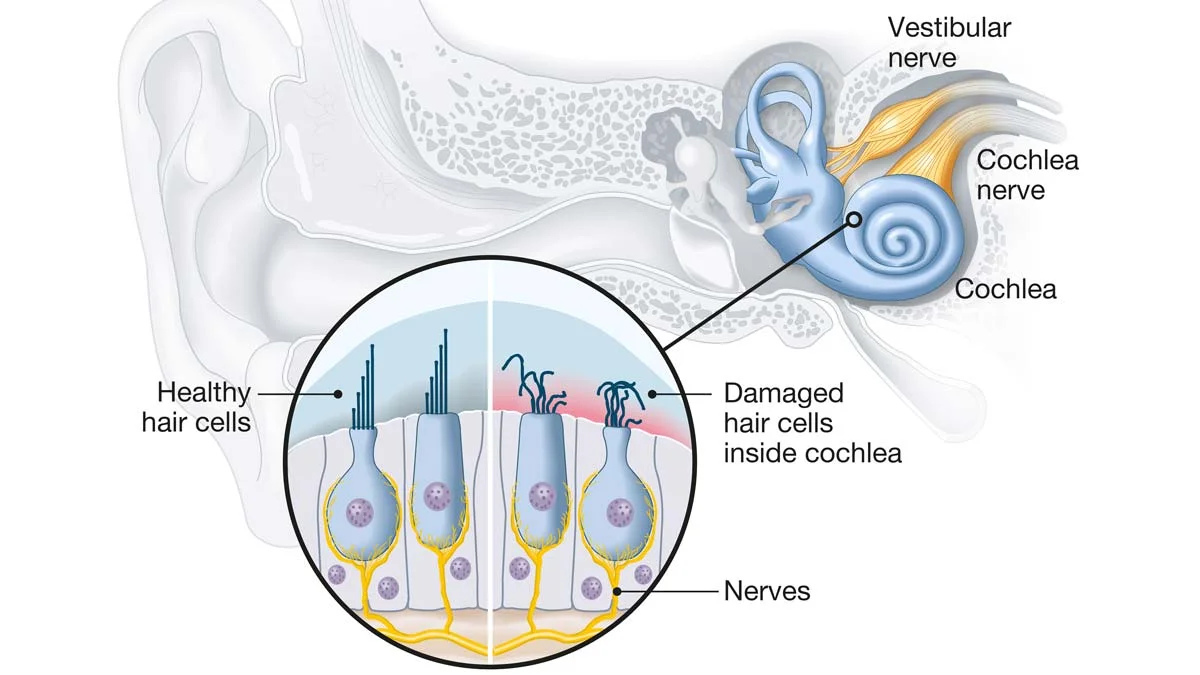
Sensorineural hearing loss (SNHL) is the most common type of permanent hearing loss. It occurs when there is damage to the inner ear — specifically the cochlea (the snail-shaped organ that converts sound vibrations into nerve signals) — or to the auditory nerve that carries those signals to the brain. Unlike conductive hearing loss, which is often a mechanical problem, sensorineural hearing loss involves damage at a cellular or neurological level.
Common causes of sensorineural hearing loss include:
Age-related hearing loss, medically known as presbycusis, is the single most common cause. As we age, the hair cells inside the cochlea naturally deteriorate, leading to a gradual decline in hearing ability, particularly for high-frequency sounds. Noise-induced hearing loss results from prolonged or sudden exposure to loud sounds, which can permanently damage the delicate hair cells of the cochlea. These cells do not regenerate. Ototoxic medications, including certain chemotherapy drugs, high-dose aspirin, and some antibiotics, can cause sensorineural damage as a side effect. Viral infections such as mumps, measles, and meningitis can directly damage the auditory nerve or the cochlea. Meniere's disease, an inner ear disorder linked to abnormal fluid pressure, can cause fluctuating sensorineural hearing loss along with tinnitus and vertigo. Genetic factors and birth-related conditions account for a significant proportion of hearing loss in infants and children.
Signs and Symptoms of Sensorineural Hearing Loss
Sensorineural hearing loss typically presents as difficulty understanding speech, especially in noisy environments. People with SNHL often say they can hear others speaking but struggle to make out the words clearly. High-pitched sounds like birdsong, doorbells, or children's voices are frequently the first to become harder to detect. Tinnitus — a persistent ringing, buzzing, or hissing sound in the ears — is also a very common accompanying symptom.
Unlike conductive hearing loss, sensorineural hearing loss is generally not reversible with medication or surgery. However, it is highly manageable. Modern hearing aids are exceptionally effective at amplifying and clarifying sound for people with SNHL, and in cases of profound or severe hearing loss, cochlear implants can restore a functional level of hearing.
Mixed Hearing Loss: When Both Types Are Present
It is worth noting that some individuals experience mixed hearing loss, meaning they have elements of both conductive and sensorineural hearing loss simultaneously. For example, a person with age-related sensorineural hearing loss may also develop a middle ear infection, adding a conductive component. Treatment in these cases is tailored to address both aspects of the condition.
How Is the Type of Hearing Loss Diagnosed?
Accurate diagnosis requires a professional hearing assessment conducted by a qualified audiologist. At VR Hearing Clinic, our comprehensive evaluations include:
A pure-tone audiometry test determines the softest sounds a person can hear across a range of frequencies. This produces an audiogram — a visual map of your hearing ability. A tympanometry test assesses the movement of the eardrum and the function of the middle ear, helping to identify conductive components. Speech audiometry evaluates how well you can hear and understand spoken words at different volumes. Bone conduction testing is particularly useful for distinguishing between conductive and sensorineural hearing loss. It bypasses the outer and middle ear entirely, delivering sound directly to the cochlea through a small device placed behind the ear. If a person hears normally through bone conduction but poorly through air conduction, the issue is conductive. If hearing is reduced through both pathways, the issue is sensorineural.
Treatment Options: A Comparison
Conductive hearing loss is frequently treated with earwax removal procedures, prescription medications such as antibiotics or antifungals, minor surgical procedures including grommet insertion (for children with glue ear), tympanoplasty for eardrum repair, and stapedectomy for otosclerosis. In some cases, bone-anchored hearing aids (BAHA) are recommended where surgery is not suitable.
Sensorineural hearing loss is most commonly managed with digital hearing aids, which are available in a wide range of styles including behind-the-ear, receiver-in-canal, and completely-in-canal models. For severe to profound SNHL, cochlear implants may be recommended. Auditory rehabilitation programs help patients adjust to and maximize the benefit of hearing devices. Tinnitus management therapies are also available for those experiencing accompanying tinnitus.
When Should You See a Hearing Specialist?
You should not wait until hearing loss becomes severe before seeking help. Early intervention consistently leads to better outcomes, both for hearing ability and for related cognitive and emotional wellbeing. Consider booking an assessment at VR Hearing Clinic if you frequently ask people to repeat themselves, have difficulty following conversations in noisy places, notice ringing or buzzing in your ears, feel that others are mumbling or speaking unclearly, need to turn the television volume up higher than others find comfortable, or have experienced sudden hearing loss in one or both ears.
Sudden sensorineural hearing loss in particular is a medical emergency that requires prompt attention, as early steroid treatment can significantly improve the chances of recovery.
Why Accurate Diagnosis Matters
Treating the wrong type of hearing loss can lead to wasted time, money, and unnecessary frustration. A patient with conductive hearing loss due to earwax does not need a hearing aid — they need wax removal. Conversely, a patient with significant sensorineural hearing loss will not benefit from over-the-counter sound amplifiers that do not address the nuances of their specific hearing profile. Getting a professional diagnosis ensures you receive targeted, effective care from the very first appointment.
Final Thoughts
Whether your hearing loss is conductive, sensorineural, or mixed, the path forward begins with understanding what is actually happening in your ears. The two types differ in their causes, their symptoms, and their treatments — but both are highly manageable with the right professional support.
At VR Hearing Clinic, our experienced team is committed to guiding you through every step of your hearing health journey, from initial assessment to ongoing care. If you have concerns about your hearing, do not hesitate to reach out. Better hearing is not just possible — for most people, it is achievable.