Common Mistakes People Make While Buying an Ear Machine
Common Mistakes People Make While Buying an Ear Machine
Buying a hearing aid, often called an "ear machine" in everyday conversation, is one of those decisions people tend to rush. Hearing loss creeps in slowly, and by the time someone decides to act on it, there's usually a sense of urgency to fix the problem quickly. Unfortunately, this urgency often leads to poor choices that cost money, comfort, and sometimes even the willingness to try again.
Whether you're buying an ear machine for yourself or an aging parent, understanding the common pitfalls can save you from months of frustration. Here's a detailed look at the mistakes people repeatedly make, and how you can avoid them.
Mistake One: Skipping the Hearing Test
The single biggest mistake buyers make is walking into a shop and picking an ear machine without a proper hearing test. Hearing loss isn't uniform. One person might struggle with high-pitched sounds, another with low frequencies, and someone else might have hearing loss that's more pronounced in one ear than the other.
Without a diagnostic hearing test (audiometry) conducted by a qualified audiologist, you're essentially guessing. A device that isn't calibrated to your specific hearing profile may amplify the wrong frequencies, leave gaps in speech clarity, or simply feel unnatural. Many people give up on hearing aids altogether after a bad first experience, when the real issue was never getting properly tested in the first place.
A hearing test takes less than an hour and gives both you and your audiologist a clear picture of what kind of amplification, and what kind of device, will actually help.
Mistake Two: Choosing Based on Ear Machine Price Alone
Price is always a factor, and that's completely reasonable. But choosing the cheapest ear machine price you can find, without considering features, fit, or after-sales service, often backfires.
Very low-cost devices are usually basic sound amplifiers rather than true hearing aids. They amplify everything indiscriminately, including background noise, which can make environments like markets, traffic, or family gatherings unbearable rather than easier to navigate. On the other end, the most expensive device isn't automatically the best choice either, especially if it has features you don't need.
The smarter approach is to think of ear machine price as one part of a bigger equation that includes sound quality, comfort, battery life, warranty, and the support you'll receive after purchase. A mid-range device fitted correctly by a professional will almost always outperform a premium device bought carelessly.
Mistake Three: Rushing to Buy Ear Machine Options Online
Online shopping has made almost everything more convenient, and hearing aids are no exception. There are now countless ear machine options available with just a few clicks, often at tempting discounts. But hearing aids aren't like headphones or earphones. They need to be fitted, programmed, and adjusted to your specific ear shape and hearing loss pattern.
Buying online without any professional involvement means you miss out on the fitting process entirely. The device might be physically uncomfortable, or worse, programmed with generic settings that don't match your hearing needs. Some buyers end up purchasing two or three devices online before realizing that the actual solution lies in an in-person consultation.
If you do want to explore ear machine options online, use it as a starting point for research, not the final purchase decision. Narrow down your choices, then visit a clinic to get properly assessed and fitted.
Mistake Four: Ignoring the Trial Period
Almost every reputable hearing aid provider offers a trial period, yet many buyers skip this step entirely, either because they don't know it exists or because they're in a hurry to finalize the purchase.
A trial period allows you to wear the device in real-life situations: at home, at work, in noisy places, during phone calls, before committing to it fully. This is crucial because a hearing aid that sounds perfect in a quiet clinic room can feel completely different in a crowded market or a family dinner.
Skipping the trial period means you're committing to a device you've barely tested. If it doesn't suit you, you're often stuck with a non-refundable purchase. Always ask specifically about the trial period, how long it lasts, and what the return or exchange policy looks like, before signing off on any purchase.
Mistake Five: Not Thinking About How to Choose the Right Hearing Aid for India
Buying decisions abroad don't always translate well to Indian conditions. If you're wondering how to choose the right hearing aid for India specifically, there are a few local factors that matter more than people realize.
India's climate is humid in many regions, which can affect device longevity if moisture resistance isn't considered. Power cuts and inconsistent electricity in smaller towns make battery life and charging convenience important factors. Language and accent also matter. A hearing aid's speech-processing algorithm should work well with the specific way people around you speak, not just generic English test tones.
Affordability and access to local service centers are equally important. A high-end imported device might offer excellent features, but if the nearest service center is hours away, routine maintenance becomes a hassle. When figuring out how to choose the right hearing aid for India, prioritize devices with strong local support networks over specs alone.
Mistake Six: Forgetting About Follow Up Support
A hearing aid isn't a one-time purchase; it's an ongoing relationship. Ears change, hearing loss can progress, and devices need regular cleaning, tuning, and occasional repairs. Many buyers forget to ask about follow up support before purchasing, only to struggle later when they need an adjustment or a minor repair.
Good follow up support includes periodic hearing re-evaluation, software reprogramming as your hearing changes, cleaning and maintenance services, and quick access to replacement parts like batteries, domes, or tubing. Before you buy, ask how many free follow-up visits are included, whether remote adjustments are possible, and how repairs are typically handled.
Common Mistakes at a Glance
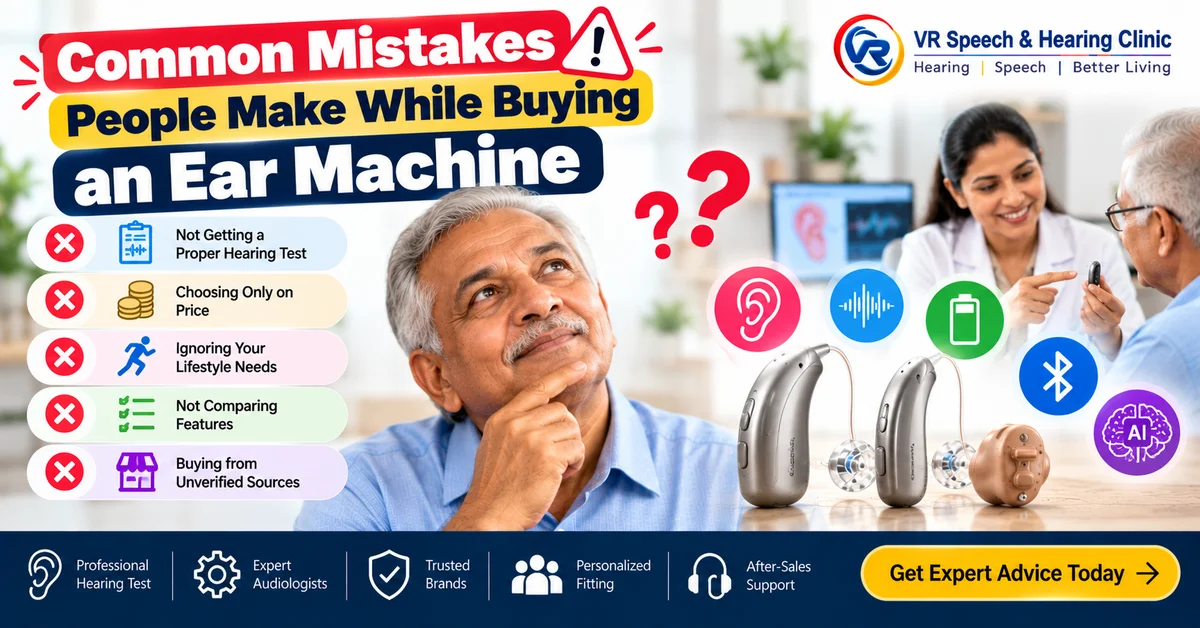
To summarize, the mistakes that most commonly trip up buyers are: skipping the hearing test, focusing only on ear machine price, rushing into online purchases, ignoring the trial period, not adapting the choice for how to choose the right hearing aid for India, and forgetting about follow up support. Each of these, on its own, might seem minor, but together they're responsible for most of the dissatisfaction people report with their first hearing aid.
How to Avoid These Mistakes
Avoiding these pitfalls doesn't require becoming an expert overnight. It simply requires a more structured approach. Start with a proper hearing test from a certified audiologist rather than assuming you know your hearing loss level. Compare ear machine price alongside features and support, not in isolation. Treat online research as a way to shortlist ear machine options, not the final purchase step. Always ask about and use the trial period fully before committing. Factor in India-specific conditions like climate, service access, and language when deciding how to choose the right hearing aid for India. Finally, choose a provider that offers strong follow up support, not just a one-time sale.
Why VR Speech and Hearing Clinic Helps You Get This Right
VR Speech and Hearing Clinic approaches hearing aid buying the way it should be approached: starting with a thorough diagnostic hearing test, followed by personalized recommendations based on your lifestyle, budget, and hearing profile. Rather than pushing a single brand or price point, the clinic focuses on matching the right device to the right person, with transparent guidance on ear machine price and features.
The clinic also emphasizes trial periods, so you never have to commit to a device you haven't tested in your everyday environment. And because ongoing care matters as much as the initial fitting, follow up support, including reprogramming, cleaning, and troubleshooting, is built into the experience rather than treated as an afterthought.
Conclusion
Buying an ear machine is a decision that affects daily communication, relationships, and quality of life, so it deserves more care than a quick online purchase or a price-based decision. By getting a proper hearing test, weighing ear machine price against real value, exploring ear machine options carefully, using trial periods, understanding how to choose the right hearing aid for India, and prioritizing follow up support, you set yourself up for a far better outcome. With the right guidance, such as the personalized approach offered by VR Speech and Hearing Clinic, choosing a hearing aid becomes a confident decision rather than a stressful gamble.
FAQs
Q1: What is an ear machine?
An ear machine is a common term for a hearing aid, a small electronic device worn in or behind the ear to amplify sound for people with hearing loss.
Q2: Is a hearing test necessary before buying an ear machine?
Yes. A hearing test identifies the exact type and degree of hearing loss, which determines what kind of device and settings will actually work for you.
Q3: Does a higher ear machine price always mean better quality?
Not necessarily. Price should be considered alongside fitting, features, and after-sales support rather than as the only deciding factor.
Q4: Can I buy ear machine options online without a hearing test?
It's not recommended. Online purchases skip the fitting and programming process, which often leads to discomfort or ineffective amplification.
Q5: How long should a hearing aid trial period last?
Most clinics offer a trial period of a few weeks, giving you time to test the device in different real-life environments before finalizing the purchase.
Q6: What should I know about how to choose the right hearing aid for India?
Consider climate resistance, battery reliability, local service center access, and how well the device processes regional speech patterns and accents.
Q7: Why is follow up support important after buying a hearing aid?
Hearing needs change over time, and devices require regular cleaning, adjustments, and occasional repairs, so ongoing support ensures long-term satisfaction.