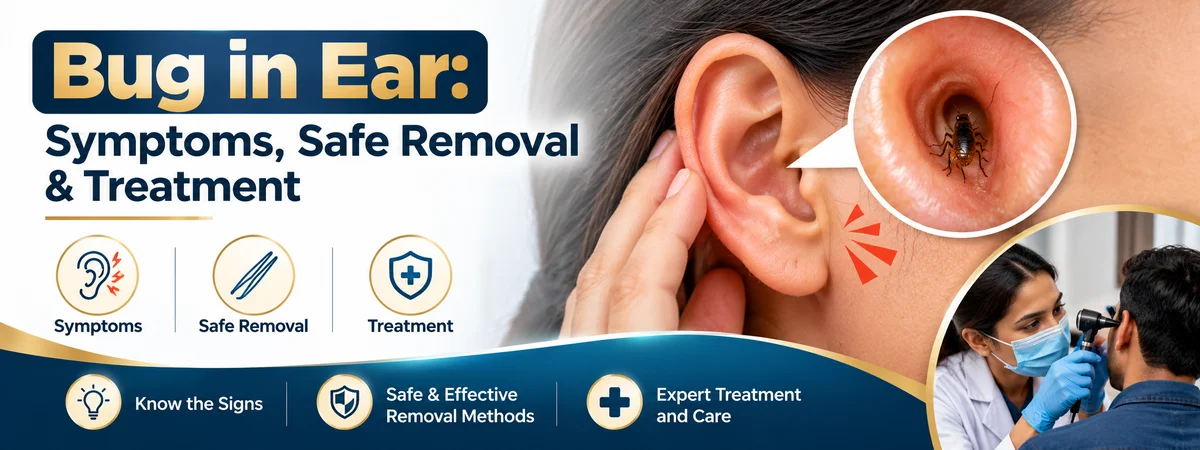
Bug in Ear: Symptoms, Safe Removal & Treatment
Bug in Ear: Symptoms, Removal & Treatment
Few things feel as alarming as a bug crawling or buzzing inside your ear. The sound is loud, the sensation is strange, and the panic is real. An insect in the ear is more common than most people think, especially at night, during the monsoon season, and in warm climates like Maharashtra. Moths, mosquitoes, ants, flies, beetles, and cockroaches can all find their way into the ear canal.
The good news is that this is usually not dangerous if handled calmly and correctly. The wrong response, however, can push the insect deeper or damage the eardrum. This guide explains the symptoms, safe first-aid steps, what to avoid, and when to get professional help.
Why Do Bugs Enter the Ear?
The ear canal is a warm, dark, sheltered space. It is easy for a small insect to wander in, especially in these situations:
Sleeping on the floor, on the ground, or outdoors
Sleeping with windows open or without a mosquito net
Camping, trekking, or working in fields and gardens
Living in homes with cockroach or ant problems
Monsoon season, when insects look for dry shelter
Children playing outdoors or on grass
Most insects enter by accident. Some are attracted by earwax, warmth, or moisture.
Common Symptoms of a Bug in the Ear
Symptoms depend on the type and size of the insect and whether it is alive or dead. Watch for:
1. Crawling or buzzing sensation. A live insect often causes a tickling, fluttering, or crawling feeling. You may hear loud buzzing, scratching, or clicking sounds, especially in a quiet room.
2. Ear pain. A moving insect can irritate the delicate skin of the ear canal. Some insects bite or sting, causing sharp or throbbing pain.
3. Feeling of fullness. The ear may feel blocked, like water or wax is trapped inside.
4. Reduced hearing. A larger insect, or one that has died, can partially block the canal and muffle sound.
5. Itching or irritation. Constant movement can make the ear canal itchy and sore.
6. Dizziness or imbalance. If the insect touches the eardrum or is close to it, you may feel off balance or lightheaded.
7. Discharge or bleeding. Fluid, pus, or blood may appear if the skin is scratched or an infection develops.
8. Tinnitus. Ringing or a persistent noise in the ear can occur.
Children may not be able to describe what they feel. Watch for sudden ear tugging, crying, irritability, head shaking, or refusing to lie on one side.
What to Do Immediately: Safe First Aid
Stay calm. Panic makes the insect move more and makes you more likely to do something harmful. Follow these steps.
Step 1: Stay still and tilt your head. Tilt your head so the affected ear faces the ground and gently shake it. Sometimes the insect falls out on its own.
Step 2: Use a light to lure it out. In a dark room, shine a torch near the ear opening. Some insects, such as moths, move toward light.
Step 3: Drown the insect with oil. If you are confident your eardrum is intact and there is no ear discharge or history of ear surgery, lie on your side with the affected ear up. Gently pour a few drops of lukewarm (not hot) mineral oil, baby oil, or olive oil into the ear. The oil suffocates the insect, stops its movement, and often makes it float to the surface. Stay in this position for a minute or two, then tilt your head to let the oil and insect drain out.
Step 4: Gently pull the ear. Pull the outer ear gently backward and upward (downward for children) to straighten the canal, which helps the insect slide out.
If the insect does not come out after these steps, or if you have any doubt, see a doctor. Do not keep trying at home.
What NOT to Do
Wrong home remedies cause more harm than the insect itself. Avoid the following:
Do not use cotton buds, hairpins, matchsticks, or tweezers. These can push the insect deeper or injure the canal and eardrum.
Do not put your finger inside the ear.
Do not use oil or water if you have a perforated eardrum, ear discharge, or recent ear surgery.
Do not use ear candles.
Do not use garlic, onion juice, or alcohol-based drops. These can irritate the skin.
Do not flush with water if the insect is a seed, grain, or plant material, because these can swell. Also avoid forceful flushing in children.
Do not wait for days. A dead insect left in the ear can cause infection.
When to See an ENT Doctor or Hearing Specialist
Seek professional care if any of these apply:
The insect does not come out after first aid
You have severe pain, bleeding, or discharge
You feel dizzy, nauseous, or have sudden hearing loss
The insect is large, like a cockroach or beetle
You suspect the eardrum is injured
A child is involved
Symptoms continue after the insect seems to be gone
You have swelling, redness, fever, or a foul smell from the ear
How Doctors Remove a Bug from the Ear
A trained professional will first examine the ear with an otoscope or a microscope to see the insect clearly and check the condition of the ear canal and eardrum. Depending on the case, treatment may include:
Killing the insect first. A live insect is often immobilised with medicated drops or oil, which makes removal more comfortable.
Suction. Gentle suction under direct vision is a safe and common method, especially for small or fragile insects.
Micro-instruments. Fine forceps or hooks designed for the ear are used to remove the insect in one piece.
Irrigation. Controlled, gentle flushing may be used only when the eardrum is confirmed to be intact.
Aftercare. If the canal is scratched or inflamed, the doctor may prescribe antibiotic or anti-inflammatory ear drops. Any pain relief or medicines should be taken only as advised by a doctor.
Professional removal is usually quick, and most people feel immediate relief.
Possible Complications if Left Untreated
A bug in the ear that is ignored or removed incorrectly can lead to:
Ear canal infection (otitis externa)
Injury or perforation of the eardrum
Hearing loss
Persistent tinnitus
Skin abrasions and bleeding
Allergic reactions to bites, stings, or insect parts
Spread of infection to the middle ear
Early, safe removal prevents nearly all of these problems.
After Removal: Care and Follow-Up
Once the insect is out:
Keep the ear dry for a few days if advised
Avoid swimming and avoid inserting anything into the ear
Use prescribed drops exactly as directed
Watch for pain, discharge, or hearing changes
Book a follow-up if hearing feels reduced, since a hearing check can confirm that nothing was affected
How to Prevent Insects from Entering Your Ears
Simple habits lower the risk:
Use mosquito nets or screens when sleeping
Keep your bedroom and bedding clean and pest-free
Close windows at night during insect-heavy seasons
Avoid sleeping on the floor or on bare ground
Control cockroaches and ants at home
Use insect repellent outdoors, avoiding the ear canal itself
Keep ears clean without over-cleaning, since a healthy wax layer is protective
Teach children not to put objects in their ears
Expert Ear and Hearing Care in Chhatrapati Sambhajinagar
If you or your child has a bug in the ear, or you are unsure whether something is stuck, do not take chances. Professional care keeps your hearing safe and gives you quick relief.
VR Speech and Hearing Clinic
Second Floor, Vasantrao Naik Chowk, Opposite Hotel Deepali Executive, N-3, CIDCO, Chhatrapati Sambhajinagar, Maharashtra 431003
The clinic offers careful ear examination, safe removal of foreign bodies, and hearing evaluation to make sure your ear health is back to normal. Visit early rather than waiting for pain or infection to develop.
Frequently Asked Questions (FAQs)
1. Can a bug go into the brain through the ear?
No. The eardrum and the bones of the skull separate the ear canal from the brain. An insect cannot reach the brain. However, it can irritate the canal or damage the eardrum, so it should be removed promptly.
2. How do I know if there is a bug in my ear?
Common signs are a crawling feeling, buzzing sounds, pain, a blocked sensation, itching, and reduced hearing. An exam confirms it.
3. Can I remove a bug from my ear at home?
Sometimes. Tilting the head and using lukewarm oil can work if your eardrum is intact. Never use sharp objects or cotton buds. If it does not come out quickly, see a doctor.
4. What should I put in my ear to kill a bug?
Lukewarm mineral oil, baby oil, or olive oil is commonly recommended, provided there is no eardrum perforation, discharge, or ear surgery history.
5. Is it an emergency?
It is usually not life-threatening, but it needs prompt attention. Go to a doctor urgently for severe pain, bleeding, dizziness, sudden hearing loss, or if a child is affected.
6. What if the bug is dead inside my ear?
A dead insect can still cause blockage and infection. It should be removed by a professional.
7. Can a bug in the ear cause hearing loss?
It can cause temporary hearing loss by blocking the canal. Permanent loss is rare, but it can happen if the eardrum or middle ear is damaged.
8. Will the bug come out on its own?
Sometimes, but not reliably. Do not wait several days, because infection can develop.
9. How long does removal take?
Professional removal usually takes only a few minutes.
10. Where can I get a bug removed from my ear in Chhatrapati Sambhajinagar?
You can visit VR Speech and Hearing Clinic at Vasantrao Naik Chowk, CIDCO N-3, for examination and safe care.