BTE vs RIC vs ITC Hearing Aids: Which Style Is Best for You?
BTE vs RIC vs ITC Hearing Aids: Which Style Is Right for You?
Choosing a hearing aid is about more than just amplifying sound — it's about finding a device that fits your lifestyle, hearing loss level, and comfort preferences. Among the many styles available, three stand out as the most commonly recommended by audiologists: BTE (Behind-The-Ear), RIC (Receiver-In-Canal), and ITC (In-The-Canal). Each has distinct advantages and trade-offs. This guide breaks down the differences so you can make an informed decision.
Understanding the Three Hearing Aid Styles
What Is a BTE Hearing Aid?
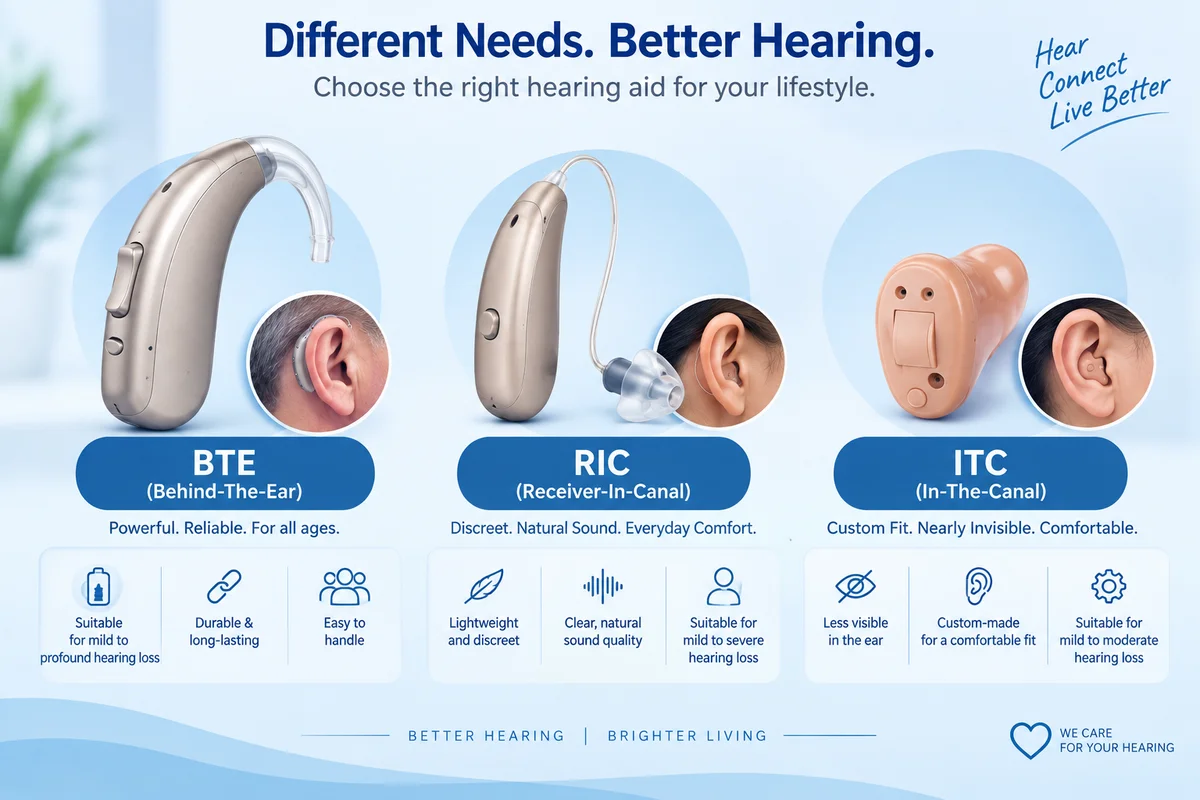
Behind-The-Ear hearing aids are exactly what the name suggests — a small case sits behind the ear, connected to an earmold or dome that sits inside the ear canal via a thin tube. BTE devices house the microphone, processor, and battery all in the behind-the-ear unit, making them one of the most powerful and versatile styles on the market.
Best suited for: People with mild to profound hearing loss, including children and older adults who need a durable, easy-to-handle device.
Pros:
Handles the widest range of hearing loss, from mild to severe
Larger controls and batteries, easier to manage for those with dexterity issues
Durable and less prone to earwax damage since components sit outside the ear
Longer battery life compared to smaller styles
Cons:
More visible than other styles
Can interfere with glasses or face masks
Some users find the tube uncomfortable at first
What Is a RIC Hearing Aid?
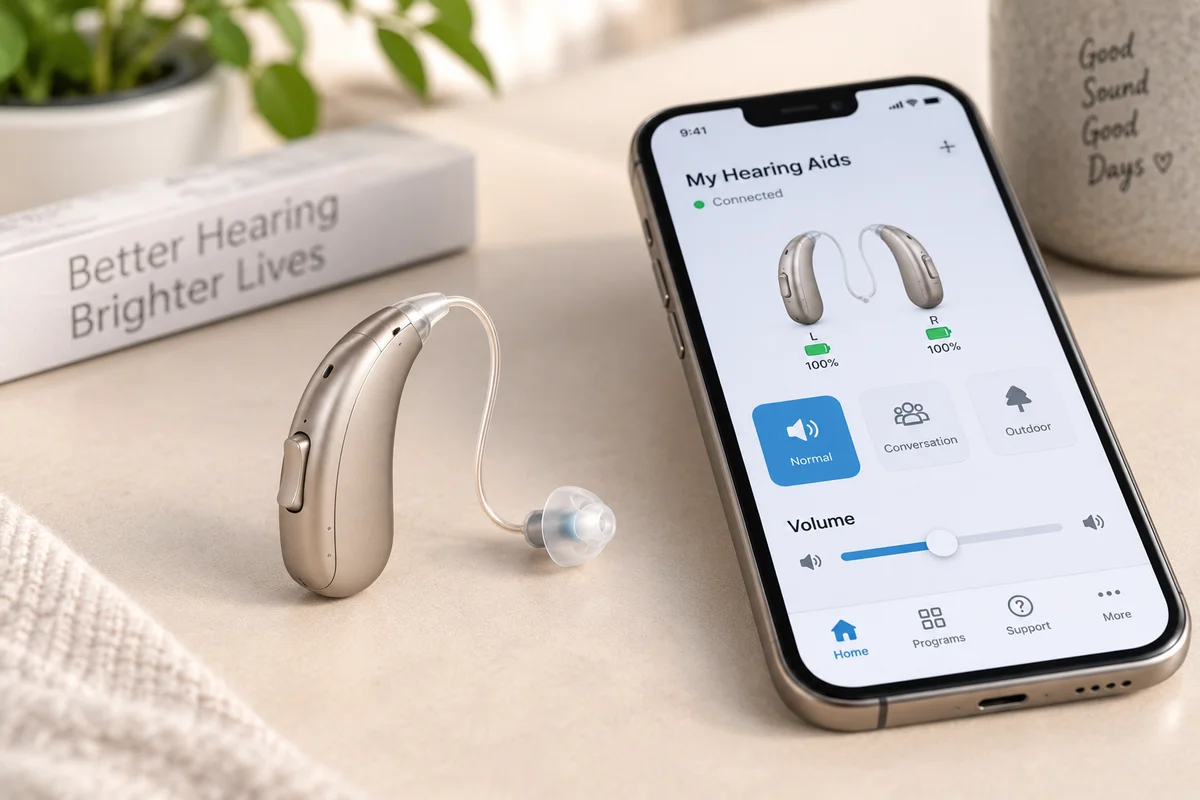
Receiver-In-Canal hearing aids are a popular evolution of the BTE design. Instead of routing sound through a tube, the RIC style places the speaker (receiver) directly in the ear canal, connected to the behind-the-ear unit by a thin wire. This design reduces the size of the behind-the-ear component significantly.
Best suited for: People with mild to severe hearing loss who want a discreet yet powerful option.
Pros:
Smaller and less visible than traditional BTE devices
Natural sound quality because the receiver sits closer to the eardrum
Reduced occlusion effect (that "plugged up" feeling)
Available with rechargeable battery options
Great for both first-time users and experienced wearers
Cons:
The receiver wire can be prone to wear and may need replacement
Slightly more vulnerable to moisture and earwax than BTE
Not always ideal for profound hearing loss
What Is an ITC Hearing Aid?
In-The-Canal hearing aids are custom-molded to fit partially inside the ear canal, making them far less noticeable than BTE or RIC models. They are a step between fully invisible in-the-ear devices and the more visible behind-the-ear styles.
Best suited for: Adults with mild to moderate hearing loss who prioritize discretion and have good manual dexterity.
Pros:
Nearly invisible, boosting confidence for self-conscious users
Custom-fitted for comfort
Compatible with phones and headphones without feedback issues
No external tubing or wires
Cons:
Limited power, not suitable for severe or profound hearing loss
Smaller batteries mean shorter battery life
Higher risk of earwax clogging due to canal placement
Small size can make handling and cleaning difficult, especially for seniors
BTE vs RIC vs ITC: Side-by-Side Comparison
Feature | BTE | RIC | ITC |
|---|---|---|---|
Visibility | Most visible | Moderately discreet | Highly discreet |
Hearing loss range | Mild to profound | Mild to severe | Mild to moderate |
Durability | Very durable | Moderate | Less durable |
Battery life | Longest | Moderate (rechargeable options) | Shortest |
Sound quality | Good | Excellent (natural) | Good |
Ease of handling | Easiest | Easy | Requires dexterity |
Cost | Varies, often mid-range | Mid to high | Mid to high |
Which One Should You Choose?
The right hearing aid style ultimately depends on a few personal factors:
1. Degree of Hearing Loss
If you have severe to profound hearing loss, BTE devices are typically the most reliable option because they can be fitted with more powerful amplification. RIC devices work well for mild to severe loss, while ITC is generally reserved for mild to moderate cases.
2. Lifestyle and Activity Level
Active individuals or those working in noisy or physically demanding environments may prefer the durability of a BTE device. RIC hearing aids strike a balance between performance and subtlety, making them a favorite among professionals. ITC aids suit those who want a low-profile solution for everyday, less physically intense settings.
3. Manual Dexterity
Smaller devices like ITC require more precision to insert, remove, and clean. If dexterity is a concern — particularly for older adults — a BTE or RIC option with larger components may be easier to manage.
4. Cosmetic Preference
For many first-time users, appearance is a major factor. RIC and ITC styles are far less noticeable than traditional BTE hearing aids, which can influence confidence in social or professional settings.
5. Budget
Pricing varies by brand, technology level, and features like Bluetooth connectivity or rechargeability. Generally, cost differences between these three styles depend more on the internal technology than the shell style itself, so it's worth comparing specific models rather than assuming one style is universally cheaper.
Final Thoughts
There's no single "best" hearing aid style — only the best style for your specific hearing loss, lifestyle, and comfort needs. BTE hearing aids offer power and durability, RIC devices balance discretion with excellent sound quality, and ITC aids provide a nearly invisible solution for those with mild to moderate hearing loss. The best way to determine which is right for you is to consult with a licensed audiologist who can evaluate your hearing profile and recommend a device tailored to your needs.
FAQs
Q1: What is the main difference between BTE, RIC, and ITC hearing aids?
BTE devices sit fully behind the ear with sound delivered through a tube, RIC devices place the receiver directly in the ear canal for more natural sound, and ITC devices are custom-molded to fit partly inside the canal for maximum discretion.
Q2: Which hearing aid style is most discreet?
ITC hearing aids are the most discreet of the three, as they sit mostly hidden within the ear canal. RIC devices are the next most subtle option.
Q3: Can BTE hearing aids treat severe hearing loss?
Yes. BTE hearing aids are the most powerful of the three styles and are typically recommended for moderate to profound hearing loss.
Q4: Are RIC hearing aids good for first-time users?
Yes. RIC hearing aids are popular among first-time users because they combine natural sound quality, moderate visibility, and ease of use.
Q5: Do ITC hearing aids work well for seniors?
ITC hearing aids can work well for seniors with mild to moderate hearing loss, but their small size may be challenging for those with limited dexterity or vision.
Q6: Which hearing aid style has the longest battery life?
BTE hearing aids generally offer the longest battery life due to their larger battery compartments, followed by RIC devices, with ITC having the shortest due to their compact size.