Bone Conduction Hearing Aid – Benefits, Types, Cost & Best Clinic Guide
Introduction
Hearing loss affects millions of people worldwide, and not every case can be treated with a traditional hearing aid. For people with certain types of hearing loss, such as conductive hearing loss, single-sided deafness, or chronic ear infections, a bone conduction hearing aid offers a safe and effective alternative. Unlike conventional devices that amplify sound through the ear canal, this technology sends sound vibrations directly through the bones of the skull to the inner ear, bypassing damaged or blocked areas completely.
This guide explains what a bone conduction hearing aid is, how it works, who benefits most from it, the different types available, and how a specialized clinic like VR Speech and Hearing Clinic can help you find the right solution for your hearing needs.

What Is a Bone Conduction Hearing Aid?
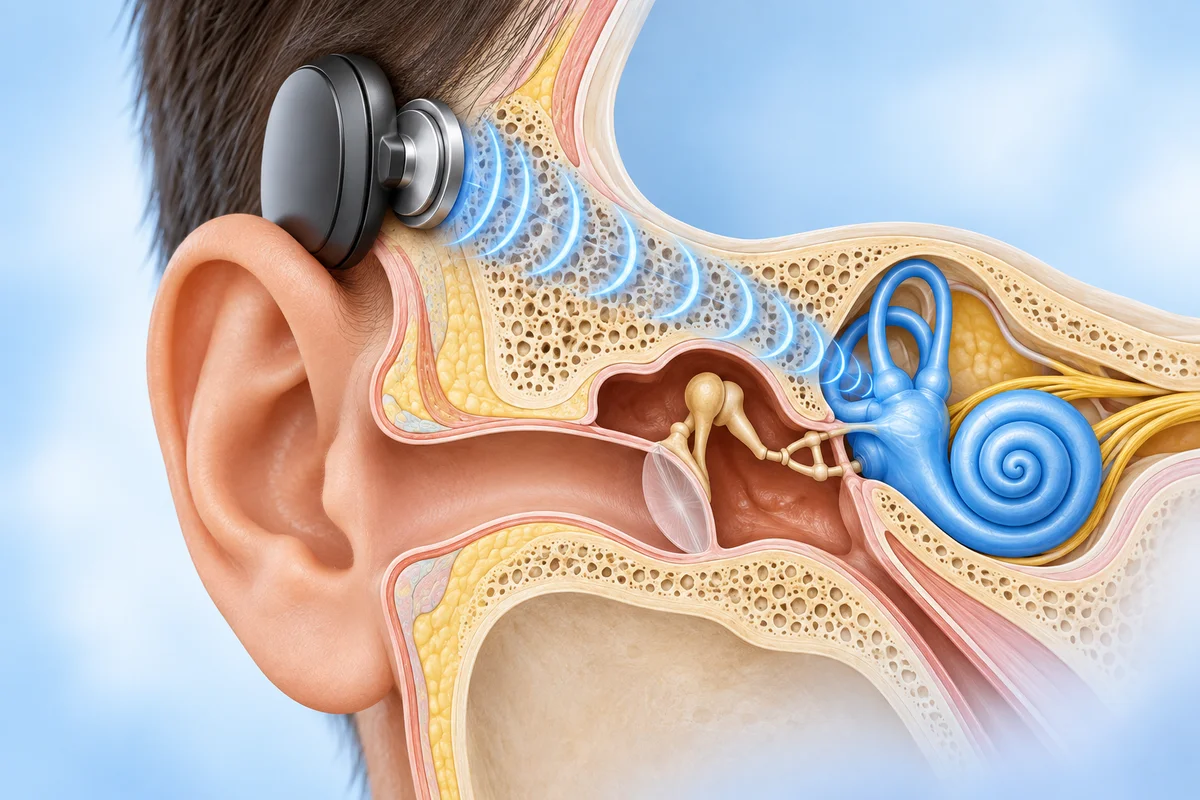
A bone conduction hearing aid is a medical device that transmits sound through bone vibration rather than through the air and ear canal. It captures sound using a small external microphone and processor, converts it into vibrations, and transfers those vibrations through the skull bone directly to the cochlea, the hearing organ located in the inner ear.
This method is especially useful for people whose outer or middle ear cannot process sound normally, since it skips these structures entirely and delivers sound signals straight to the part of the ear that matters most for hearing.
How Does It Work?
The process behind a bone conduction hearing aid involves three simple steps:
Sound is picked up by a microphone in the external processor.
The processor converts the sound waves into mechanical vibrations.
These vibrations travel through the skull bone to the cochlea, where they are interpreted as sound by the brain.
Because the device relies on bone rather than air to transmit sound, people with damage or blockages in the ear canal or middle ear can still perceive sound clearly.
Who Needs a Bone Conduction Hearing Aid?
This type of device is typically recommended for individuals with:
Conductive hearing loss caused by problems in the outer or middle ear
Mixed hearing loss, which combines conductive and sensorineural components
Single-sided deafness, where hearing is completely lost in one ear
Chronic ear infections that prevent the use of regular in-ear hearing aids
Congenital ear conditions such as microtia or atresia, where the ear canal is narrow or absent
Ear canal abnormalities that make traditional hearing aids uncomfortable or ineffective
If you experience frequent ear infections, drainage, or structural ear issues along with hearing difficulty, a bone conduction solution may be more suitable than a standard hearing aid.
Types of Bone Conduction Hearing Aids
There are generally two categories of bone conduction devices, depending on how they are worn or attached.
1. Non-Surgical (Softband or Adhesive) Devices
These devices sit externally, either held in place with a soft headband or attached using a skin adhesive. They press against the skull and transmit vibrations through the skin and bone. Non-surgical options are ideal for children, people who prefer a non-invasive solution, or those still being evaluated for a permanent surgical device.
2. Surgical (Implantable) Devices
Implantable bone conduction systems involve a minor surgical procedure to place a small titanium implant into the skull bone. An external sound processor then attaches magnetically or mechanically to this implant. Because vibrations travel through solid bone rather than skin and tissue, implantable devices typically provide clearer, more efficient sound transmission. These are usually recommended for adults and older children with long-term conductive or mixed hearing loss.
Your audiologist will determine which type suits you based on the severity and cause of your hearing loss, your age, lifestyle, and personal comfort preferences.
Benefits of Bone Conduction Hearing Aids
Choosing a bone conduction hearing aid offers several distinct advantages:
Bypasses damaged or blocked outer and middle ear structures
Reduces the risk of ear infections associated with in-ear devices
Provides a comfortable alternative for people with narrow or absent ear canals
Offers improved sound clarity for single-sided deafness by routing sound from the deaf side to the functioning ear
Suitable for both children and adults
Non-surgical versions allow trial use before committing to an implant
Bone Conduction vs Traditional Hearing Aids
Traditional hearing aids amplify sound and direct it into the ear canal, which works well for sensorineural hearing loss where the inner ear and nerve pathways are intact but the volume of sound needs to be boosted. Bone conduction hearing aids, in contrast, are designed for cases where the sound pathway through the ear canal or middle ear is blocked, damaged, or absent altogether.
In short, a traditional hearing aid solves a volume problem, while a bone conduction hearing aid solves a transmission problem. Choosing between them depends entirely on the type and cause of hearing loss, which is why a proper diagnostic hearing test is essential before selecting any device.
Is Bone Conduction Surgery Safe?
For implantable systems, the surgical procedure is generally minor, performed under local or general anesthesia, and takes a relatively short time. Recovery is usually quick, and most patients can resume normal activities within a few days to weeks. As with any procedure, it's important to discuss risks, benefits, and expected outcomes with a qualified ENT specialist and audiologist beforehand.
Cost Considerations
The cost of a bone conduction hearing aid varies depending on whether you choose a non-surgical or implantable device, the brand and technology level, and whether surgery and follow-up care are included. Non-surgical softband devices are generally more affordable and are often used first, especially for children, before deciding on a permanent implant. It's advisable to consult a hearing care professional who can walk you through pricing, insurance coverage where applicable, and long-term maintenance costs.
How to Choose the Right Clinic
Selecting the right hearing care provider is just as important as selecting the right device. Look for a clinic that offers:
Comprehensive hearing evaluations and diagnostic testing
Experienced audiologists and ENT specialists
A range of bone conduction and traditional hearing aid brands
Personalized fitting and programming
Ongoing support, maintenance, and follow-up care
VR Speech and Hearing Clinic is known for its patient-centered approach to hearing healthcare, offering detailed hearing assessments, expert guidance on choosing between surgical and non-surgical bone conduction options, and continued support throughout the fitting and adjustment process. Clinics with this level of specialization help ensure that patients receive a solution tailored to their specific type of hearing loss rather than a one-size-fits-all recommendation.
Living with a Bone Conduction Hearing Aid
Adjusting to a new hearing device takes time, regardless of the type. Most users notice a significant improvement in sound clarity and speech understanding within the first few weeks. Regular follow-up visits with your audiologist help fine-tune the device settings, address any discomfort, and ensure the device continues to perform optimally as your hearing needs evolve.
Conclusion
A bone conduction hearing aid can be a life-changing solution for individuals with conductive hearing loss, single-sided deafness, or ear conditions that make traditional hearing aids impractical. By transmitting sound directly through bone to the inner ear, these devices offer clarity and comfort where conventional amplification falls short. If you or a loved one struggles with hearing loss and traditional hearing aids haven't helped, consulting an experienced clinic such as VR Speech and Hearing Clinic can help determine whether a bone conduction hearing aid is the right path toward better hearing and improved quality of life.
FAQs
1. What is the main difference between a bone conduction hearing aid and a regular hearing aid?
A bone conduction hearing aid sends sound vibrations through the skull bone directly to the inner ear, while a regular hearing aid amplifies sound through the ear canal.
2. Can children use bone conduction hearing aids?
Yes, children can use non-surgical softband bone conduction devices, which are often recommended before considering a permanent implant later in life.
3. Is the surgery for bone conduction implants painful?
The procedure is typically minor and performed under anesthesia, so patients do not feel pain during surgery. Mild discomfort during recovery is normal and manageable.
4. Who is an ideal candidate for a bone conduction hearing aid?
People with conductive or mixed hearing loss, chronic ear infections, single-sided deafness, or structural ear abnormalities are usually ideal candidates.
5. How long does it take to adjust to a bone conduction hearing aid?
Most users adapt within a few weeks, though full adjustment and comfort may take a couple of months with proper follow-up care.
6. Where can I get a proper hearing evaluation for bone conduction options?
A specialized clinic like VR Speech and Hearing Clinic can perform detailed hearing assessments and guide you toward the most suitable bone conduction solution.