Best PTA Hearing Test Centres in Chhatrapati Sambhajinagar
Best PTA Hearing Test Centres in Chhatrapati Sambhajinagar (Aurangabad)
Hearing problems often creep in slowly, and most people only realise something is wrong when they start missing words in conversations or turning up the TV volume more than usual. If you live in Chhatrapati Sambhajinagar, formerly known as Aurangabad, and you suspect a hearing issue, the first and most important step is getting a Pure Tone Audiometry, commonly called a PTA test. This simple, painless test tells you exactly how well your ears are working and whether you need further care.
Among the trusted names offering this service in the city is VR Speech and Hearing Clinic, led by audiologist Vilas Rathod, BASLP. With a growing presence across Maharashtra and a strong reputation for accurate diagnosis and honest guidance, the clinic has become a go-to option for people seeking a proper hearing evaluation in the region.
What Is a PTA Test for Ear?
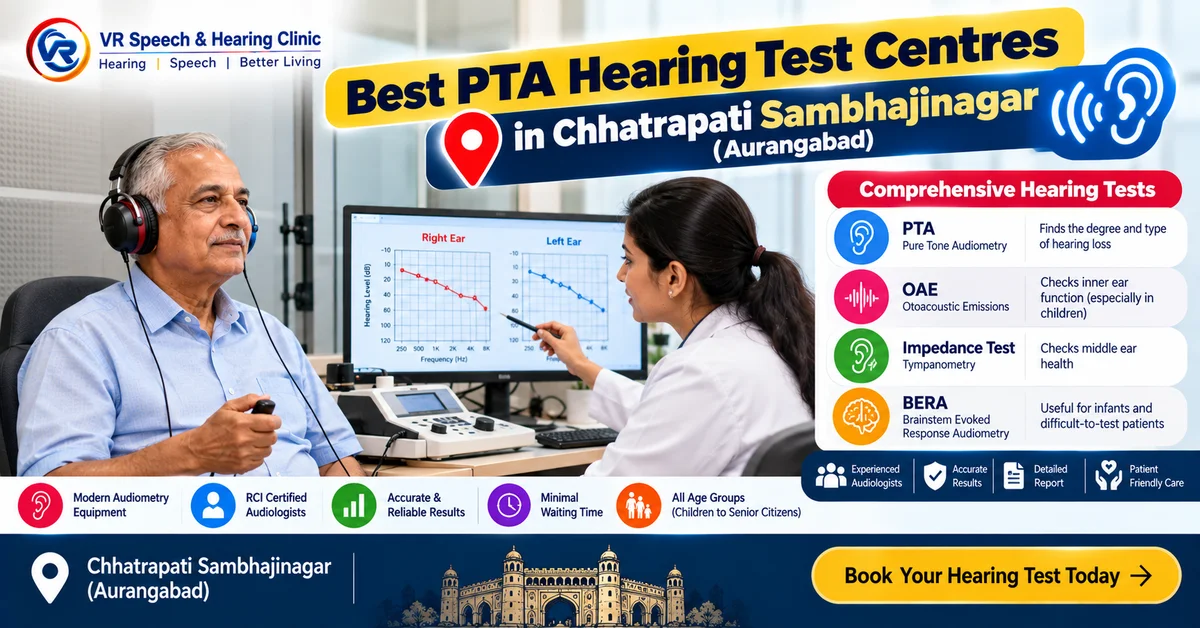
Pure Tone Audiometry is the standard test used worldwide to measure how well a person hears different sounds. During the test, you wear headphones and listen to a series of tones at different pitches and volumes. Each time you hear a sound, you signal by raising your hand or pressing a button. The audiologist records the softest sound you can detect at each frequency, and this information is plotted on a chart called an audiogram.
The audiogram shows whether your hearing is normal, or whether there is mild, moderate, severe, or profound hearing loss. It also helps identify which type of hearing loss you may have, whether it originates in the outer or middle ear, the inner ear, or a combination of both. This is why the PTA test is considered the foundation of any hearing evaluation.
Why Is a PTA Test Important?
Many people delay a hearing test because they assume mild difficulty hearing is just a normal part of ageing or background noise. However, untreated hearing loss can affect much more than just conversations. It can lead to social withdrawal, difficulty at work, strain in relationships, and even a higher risk of cognitive decline over time in older adults.
A PTA test is important because it gives an objective, measurable picture of your hearing health rather than relying on guesswork. It helps doctors and audiologists decide the right course of action, whether that means monitoring the condition, prescribing medication, recommending a hearing aid, or suggesting further diagnostic tests such as an ABR or OAE. Early detection through a PTA test often makes treatment simpler and more effective, especially in children where speech and language development depends heavily on proper hearing.
What Happens During a Hearing Test for Hearing Loss?
If you are visiting a centre for the first time, knowing what to expect can ease any nervousness. A typical hearing test for hearing loss usually includes a few steps.
First, the audiologist will ask about your medical history, any symptoms you are experiencing such as ringing in the ears or muffled hearing, and any family history of hearing problems. This is followed by a physical examination of the ear canal using an otoscope to check for wax buildup, infection, or any visible blockage.
Next comes the actual audiometry test, where you sit in a quiet room or a sound-treated booth and wear headphones. Tones of varying pitch and loudness are played into each ear separately, and you respond whenever you hear a sound. Some clinics also perform a bone conduction test, where a small vibrating device is placed behind the ear to check how sound travels through the bone, which helps differentiate between types of hearing loss.
Additional tests like tympanometry, which checks the movement of the eardrum, or speech audiometry, which tests your ability to understand spoken words, may also be included depending on your symptoms. The entire process is non-invasive, painless, and usually takes between thirty minutes to an hour.
How Do You Choose Among the Best Hearing Aid Centres in Chhatrapati Sambhajinagar (Aurangabad)?
With several clinics offering hearing services in the city, choosing the right one can feel overwhelming. A few factors can help narrow down your options.
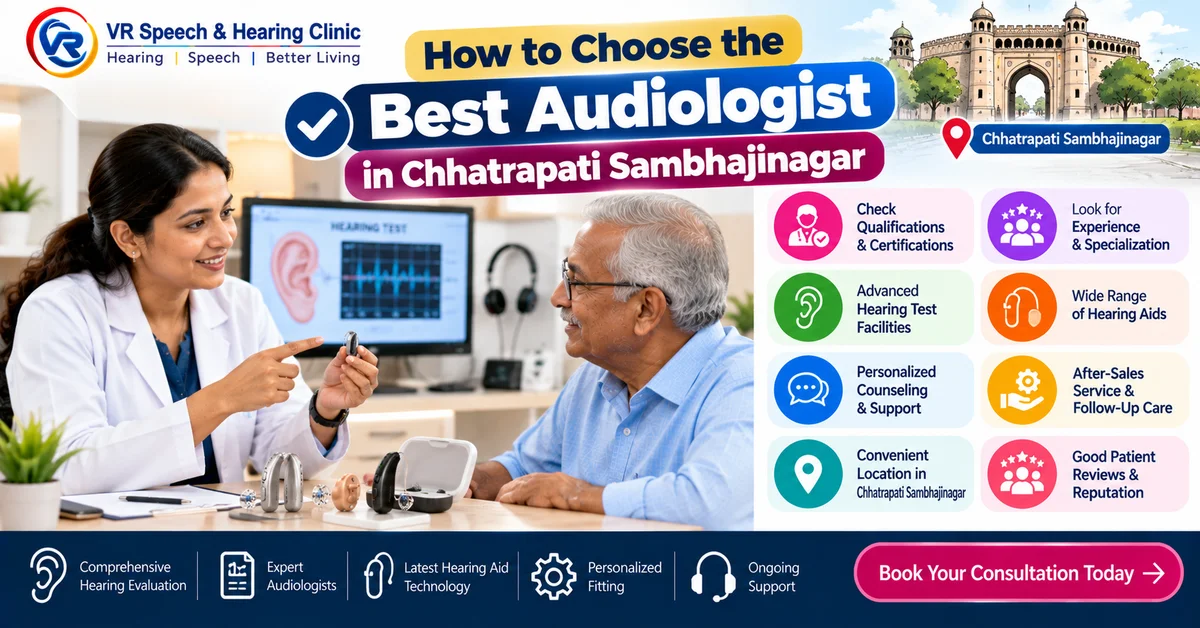
Look for a centre that employs qualified and certified audiologists, ideally with a BASLP or MASLP degree, since hearing diagnosis and treatment require specialised training. Check whether the clinic uses calibrated, modern audiometry equipment, as outdated machines can give inaccurate results.
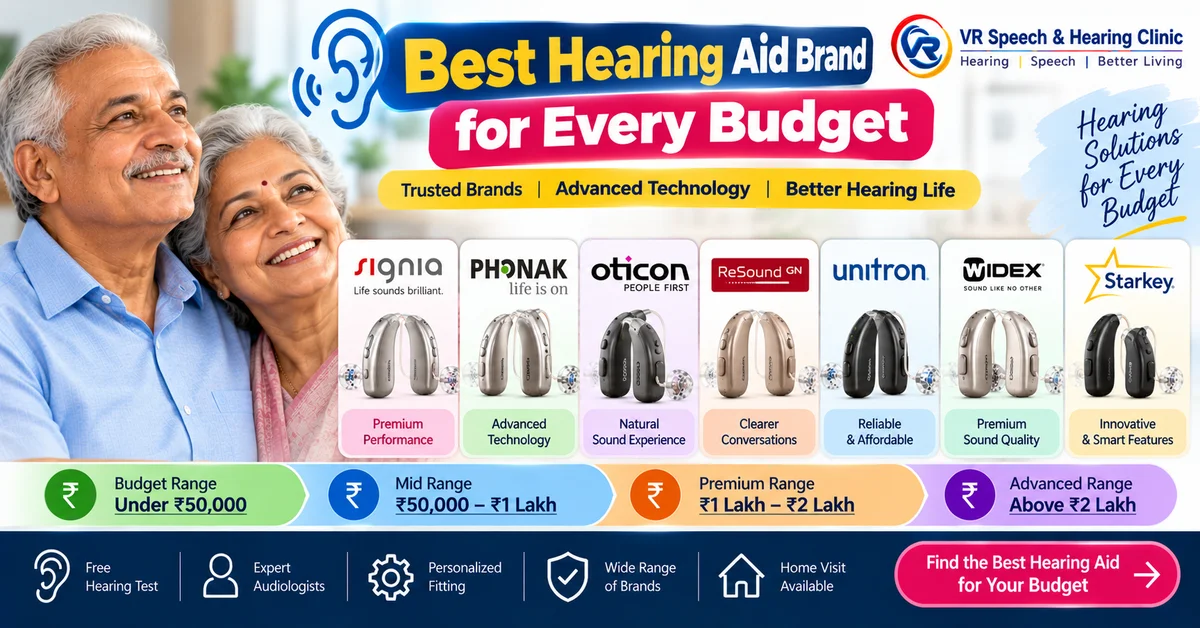
It also helps to choose a centre that offers a wide range of hearing aid brands rather than pushing just one option, so you get a solution suited to your specific hearing loss and lifestyle rather than a one-size-fits-all product. Transparent pricing, a proper trial period before purchase, and ongoing after-sales support such as repairs, servicing, and fine-tuning are equally important. Reading patient reviews and asking about the clinic's experience with cases similar to yours can also guide your decision.
Why Does Choosing the Right Audiologist in Chhatrapati Sambhajinagar (Aurangabad) Matter?
The person conducting your hearing test matters just as much as the equipment used. A skilled audiologist doesn't just run a test and hand you a report. They interpret the results in context, ask the right follow-up questions, and explain findings in a way you can actually understand.
The right audiologist will also take time to understand your daily lifestyle, whether you work in a noisy environment, attend frequent meetings, or need to follow conversations in group settings, before recommending a hearing aid. This personalised approach makes a significant difference in how comfortable and effective the final solution turns out to be. A rushed or generic consultation, on the other hand, can lead to a mismatched hearing aid that gets abandoned within months.
What Should You Expect During Your Visit?
Your first visit to a hearing centre typically starts with a friendly consultation where the staff note down your concerns and medical background. This is followed by the ear examination and the PTA test itself, conducted in a quiet setting to ensure accurate results.
Once the test is complete, the audiologist will walk you through your audiogram, explaining what the numbers and graphs mean in simple terms. If hearing loss is detected, they will discuss your options, which may include hearing aids, medical referral, or further testing. Many centres also offer an on-the-spot trial of hearing aids so you can experience the difference before making any purchase decision. The entire visit is usually completed within one to two hours, and there is no pain or discomfort involved at any stage.
Who Should Get a PTA Test Done?
A PTA test is not just for people who already suspect hearing loss. It is recommended for anyone experiencing ringing or buzzing in the ears, difficulty following conversations in noisy places, frequently asking others to repeat themselves, or feeling that people around them are mumbling.
It is also important for older adults over the age of sixty, since age-related hearing loss is common and often goes unnoticed. Children who show delayed speech development, poor academic performance, or inattentiveness should also be screened, as undiagnosed hearing issues can significantly affect learning. People exposed to loud noise regularly, such as factory workers, musicians, or those who use headphones at high volume for long periods, should also consider periodic hearing checks as a precaution.
What Should You Check Before Booking a Test?
Before booking a PTA test, confirm that the centre is staffed by qualified audiologists and not just technicians running the equipment without proper interpretation skills. Ask whether the test is conducted in a soundproof or sound-treated room, as background noise can affect accuracy.
It is also worth checking if the clinic provides a detailed, written audiogram report that you can keep for future reference or share with an ENT specialist if needed. Enquire about the cost of the test upfront, whether a doctor's consultation is included, and how soon you can expect results and a follow-up discussion. Choosing a centre that is transparent about all of this from the start saves time and avoids confusion later.
Conclusion
A PTA test is a small step that can make a big difference in how you experience the world around you, from conversations with loved ones to everyday sounds you might be missing without realising it. If you are in Chhatrapati Sambhajinagar and looking for a reliable place to get your hearing checked, VR Speech and Hearing Clinic, led by audiologist Vilas Rathod, offers professional PTA testing along with a full range of hearing aid solutions and speech therapy services. Whether you are booking a test for yourself, a child, or an elderly parent, choosing a centre with qualified audiologists and modern equipment ensures you get accurate results and the right guidance for the next step.
FAQs
Is a PTA hearing test painful?
No, a PTA test is completely painless and non-invasive. It simply involves listening to tones through headphones and responding when you hear them.
How long does a PTA test take?
Most PTA tests take between thirty minutes to an hour, depending on whether additional tests like tympanometry or speech audiometry are included.
Do I need a doctor's referral to get a PTA test done?
No referral is usually necessary. You can walk into most audiology or hearing clinics directly and request a hearing evaluation.
At what age should hearing tests begin?
Hearing tests can be done at any age, including infancy through newborn hearing screening. Adults, especially those above sixty, should also consider periodic testing.
Can a PTA test detect the cause of hearing loss?
A PTA test identifies the degree and type of hearing loss, but determining the exact underlying cause may require additional tests or a consultation with an ENT specialist.
How much does a PTA test typically cost?
Costs vary by clinic and location, so it's best to confirm pricing directly with the centre before booking your appointment.
Will I need a hearing aid after a PTA test?
Not necessarily. A hearing aid is only recommended if the test shows a significant hearing loss that would benefit from amplification. Many results show normal hearing or issues requiring medical treatment instead.