Best Hearing Aid Brand for Every Budget
Best Hearing Aid Brand for Every Budget in 2026
Choosing a hearing aid in 2026 can feel overwhelming. Walk into any hearing aid shop and you'll be shown a dozen brands, each claiming to be the best. The truth is simpler than the marketing makes it sound: the right hearing aid depends on your hearing loss, lifestyle, and budget, not on which brand has the flashiest advertisement. This guide breaks down what actually matters when picking a hearing aid brand, so you can make a confident, informed decision.
Why There Is No Single Best Brand for Everyone
Hearing loss is not a one-size-fits-all condition. Two people with the same degree of hearing loss can have completely different needs based on their age, work environment, social habits, and even the shape of their ear canal. A software professional who spends hours on video calls needs different features than a retired teacher who mostly needs help following conversations at family gatherings.
This is why audiologists rarely recommend a single "best" brand. Instead, good clinics evaluate your hearing test results, your daily environment, and your budget before suggesting two or three suitable options. A premium brand with advanced noise-cancellation might be wasted on someone who rarely steps into noisy environments, while a budget device might frustrate someone who needs it for meetings and outdoor errands throughout the day. The best brand is the one that matches your actual life, not the one with the biggest billboard.

Popular Hearing Aid Brands in India
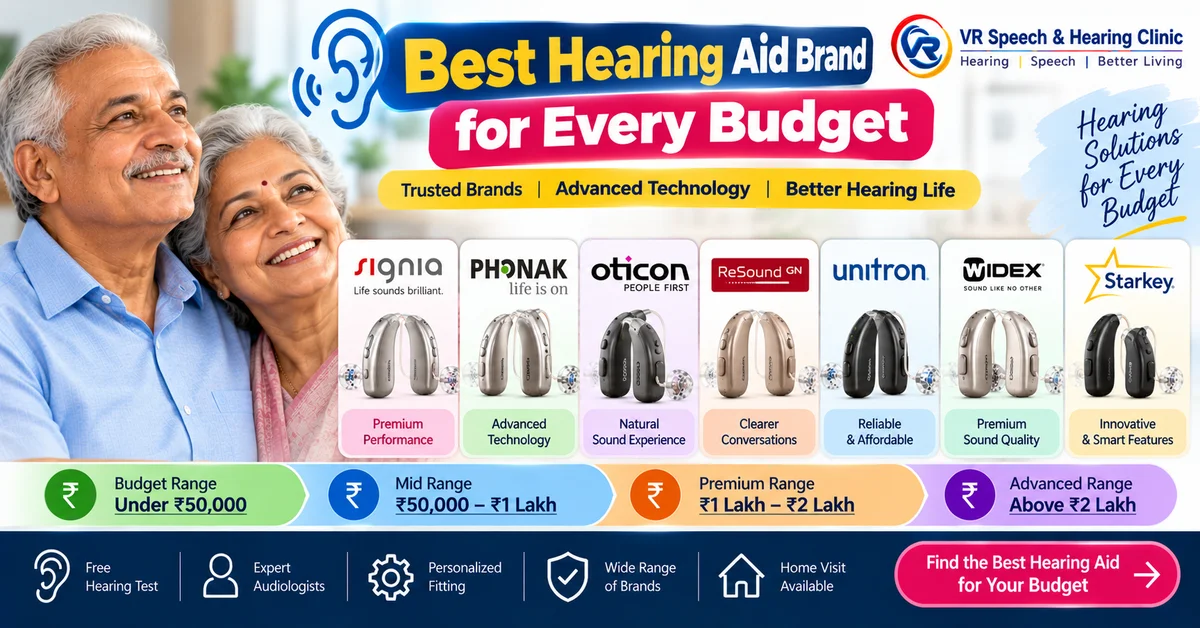
India's hearing aid market has matured significantly, and most global brands now have a strong presence here, along with reliable after-sales networks. Some of the widely trusted names include Phonak, Signia, Widex, Starkey, Oticon, ReSound, and Unitron, alongside several value-focused Indian and Chinese manufacturers that have improved in quality over the past few years.
Premium brands typically offer superior sound processing, rechargeable batteries, Bluetooth connectivity, and app-based fine-tuning. Mid-range options usually cover the essentials well, including decent noise reduction and comfortable fit, without the premium price tag. Budget brands have also improved considerably, and many now offer digital programmability that was once available only in expensive models a decade ago.
What matters more than the brand name printed on the device is who is fitting it, how well it's programmed to your specific hearing test, and whether the shop will support you after the sale. This is exactly why choosing an experienced clinic matters as much as choosing a brand.
What to Expect from a Good Hearing Aid Shop
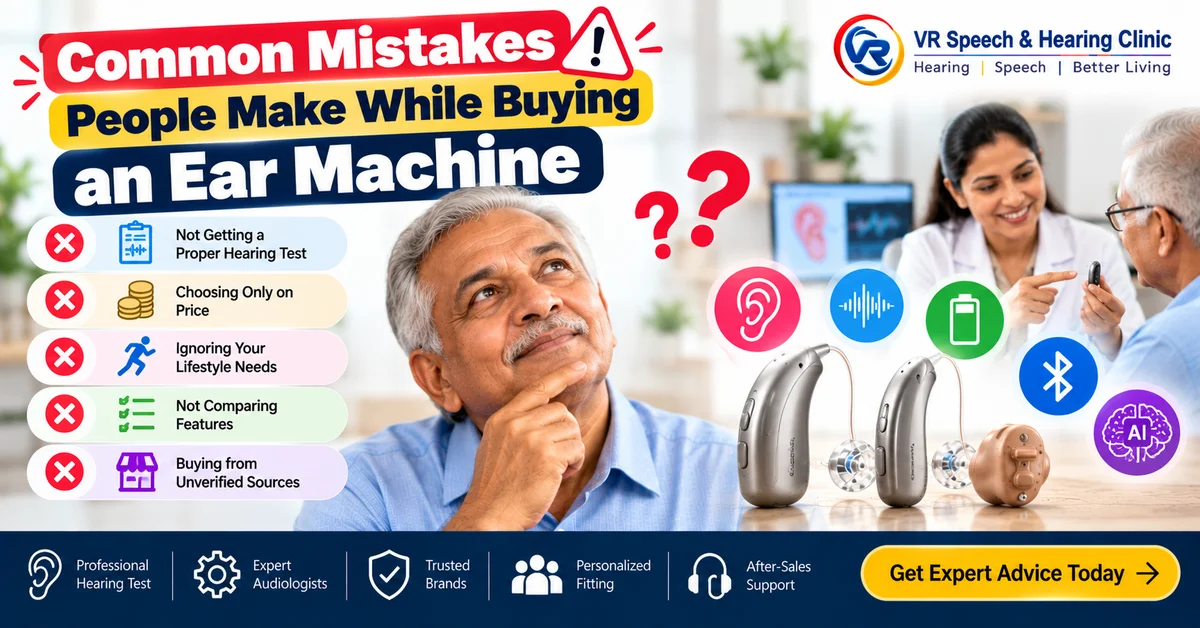
Not every shop selling hearing aids is equipped to serve you well. A good hearing aid shop should start with a proper diagnostic hearing test, not just a quick screening. It should have qualified audiologists on staff who can explain your specific hearing loss pattern in simple terms, rather than pushing whichever device has the highest margin.
Look for a shop that lets you try before you buy, ideally with a trial period so you can test the device in your real environment, whether that's a crowded market, an office, or your living room with the TV on. The shop should also offer transparent pricing without hidden costs for fittings, adjustments, or accessories.
Clinics like VR Speech and Hearing Clinic are known for this kind of patient-first approach, where the focus stays on accurate testing and honest brand recommendations rather than aggressive upselling. A trustworthy clinic will often tell you when a cheaper option is genuinely sufficient for your needs, which builds long-term trust far more than pushing the most expensive device available.
Finding a Hearing Aid Under Budget Without Compromising Quality
Budget constraints are real, and thankfully, staying within budget doesn't automatically mean settling for poor sound quality. The key is knowing which features you actually need versus which ones are nice-to-have extras.
If your hearing loss is mild to moderate and you mostly need help in quiet, one-on-one conversations, a basic digital hearing aid can serve you well without expensive add-ons like advanced wind noise reduction or multiple listening programs. Save money by skipping features you won't use daily, such as elaborate smartphone app controls, if you're not comfortable with smartphones in the first place.
Consider mid-tier models from established brands rather than entry-level models from premium brands. A well-reviewed mid-range Signia or ReSound device, for example, often performs better and lasts longer than the cheapest tier from a brand chasing rock-bottom prices. Also factor in the total cost of ownership, including batteries or charging accessories, ear mould replacements, and annual servicing, since these add up over the years.
Ask your clinic about instalment payment options or insurance coverage, which many reputable shops now offer. And don't underestimate the value of a proper fitting; even a modestly priced hearing aid, correctly programmed, can outperform an expensive one that's poorly fitted.
How to Compare Brands and Models Smartly
Rather than comparing brands by price alone, compare them across a few practical dimensions. First, check the technology level within each brand's own lineup, since most manufacturers offer basic, standard, advanced, and premium tiers, and the difference in real-world performance between standard and premium is often smaller than the price difference suggests.
Second, consider battery type. Rechargeable models are increasingly popular for convenience, but traditional battery-powered models remain reliable and are cheaper to maintain in the long run for many users. Third, look at connectivity needs; if you frequently take phone calls or watch a lot of TV, Bluetooth streaming can be genuinely useful rather than a gimmick.
Fourth, check the warranty period and what it covers, including moisture damage and loss coverage, which vary significantly between brands. Finally, read verified reviews from actual users with similar hearing loss profiles rather than generic star ratings, since a five-star review from someone with mild hearing loss may not reflect how the device performs for severe hearing loss.
A short comparison checklist can help: hearing loss severity match, technology tier within budget, battery type, connectivity features, warranty terms, and availability of local service support. Weighing all six factors together gives a far more accurate picture than brand reputation alone.
Why After-Sales Support Should Influence Your Decision
A hearing aid is not a one-time purchase; it's an ongoing relationship with a device that needs periodic adjustments, cleaning, and occasional repairs. This is where after-sales support becomes just as important as the brand or the price you pay upfront.
Ask potential shops how often you can come in for free follow-up adjustments, especially in the first few months as your brain adapts to amplified sound. Find out how repairs are handled, whether devices are sent out for weeks at a time or fixed locally, and what the turnaround time looks like. Also check whether the shop stocks accessories and batteries locally, since running out during a trip or an important event is genuinely inconvenient.
Clinics with a strong local reputation, such as VR Speech and Hearing Clinic, tend to build long-term relationships with patients precisely because of consistent follow-up care rather than a single transaction. Good after-sales support often matters more than a slightly cheaper price tag, since a device that's poorly maintained or rarely fine-tuned will underperform regardless of its original quality.
Conclusion
There is no universal "best" hearing aid brand in 2026, and that's actually good news, because it means there's a well-matched option for nearly every budget and lifestyle. What truly determines your satisfaction is a combination of accurate hearing testing, honest guidance from your audiologist, a device suited to your specific needs, and reliable after-sales support. Instead of chasing the most talked-about brand, focus on finding a clinic that listens, tests thoroughly, and stands behind its recommendations long after the sale is made.
FAQs
1. Which hearing aid brand is best for first-time users?
There isn't a single best brand for beginners; a mid-range device from an established brand, properly fitted by an audiologist, usually offers the easiest adjustment period.
2. Are expensive hearing aids always better than budget ones?
Not necessarily. Price often reflects extra features like Bluetooth or rechargeability, but a well-fitted budget device can outperform a poorly fitted expensive one.
3. How often should I replace my hearing aid?
Most hearing aids last five to seven years with proper care, though this depends on usage, maintenance, and how quickly your hearing changes.
4. Can I try a hearing aid before buying it?
Yes, most reputable clinics offer a trial period so you can test the device in your everyday environment before committing.
5. Does insurance cover hearing aids in India?
Coverage varies by insurer and policy; some health plans offer partial reimbursement, so it's worth checking with your provider directly.
6. How do I know if a hearing aid shop is trustworthy?
Look for qualified audiologists, proper diagnostic testing, transparent pricing, trial periods, and a track record of ongoing patient support.