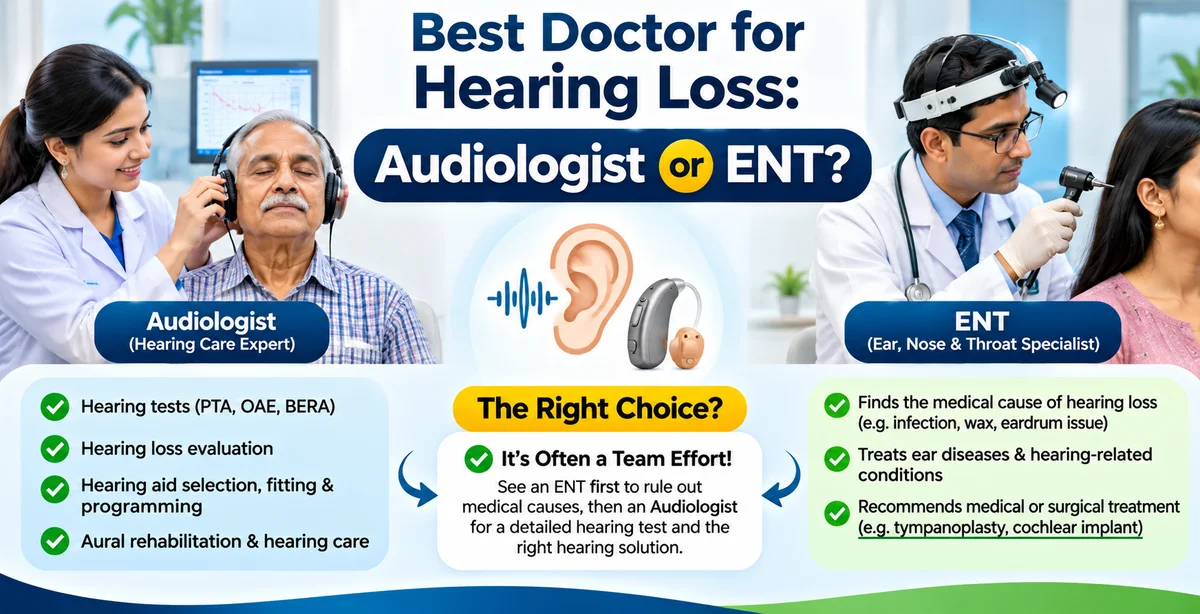
Best Doctor for Hearing Loss: Audiologist or ENT?
What Is the Best Doctor to See for Hearing Loss? Audiologist vs ENT Doctor Explained
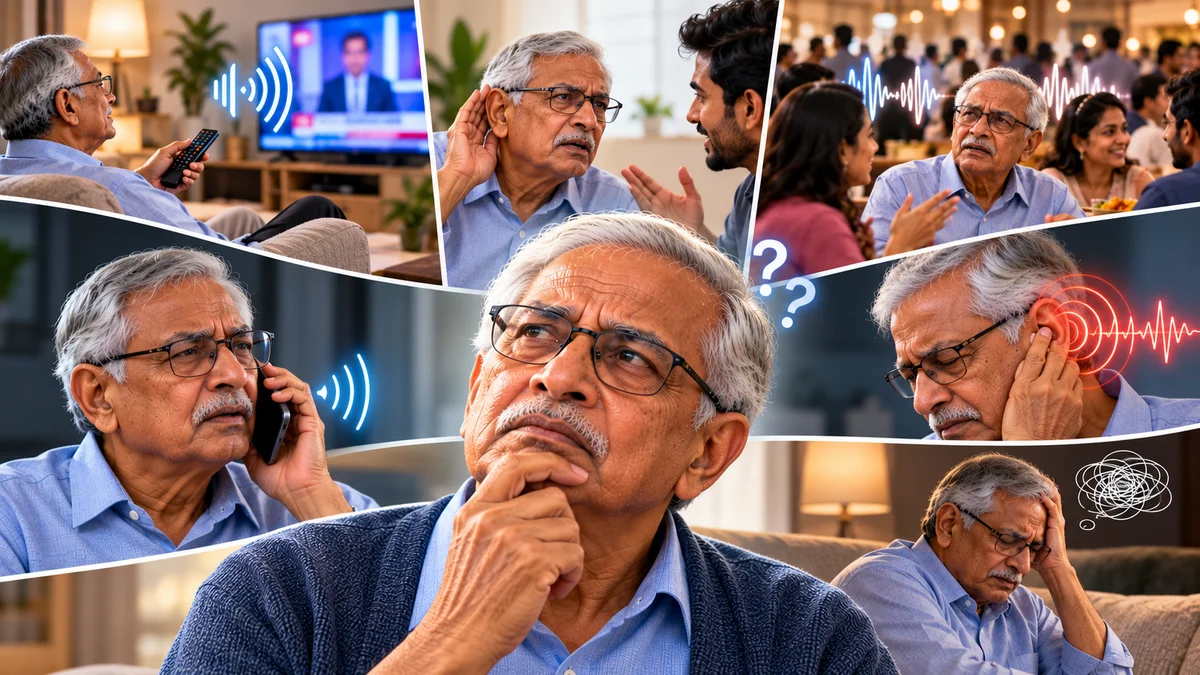
Hearing loss rarely arrives overnight. It creeps in: you ask people to repeat themselves, turn the television up, or struggle to follow conversations in a noisy restaurant. When you finally decide to get help, one question comes up first. What is the best doctor to see for hearing loss, an audiologist or an ENT doctor?
The honest answer is that both matter, and the right first visit depends on your symptoms. This guide explains what each specialist does, when to see them, and how to choose the right hearing care clinic for you or your family.
Quick Answer: Audiologist or ENT Doctor?
If your hearing has faded gradually and you have no pain, discharge, or dizziness, an audiologist is usually the best first stop. An audiologist can test your hearing, measure how severe the loss is, and recommend hearing aids or other support.
If your hearing loss is sudden, painful, one-sided, or comes with ear discharge, dizziness, or an injury, see an ENT doctor (otolaryngologist) as soon as possible. An ENT doctor can find and treat medical or surgical causes.
In many cases, the best results come when both specialists work together.
What Does an Audiologist Do?
An audiologist is a hearing healthcare professional trained to identify, measure, and manage hearing and balance problems. Audiologists do not perform surgery, but they specialise in the science of hearing. An audiologist can:
Perform hearing tests such as pure tone audiometry and speech audiometry
Check middle ear function with tympanometry
Screen newborns and infants using tests like OAE and BERA
Recommend, program, and fit hearing aids
Provide tinnitus counselling and hearing rehabilitation
Refer you to an ENT doctor when a medical cause is suspected
Audiologists are especially valuable for hearing aid users, because hearing aids need careful fitting, fine-tuning, and regular follow-up to work well.
What Does an ENT Doctor Do?
An ENT doctor, also called an otolaryngologist, is a medical doctor who treats conditions of the ear, nose, and throat. For hearing loss, the ENT doctor’s job is to find out why your hearing has changed and treat the underlying cause. An ENT doctor can:
Examine the ear canal and eardrum
Remove hardened earwax that blocks sound
Treat ear infections and fluid behind the eardrum
Diagnose a perforated eardrum, otosclerosis, cholesteatoma, or growths in the ear
Provide urgent treatment for sudden hearing loss
Prescribe medicines and perform ear surgery when needed
Assess whether you are a candidate for a cochlear implant
If your hearing loss may come from infection, injury, disease, or a structural problem, the ENT doctor is the specialist who can treat it.
Audiologist vs ENT Doctor: The Key Differences
Training: Audiologists are trained in hearing science and rehabilitation. ENT doctors are medical doctors with surgical training.
Focus: Audiologists measure hearing and manage hearing loss. ENT doctors diagnose and treat medical conditions of the ear.
Treatment: Audiologists offer hearing aids, counselling, and rehabilitation. ENT doctors offer medicines, procedures, and surgery.
Think of it this way: the ENT doctor asks what is causing the problem and whether it can be treated medically. The audiologist asks how much you are hearing and how to help you hear better in daily life.
Understanding the Types of Hearing Loss
Conductive hearing loss happens when sound cannot pass through the outer or middle ear, often because of earwax, infection, fluid, or a damaged eardrum. It is frequently treatable by an ENT doctor.
Sensorineural hearing loss involves damage to the inner ear or hearing nerve, usually from ageing, loud noise, certain medicines, or genetics. It is generally permanent and is often managed with hearing aids or implants.
Mixed hearing loss is a combination of both.
Signs You Should Get Your Hearing Checked
Asking people to repeat themselves often
Trouble following conversations in noisy places
Turning up the TV or phone volume
Muffled speech, as if people are mumbling
Ringing or buzzing in the ears (tinnitus)
Feeling tired after long conversations
A child with delayed speech or a poor response to sounds
Do not wait for the problem to get worse. Untreated hearing loss has been linked to social isolation, low confidence, and learning difficulty in children.
When to See an ENT Doctor First
Sudden hearing loss in one or both ears. This is a medical emergency, and early treatment gives the best chance of recovery.
Ear pain, fever, pressure, or discharge
Dizziness or vertigo along with hearing loss
Hearing loss after a head injury, a loud blast, or a suspected eardrum perforation
Hearing loss or tinnitus in only one ear
A blocked ear that does not clear after a cold or allergy
When to Start With an Audiologist
Hearing has declined slowly over months or years
You suspect age-related or noise-related hearing loss
You want a complete hearing test and a clear report
You already use hearing aids that need adjustment
Your child needs a hearing screening
A good audiologist will always refer you to an ENT doctor if the test results suggest a medical problem.
Why the Best Care Combines Both
Hearing care works best as teamwork. An audiologist’s tests reveal the type and degree of hearing loss. If the results point to a medical cause, you are referred to an ENT doctor for treatment. Once the cause is treated, the audiologist helps you make the most of your remaining hearing with hearing aids or other devices. When a child has speech delay, a speech-language pathologist joins the team. Coordinated care saves time, avoids repeat tests, and leads to better outcomes.
How to Choose a Hearing Care Clinic
Qualified, registered professionals (in India, check for RCI registration)
Proper diagnostic equipment and a quiet, sound-treated testing room
Results explained in plain language, not jargon
Honest advice, with a hearing aid demonstration before you decide
Follow-up and aftercare once you start using hearing aids
A clear referral path to an ENT doctor
Care for both children and adults
Why Choose VR Speech And Hearing Clinic
At VR Speech And Hearing Clinic, we know hearing loss affects more than your ears. It affects relationships, work, confidence, and safety. Our clinic brings speech and hearing care together so that you, your child, or an ageing parent can be tested, understood, and supported in one place.
When you visit us, you can expect:
A thorough hearing evaluation
A clear explanation of your results
Honest guidance, including ENT referral when needed
Personalised hearing solutions with proper follow-up
Speech and language support alongside hearing care
Conclusion
So, what is the best doctor to see for hearing loss? For most people, the best answer is a team: an audiologist to test and manage your hearing, and an ENT doctor to treat any medical cause. If your hearing loss is sudden or painful, see an ENT doctor straight away. If it is gradual, start with an audiologist. Whichever route you take, do not delay. Book a hearing test with VR Speech And Hearing Clinic today and take the first step toward clearer hearing.
Frequently Asked Questions (FAQs)
Which doctor should I see first for hearing loss?
If your hearing loss is gradual and painless, start with an audiologist for a hearing test. If it is sudden, painful, one-sided, or comes with discharge or dizziness, see an ENT doctor first.
Can an audiologist treat hearing loss?
An audiologist can diagnose hearing loss and manage it with hearing aids, counselling, and rehabilitation. Audiologists do not prescribe medicines or perform surgery, so they refer you to an ENT doctor when a medical cause is suspected.
Can hearing loss be cured?
It depends on the cause. Conductive hearing loss from earwax, infection, or fluid can often be treated. Sensorineural hearing loss is usually permanent, but it can be managed well with hearing aids or implants.
Is sudden hearing loss an emergency?
Yes. Sudden hearing loss should be checked by an ENT doctor as early as possible, ideally within a day or two. Early treatment improves the chance of recovery.
Do I need an ENT doctor before getting hearing aids?
Not always, but an ENT check is recommended if you have pain, discharge, dizziness, sudden or one-sided hearing loss, or any sign of a medical problem. Your audiologist will advise you after your hearing test.
Can hearing aids restore normal hearing?
No. Hearing aids do not restore normal hearing, but they make sounds clearer and speech easier to understand, which greatly improves daily communication.
How often should I get my hearing tested?
Get tested as soon as you notice any change. If you are over 50 or exposed to loud noise, a hearing check every one to two years is a sensible habit.