Best Audiologist in Chhatrapati Sambhajinagar
Why the choice of professional matters
The World Health Organization estimates that nearly 2.5 billion people worldwide will live with some degree of hearing loss by 2050, and notes that untreated hearing loss can affect communication, education, earning ability, mental health and relationships. WHO also says early identification is the first step, and that rehabilitation (including hearing aids) is effective where hearing loss is permanent.
An audiologist does much more than fit hearing aids. A qualified audiologist diagnoses the type and degree of hearing loss, recognises when a medical problem needs an ENT doctor, and builds a plan around your lifestyle and budget. Choosing the wrong provider can mean a missed diagnosis, a poorly programmed device and money wasted.

Signs you should get your hearing tested
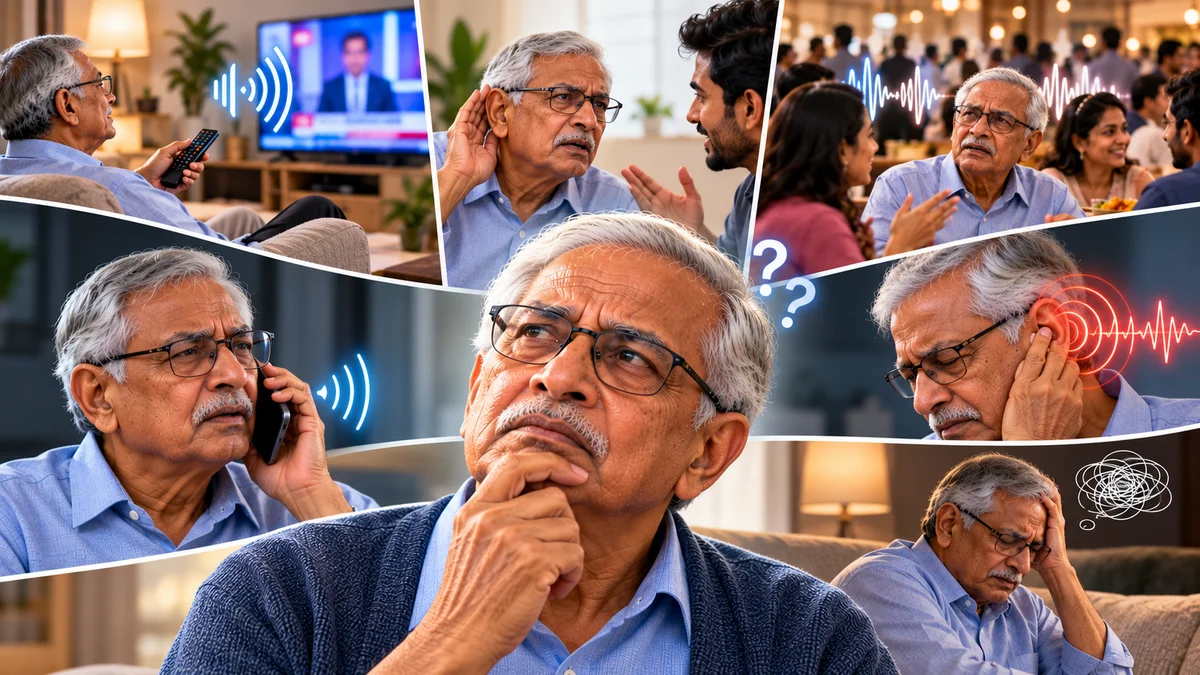
Book a hearing evaluation if you notice any of these:
You often ask people to repeat themselves, or feel people mumble.
You understand speech poorly in restaurants, markets, weddings or group conversations.
You turn the TV or phone volume up higher than others prefer.
You struggle to follow phone calls.
You hear ringing, buzzing or hissing (tinnitus).
Family members tell you that you are not hearing well.
You feel tired after conversations because of the effort to listen.
You have been exposed to loud noise at work, at events or through earphones.
Hearing loss in adults is often gradual, so a baseline test is sensible if you are over 50, work in a noisy job, or have a family history of hearing loss.
When it is urgent: see a doctor first
Sudden hearing loss. Health authorities such as the US NIDCD describe sudden sensorineural hearing loss as a medical emergency. A common clinical definition is a drop of at least 30 dB across three connected frequencies within 72 hours, often noticed on waking. Treatment works best when started early. Do not assume it is wax, a cold or allergy.
Ear pain, discharge or bleeding.
Hearing loss in only one ear that is new or getting worse quickly.
New dizziness or vertigo, facial weakness, or other neurological symptoms.
Hearing loss after a head injury or a very loud blast.
In these cases an ENT specialist should examine you first. A good audiologist will help coordinate that referral.
Audiologist, ENT doctor or hearing aid shop: who should you see?
Professional | What they do | See them first when |
|---|---|---|
Audiologist (BASLP / MASLP) | Diagnoses hearing and balance problems, performs hearing tests, counsels, fits and programs hearing aids, refers to an ENT when needed | Gradual hearing difficulty, a hearing test, hearing aid advice, tinnitus, or a child's hearing check |
ENT doctor (otolaryngologist) | Medical and surgical care of the ear: infections, wax impaction, eardrum problems, sudden hearing loss, tumours | Pain, discharge, sudden or one-sided hearing loss, dizziness |
Hearing aid dealer or technician | Sells, fits and repairs hearing aids. Training varies, and not everyone is qualified to diagnose | Servicing and repair. For a first diagnosis, start with an audiologist |
Speech-language pathologist | Treats speech, language and voice problems. Many BASLP-trained professionals do both audiology and speech therapy | A child with delayed speech, or speech rehabilitation after a hearing aid fitting |
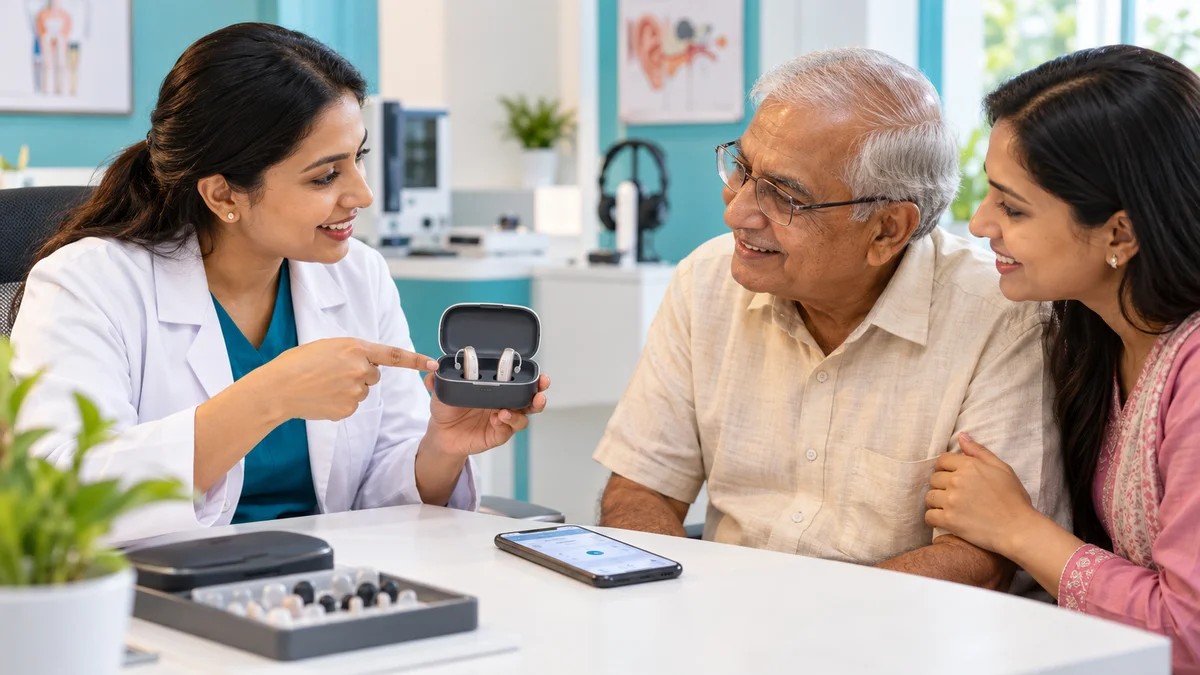
In most cases the ideal route is: audiologist for testing, ENT if anything medical shows up, then audiologist again for hearing aid selection and follow-up.
How to verify an audiologist in India
In India, audiologists and speech therapists are regulated by the Rehabilitation Council of India (RCI), a statutory body set up under the RCI Act, 1992. The RCI maintains the Central Rehabilitation Register (CRR), and qualified audiologists are registered in it.
Here is a simple way to check:
Ask for the qualification. BASLP (Bachelor of Audiology and Speech-Language Pathology) or MASLP (Master's) from a recognised institution.
Ask for the RCI CRR registration number. A genuine professional will share it without hesitation.
Verify it through the status check on the official RCI website (rehabcouncil.nic.in).
Ask which category they are registered in. The RCI also registers other categories, such as Hearing Aid and Ear Mould Technicians and Speech and Hearing Technicians. These are different from audiologists.
Check the name on the report. The person who tests you should be the person whose credentials you verified.
A clinic that cannot clearly explain who is testing you, and with what training, is a red flag.
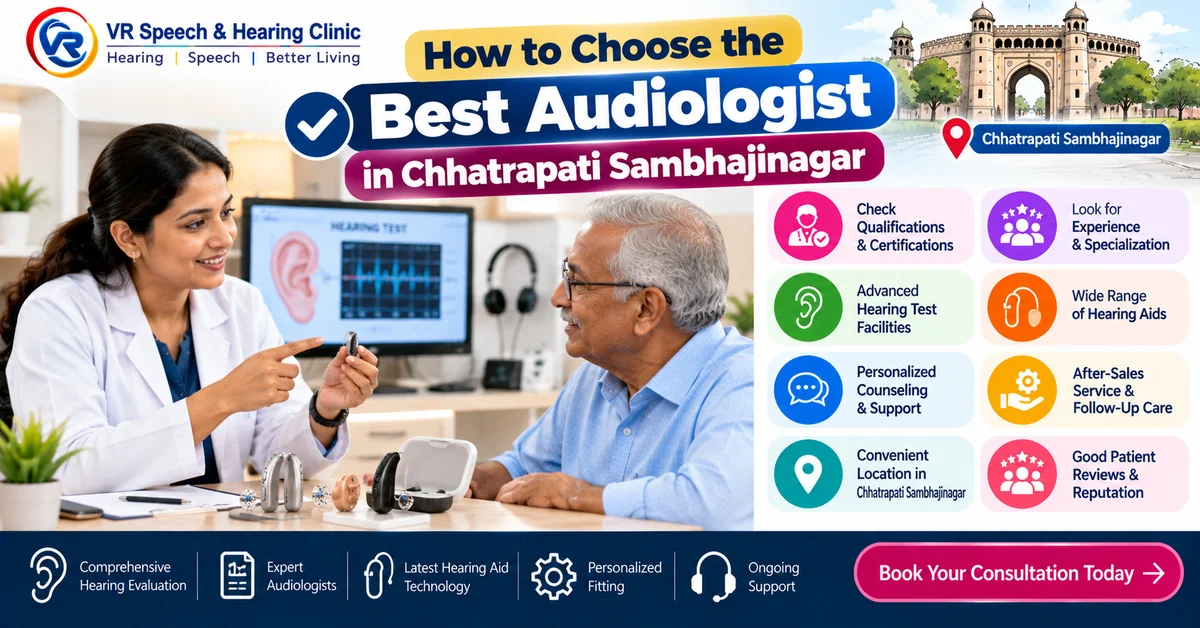
What to look for in an audiologist
Qualification and registration. BASLP or MASLP with valid RCI registration, as above.
Experience with your type of case. Adult age-related hearing loss, noise-induced loss, tinnitus, children's hearing, and auditory processing concerns all need different skills.
Proper diagnostic equipment. A sound-treated audiometry room, an audiometer for pure tone and speech testing, a tympanometer for the middle ear, and an otoscope. Ask whether the clinic can also do OAE and BERA/ABR testing, which are important for infants and for people who cannot respond reliably to standard tests.
A complete care pathway. Testing, counselling, hearing aid trial, fitting, follow-up fine-tuning and repairs. Some clinics also provide speech therapy, which is valuable for children.
A personalised approach. The audiologist should ask about your daily listening situations (noisy workplace, phone calls, temple or family gatherings, TV) before recommending anything.
How a hearing test works
A proper evaluation usually takes 30 to 60 minutes and is painless.
Case history. Symptoms, when they began, noise exposure, medicines, family history and medical conditions.
Otoscopy. The ear canal and eardrum are examined for wax, infection or blockage.
Pure tone audiometry. In a quiet room you wear headphones and respond to tones of different pitches and loudness. This maps your hearing thresholds.
Speech audiometry. Measures how clearly you understand words, which shows how hearing loss affects real conversation.
Tympanometry. Checks eardrum movement and middle ear function, and can reveal fluid or stiffness.
Results and counselling. The audiologist explains your audiogram (a chart of your hearing), the type and degree of loss, and your options.
Other tests you may be offered: OAE (otoacoustic emissions) and BERA/ABR for infants and special cases, and tinnitus assessment. Not everyone needs every test. Ask why a test is being recommended.
Understanding your result. Hearing loss is described by type: conductive (outer or middle ear), sensorineural (inner ear or nerve), or mixed. Conductive problems are often medically treatable. Sensorineural loss is usually permanent and is commonly managed with hearing aids or, in severe cases, implants.
Is a 'free hearing test' enough?
A free screening can be a reasonable starting point, but it is not the same as a diagnostic evaluation. Before you rely on one, ask:
Is a qualified audiologist doing the test?
Does it include otoscopy, pure tone and speech testing, and a middle ear check?
Will I get a written audiogram?
Will you tell me honestly if I do not need a hearing aid, or if I need an ENT first?
If the test ends the moment a device is recommended, get a second opinion.
Choosing the right clinic for hearing aids
If you need hearing aids, the fitting and follow-up matter as much as the device.
Brand and model choice. A trustworthy clinic offers several brands and technology levels and explains why one suits you. One brand only, without a clinical reason, is a caution sign.
Trial period. Ask for a trial before you commit, and get the terms in writing: duration, any fees, and what happens if you return the device.
Verification of the fitting. Ask whether the clinic uses Real Ear Measurement (REM), a method that checks the programming inside your ear. It is a mark of careful fitting.
Fine-tuning and follow-up. Hearing aids are not plug-and-play. Your brain needs time to adapt, usually weeks, and programming often needs adjustment. Ask how many follow-up visits are included and for how long.
Warranty and repairs. Check warranty length, repair turnaround, and whether a loaner device is provided.
Locked devices. Some devices can only be adjusted by the seller. Ask: 'If I move or change clinics, who can adjust or repair these devices, and is there an extra charge?'
Transparent pricing. Get an itemised written quote covering the devices, fitting, follow-ups, accessories and warranty.
Realistic promises. Hearing aids improve hearing but do not restore normal hearing. Be careful with miracle claims.
For price ranges and brand differences, see our guides: Best Hearing Aid Brands in India and Top Hearing Aid Brands in India: Expert Reviews and Comparison.
Green flags and red flags
Green flags | Red flags |
|---|---|
Clear qualification and RCI number shared openly | Cannot or will not explain credentials |
Full diagnostic test with a written audiogram | Quick screening followed by an immediate sales pitch |
Asks about your lifestyle and listening goals | Recommends a device before testing you properly |
Explains several options and price levels | Pushes one brand or the most expensive model |
Written quote, trial and warranty terms | Vague pricing, no written terms |
Refers you to an ENT when needed | Tells you every case needs a hearing aid |
Plans follow-up visits and adjustments | Treats the sale as the end of the relationship |
Sets realistic expectations | Promises 'normal hearing' or miracle results |
Gives you a copy of your test results | 'Today only' offers and high-pressure tactics |
Types of hearing care providers in Chhatrapati Sambhajinagar
There is no single best type of provider. Each has trade-offs:
Type | Good for | Things to check |
|---|---|---|
Independent audiology and speech clinic | Personal attention, continuity with the same audiologist, follow-up, children's services | Brand range, equipment, whether follow-up is included |
Hearing aid brand or chain centre | Convenience, standardised processes, brand support | Whether a qualified audiologist does the testing, how many brands are offered |
ENT hospital or medical college department | Medical causes, surgery, complex cases, sudden hearing loss | Waiting time, whether hearing aid fitting and follow-up are available |
Government or NGO camps | Subsidised or free devices for eligible people | Eligibility, device range, follow-up availability |
Many people combine two of these: for example, an ENT visit for a medical check and an audiologist for testing and fitting.
Hearing care for children
The WHO notes that nearly 60% of childhood hearing loss can be prevented through measures such as immunisation, good maternal and newborn care, and early treatment of middle ear infections. Early detection also protects speech and language development.
Get your child's hearing checked if:
The newborn screening was missed or not passed.
Your baby does not react to loud sounds or does not turn towards voices.
Your child's speech is delayed or unclear.
Your child often says 'what?', sits very close to the TV, or does not respond to their name.
There are frequent ear infections or fluid in the ear.
There is a family history of childhood hearing loss.
Choose an audiologist experienced with children. Infants and toddlers are usually assessed with age-appropriate methods such as OAE and BERA/ABR rather than the standard 'raise your hand' test. If hearing loss is found, early hearing aids or other intervention along with speech therapy give the best chance of good language development.
Cost and financial help in India
The cost of hearing care has two parts: the evaluation, and the device with its services. Hearing aid prices vary widely with technology level, brand, style (behind-the-ear, receiver-in-canal, in-the-canal) and what the package includes, such as fitting, follow-ups and warranty. Always compare the total cost of ownership, not just the sticker price. For a detailed breakdown, read our guide to the average cost of a hearing aid in India (in Marathi).
Government assistance. The Government of India's ADIP scheme (Assistance to Disabled Persons for Purchase/Fitting of Aids/Appliances) supports eligible persons with disabilities, including hearing impairment. Key points from the official scheme documents:
Applicants generally need a disability certificate showing at least 40% (benchmark) disability.
An income certificate or equivalent proof is required, and the level of subsidy depends on income and cost of the device.
The scheme is delivered through approved implementing agencies such as ALIMCO and national institutes, often through camps.
A UDID card or enrolment number is among the documents requested.
Aids supplied under the scheme must be certified.
Rules and eligibility get revised, so confirm current details on the official ADIP portal (adip.depwd.gov.in) or with the District Disability Rehabilitation Centre. Many private clinics, including ours, also offer EMI options, so ask what financing is available.
How to prepare for your first appointment
Write down your symptoms, when they started and which situations are hardest.
Bring a list of current medicines and any past ear or hearing reports.
Bring a family member or friend if possible. They can describe what you miss and help you remember advice.
If you use earphones heavily or work in a noisy place, mention it.
Avoid inserting anything into the ear before the visit. Let the audiologist check for wax first.
Ask for a copy of your audiogram before you leave.
Questions to ask before you commit
What is your qualification, and what is your RCI registration number?
Who will test me, and how many years of clinical experience do they have?
What equipment do you use, and which tests will I have?
Will I receive a written audiogram and report?
Which hearing aid brands and price levels do you offer, and why do you recommend this one for me?
Do you use Real Ear Measurement to verify the fitting?
What are the trial terms, and what happens if I return the device?
How many follow-up visits are included, and for how long?
What does the warranty cover, and is a loaner provided during repairs?
Who can service the device if I change cities or clinics?
Do you also provide speech therapy or children's hearing services?
How to use reviews and referrals wisely
Reviews and word of mouth help, but read them for patterns:
Look for specifics. Comments about thorough testing, clear explanations, honest advice and good follow-up are more useful than 'best clinic!'.
Be cautious of reviews that only mention discounts or sales offers.
Check how the clinic responds to criticism.
Ask your family doctor or ENT specialist whom they refer patients to.
Talk to friends and relatives in the city who have used hearing aids for a year or more, since long-term satisfaction tells you more than first impressions.
Reviews should support your checks, not replace them. Verify credentials yourself.
Protecting your hearing
The WHO estimates that around 1.1 billion young people are at risk of hearing loss from noise during leisure activities. Simple habits help:
Keep earphone volume moderate and take listening breaks.
Use ear protection around loud machinery, events and processions.
Do not insert cotton buds, pins or sharp objects into your ears.
Treat ear infections promptly.
Ask your doctor about medicines that can affect hearing.
Get tested regularly if you are over 50 or exposed to noise.
About the author and our clinic
Vilas Rathod is a BASLP-qualified audiologist at VR Speech and Hearing Clinic. The clinic offers hearing tests, hearing aid selection and fitting, tinnitus care and speech therapy.
VR Speech and Hearing Clinic, Chhatrapati Sambhajinagar Second Floor, Vasantrao Naik Chowk, opposite Hotel Deepali Executive, N-3, CIDCO, Chhatrapati Sambhajinagar, Maharashtra 431003 Phone: 9112717179 | Book an appointment | Clinic locations
Conclusion
The best audiologist for you is a verified, properly trained professional who tests thoroughly, explains your results honestly, offers more than one option, and stays with you after the fitting. Check the RCI registration, ask for a written audiogram and written policies, and treat pressure and vague promises as warning signs. And if your hearing changes suddenly, do not wait: see a doctor straight away.
Take the time to compare one or two clinics. Good hearing care is a long-term relationship, and it is worth choosing carefully.
Frequently asked questions
1. What qualification should a good audiologist have?
Look for a BASLP or MASLP degree and a valid RCI registration (CRR number), plus relevant clinical experience.
2. How can I verify an audiologist's registration?
Ask for the RCI CRR number and check its status on the official RCI website (rehabcouncil.nic.in).
3. Should I see an audiologist or an ENT doctor first?
For gradual hearing difficulty, start with an audiologist. See an ENT first if you have ear pain, discharge, sudden or one-sided hearing loss, or dizziness.
4. How long does a hearing test take?
A standard evaluation usually takes 30 to 60 minutes, depending on the tests needed.
5. Is a hearing test painful?
No. Standard hearing tests are non-invasive and painless.
6. Is a free hearing test reliable?
It can be a useful first step, but it is not always a full diagnostic evaluation. Ask who performs it, which tests are included, and whether you get a written audiogram.
7. How do I know if I need a hearing aid?
Your audiologist decides this from your audiogram, speech test results and daily communication needs. Not every hearing loss needs a hearing aid, and some need medical treatment first.
8. Can online hearing tests replace a clinic visit?
Online tests can suggest that something may be wrong, but they cannot replace an in-person evaluation that includes an ear examination and calibrated testing.
9. Can children and babies be tested?
Yes. Newborns and young children are assessed with age-appropriate tests such as OAE and BERA/ABR. Early testing is important for speech and language development.
10. What should I do if I lose hearing suddenly?
Treat it as an emergency and see a doctor or ENT specialist immediately, preferably within 72 hours. Do not wait to see if it improves.
11. How long does it take to get used to hearing aids?
Most people need several weeks to adapt, along with follow-up adjustments. Wear the aids regularly and report problems to your audiologist.
12. How often should hearing aids be serviced?
Professional check-ups every three to six months are commonly advised, along with regular cleaning and battery or charger care.
13. Is government help available for hearing aids?
The ADIP scheme can support eligible people who hold a disability certificate of at least 40% and meet income criteria. Check the official ADIP portal or your District Disability Rehabilitation Centre for current rules.
14. Should I compare more than one clinic?
Yes. Comparing qualifications, tests, brand range, written policies and follow-up support helps you make a well-informed decision.
Medical note: This article is for general education and does not replace a medical consultation. If you have sudden hearing loss, ear pain, discharge or dizziness, see a doctor promptly.
Sources
World Health Organization, World Report on Hearing (2021) and news release, '1 in 4 people projected to have hearing problems by 2050'.
US National Institute on Deafness and Other Communication Disorders (NIDCD), Sudden Deafness fact sheet.
Rehabilitation Council of India, Central Rehabilitation Register and categories of rehabilitation professionals (rehabcouncil.nic.in); Rehabilitation Council of India Act, 1992.
Department of Empowerment of Persons with Disabilities, ADIP Scheme FAQs and scheme documents (adip.depwd.gov.in).
UCSF EARS Program, How to Choose a Hearing Care Provider.
ASHA, Audiologist and Hearing Aid Dispenser: What Is the Difference?