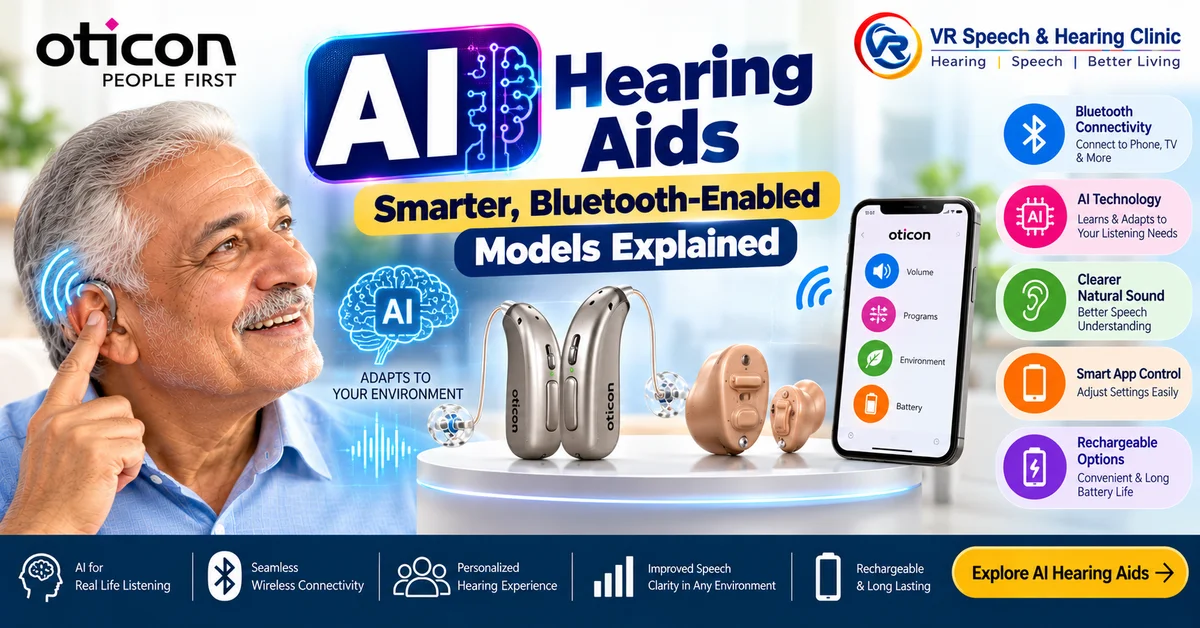
AI Hearing Aids 2026: Smarter, Bluetooth-Enabled Models Explained
How AI is Making Hearing Aids Smarter in 2026
Hearing aids have quietly become one of the most advanced pieces of technology a person wears every day. In 2026, the shift from simple sound amplifiers to AI-powered listening devices is complete, and the difference shows up in the moments that matter most — a conversation in a crowded restaurant, a phone call on a busy street, or a family dinner with everyone talking at once. If you or a loved one is considering a hearing aid upgrade this year, understanding what "AI powered" actually means will help you make a far better choice.
What Makes a Hearing Aid AI Powered
Not every hearing aid marketed as "AI" actually uses artificial intelligence in real time. Some brands use AI only during the design and engineering process, training their sound algorithms on millions of audio samples before the product ever reaches a store shelf. These devices are AI-trained, not AI-powered, and while they still perform well, they don't adapt live to your surroundings.
A true AI-powered hearing aid has a dedicated processing chip built specifically to analyze sound as it happens. This chip continuously scans the environment, classifies what it hears — speech, traffic, wind, music, multiple overlapping voices — and adjusts amplification instantly. Instead of simply making everything louder, it identifies the frequency patterns unique to human speech and pushes them forward while pulling background noise down.
The key markers of a genuinely AI-powered device include a separate neural processing unit alongside the main sound chip, deep neural network (DNN) based speech separation, environment classification that updates hundreds of times per second, and an app that lets the AI keep learning your preferences over time. If a brand cannot explain how its chip processes sound in real time, it's worth asking more questions before you buy.
How AI Hearing Aids Handle Noisy Places
Noisy environments have always been the biggest complaint among hearing aid users, and this is exactly where 2026's AI models have made the most visible progress. Older hearing aids used fixed noise-reduction presets — settings built for "restaurant" or "outdoor" that only partially matched real conditions. AI hearing aids do something structurally different.
Modern chips process tens of thousands of signal points every second, separating the acoustic signature of speech from everything competing with it, whether that's clattering dishes, traffic, wind, or a dozen overlapping conversations. Rather than boosting the whole soundscape, the device applies targeted suppression to non-speech sound while keeping the voice in front of you clear and natural. Many flagship models now offer close to double-digit decibel improvements in speech clarity within busy environments compared to non-AI devices.
The practical result is fewer moments of leaning in, asking someone to repeat themselves, or simply disengaging from a group conversation because it's too exhausting to follow. For people who work in open offices, attend family gatherings, or eat out regularly, this single improvement often justifies the upgrade on its own.
Why Bluetooth Hearing Aids Matter More Than Ever
Bluetooth connectivity used to be a nice bonus. In 2026, it is close to essential. Most current AI hearing aids support direct streaming from smartphones, so calls, music, and navigation audio go straight into the ears without an extra intermediary device. Many newer models also support Bluetooth LE Audio, which uses less battery than older Bluetooth standards while streaming clearer audio.
An emerging standard called Auracast is changing things further. Where available, Auracast lets public venues — theatres, gyms, museums, airports, and lecture halls — broadcast audio directly to compatible hearing aids. Instead of straining to hear an announcement or a film's dialogue over ambient noise, the sound is sent wirelessly and privately straight into the device.
Bluetooth also powers the companion apps that make today's hearing aids genuinely personal. Through these apps, users can fine-tune settings, save location-based sound profiles, track battery life, and in some cases speak with an AI assistant that adjusts the sound based on simple feedback like "too much background noise" or "voices sound muffled."
Top AI Hearing Aid Models to Know in 2026
Several manufacturers have released flagship AI devices this year, each taking a slightly different technical approach.
Phonak's latest Audéo Sphere Infinio line is widely regarded as one of the strongest overall performers, built around a dedicated deep neural network chip trained on millions of real-world sound samples for a more natural, brain-like representation of speech.
Oticon's Intent and newer Reveal models focus on giving wearers noticeably more speech cues in noisy settings, aiming to reduce listening fatigue over long conversations and social events.
Starkey's Omega AI, powered by a next-generation neuro processor, is built around 360-degree speech clarity rather than only amplifying what's directly ahead, and pairs this with health-tracking sensors for activity and balance.
ReSound's Vivia is one of the few models processing sound with real-time AI rather than only AI-assisted design, giving it strong marks for adaptive noise handling.
For those exploring more affordable, over-the-counter options, AI-driven OTC brands have closed much of the performance gap with prescription devices, offering real-time voice isolation technology, long battery life, and simple self-fitting through a smartphone app — a useful entry point for people not yet ready for a full clinical fitting.
AI Hearing Aid Comparison
When comparing models, focus on four practical factors rather than marketing language alone. First, check whether the AI processing happens in real time through a dedicated chip, or only during the design phase. Second, compare noise environments each device is tested in — restaurants, group conversations, and outdoor wind are the toughest tests. Third, look at battery life and charging convenience, since most AI processing draws more power than older devices. Fourth, weigh the cost against the level of professional support included, since prescription devices generally come with ongoing audiologist fitting and OTC devices rely more on self-adjustment through an app.
Price ranges vary widely, from budget-friendly OTC AI hearing aids to premium prescription flagship models. The right choice depends less on the price tag and more on your specific hearing loss profile, lifestyle, and how much support you want from a hearing care professional.
Pros and Cons of AI-Powered Hearing Aids
AI hearing aids bring real advantages: sharper speech clarity in noisy places, automatic adjustment without manually switching programs, better battery efficiency in newer chips despite doing more processing, seamless Bluetooth streaming for calls and media, and apps that let the device keep improving to match personal preferences.
There are trade-offs too. AI-powered devices generally cost more than standard digital hearing aids. Some users need an adjustment period as the automatic environment switching feels different from manual control. Not every "AI" label on the market reflects genuine real-time processing, so research and professional guidance matter. And features like Auracast are still rolling out unevenly across venues and regions, so their full benefit isn't available everywhere yet.
Why This Matters for Everyday Life in India
For hearing aid users in India, these advances are especially relevant. Daily life often involves dense, overlapping sound — busy markets, honking traffic, crowded family functions, and offices with constant background chatter. AI-powered noise separation directly addresses these exact conditions, making everyday communication far less tiring.
Bluetooth streaming also solves a common frustration: taking calls clearly in noisy public spaces without needing to step away or cup a hand around the ear. As Auracast support expands to public venues, cinemas, and transit systems in Indian cities, the benefit will only grow. Affordable OTC AI options are also making this technology accessible to a wider range of people who may not have considered a prescription device before.
Why Try These at Vr Speech And Hearing Clinic?
Choosing the right AI hearing aid isn't just about picking the most advanced chip — it's about matching the right technology to your specific hearing profile, lifestyle, and budget. At VR Speech and Hearing Clinic, our audiologists offer detailed hearing assessments, hands-on demonstrations of the latest AI and Bluetooth-enabled models, and personalized fitting so the device performs at its best from day one. Ongoing support means your hearing aid keeps adapting to your needs long after your first fitting.
Conclusion
2026 marks a genuine turning point for hearing technology. Real-time AI processing, smarter noise handling, and universal Bluetooth connectivity have moved hearing aids from simple amplifiers to intelligent listening companions. Whether you're considering a premium prescription device or an accessible OTC option, understanding what "AI powered" truly means will help you choose a hearing aid that fits your life, not just your ears.
FAQs
Is an AI hearing aid worth the extra cost?
For most people who struggle in noisy environments, yes — real-time AI processing meaningfully improves speech clarity in restaurants, offices, and group settings, reducing listening fatigue over the day.
Do all AI hearing aids support Bluetooth?
Most current AI-powered models support Bluetooth streaming for calls and media, though features like Auracast broadcast support vary by brand and model.
Can I try AI hearing aids without a prescription?
Yes, several OTC AI hearing aids are now available with self-fitting apps, though a professional hearing assessment is still recommended for the best results.
How long does the battery last on AI hearing aids?
Most modern rechargeable AI hearing aids offer a full day of use, typically 16 to 20 hours, including streaming time.
Where can I get fitted for an AI hearing aid?
Visit VR Speech and Hearing Clinic for a professional hearing assessment and personalized fitting across the latest AI and Bluetooth-enabled hearing aid models.