Speech Therapist in Ahmednagar
Looking for a speech therapist near you? Meet VR Speech and Hearing Clinic, trusted speech language pathologists in Ahmednagar for children and adults.
Book a Free Consultation
We'll call you within 24 hours. Your details are safe with us.
Speech Therapist in Ahmednagar: Expert Speech and Language Care at VR Speech and Hearing Clinic
If your child is not speaking as clearly as other children their age, or you are struggling with a voice or speech problem after an illness, you have probably searched for a "speech therapist near me." Finding the right professional matters, because early and correct therapy can change how a person communicates, learns, works, and connects with family.
VR Speech and Hearing Clinic offers professional speech and language therapy for families in Ahmednagar and nearby areas. This guide explains what a speech therapist does, which problems they treat, when to seek help, and how to choose the right speech language pathologist in Ahmednagar.
What Is a Speech Therapist?
A speech therapist, also called a speech language pathologist (SLP), is a trained healthcare professional who assesses, diagnoses, and treats problems related to speech, language, voice, fluency, and swallowing. They work with people of all ages, from toddlers with delayed speech to older adults recovering from a stroke.
Speech therapy is not only about pronouncing words correctly. It also covers understanding language, expressing thoughts, using social communication, and controlling the voice and breathing needed for speech.
Who Needs a Speech Language Pathologist?
Many people assume speech therapy is only for children who cannot talk. In reality, a speech language pathologist helps a wide range of people.
Children may need therapy for:
Delayed speech and language development
Unclear pronunciation or articulation errors
Stammering or stuttering
Limited vocabulary or difficulty forming sentences
Speech difficulties linked to autism, Down syndrome, cerebral palsy, or developmental delay
Hearing loss affecting speech development
Difficulty following instructions or understanding what is said
Adults may need therapy for:
Speech loss or weakness after a stroke (aphasia and dysarthria)
Voice problems such as hoarseness, voice strain, or vocal fatigue
Stammering that continues into adulthood
Speech changes due to head injury, Parkinson's disease, or neurological conditions
Swallowing difficulties (dysphagia)
Communication changes after surgery
Signs Your Child May Need a Speech Therapist
Parents often ask when to worry. Every child develops at their own pace, but some signs deserve a professional evaluation:
Not babbling by 12 months
No meaningful words by 18 months
Fewer than 50 words or no word combinations by 2 years
Speech that strangers cannot understand by age 3
Frequent repetition of sounds or blocking while speaking
Not responding to their name or to sounds
Difficulty playing and interacting with other children
Losing words or skills they once had
If you notice any of these, do not wait. Early intervention gives the best results, because a young child's brain learns language faster and more easily.
Speech Therapy Services You Can Expect
A good speech therapy clinic offers a complete range of services under one roof. At a clinic like VR Speech and Hearing Clinic, families can expect support in the following areas.
Speech and Language Assessment
Therapy begins with a detailed evaluation. The therapist studies the person's speech sounds, vocabulary, sentence structure, understanding, voice quality, and hearing history. This assessment forms the basis of a personalised therapy plan.
Articulation Therapy
For people who mispronounce certain sounds, therapy teaches correct tongue, lip, and jaw placement through structured practice and play-based activities.
Language Therapy
This helps children and adults build vocabulary, form sentences, understand instructions, and express ideas clearly.
Stuttering and Fluency Therapy
Fluency therapy teaches techniques for smoother speech, breathing control, and confidence in communication.
Voice Therapy
Voice therapy helps teachers, singers, call-centre workers, and others who depend on their voice and suffer from strain, hoarseness, or vocal fatigue.
Aphasia and Stroke Rehabilitation
After a stroke or brain injury, therapy helps patients recover speech, comprehension, reading, and writing as far as possible.
Hearing Evaluation and Support
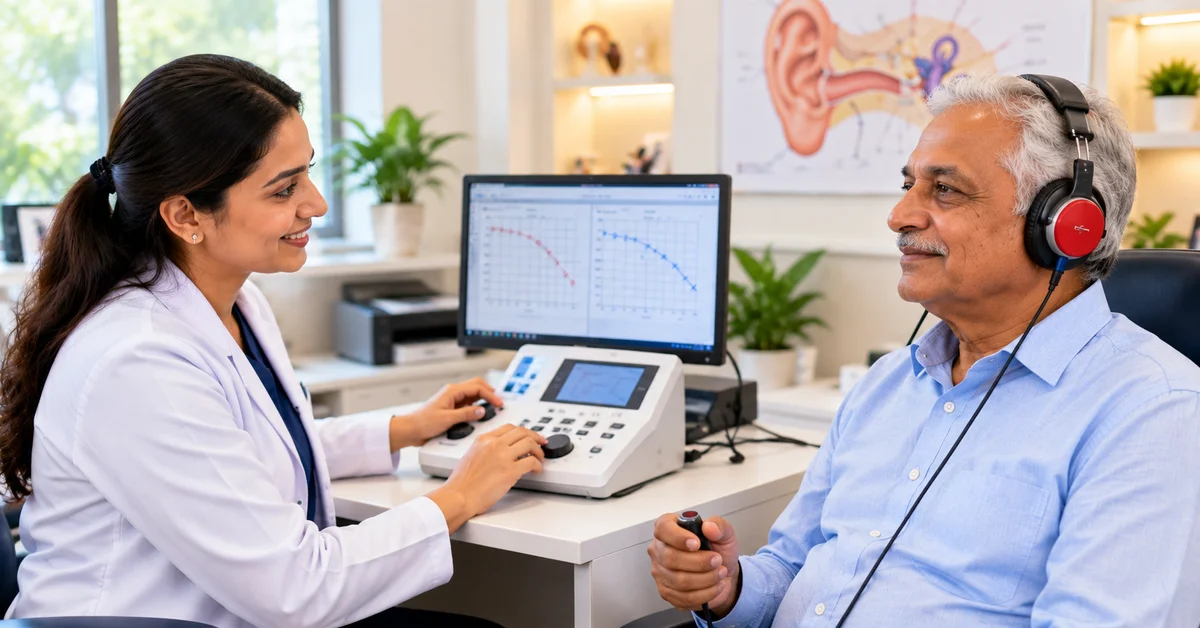
Speech and hearing are closely connected. Untreated hearing loss can delay speech in children and cause communication problems in adults. A clinic that combines speech therapy with hearing services can identify the root cause faster.
Why Hearing and Speech Care Should Go Together
Children learn to speak by listening. If a child cannot hear well, speech and language development suffers, even when the child is otherwise healthy. Many delayed speech cases turn out to involve an undiagnosed hearing problem.
This is why a clinic that offers both speech and hearing care is valuable. Hearing screening, audiological testing, and speech assessment can happen in a coordinated way, saving parents time and giving the therapist a full picture. VR Speech and Hearing Clinic reflects this combined approach in its very name and focus.
How Speech Therapy Works: What Happens in a Session
Many parents feel nervous before the first visit. Here is what usually happens.
Case history: The therapist asks about pregnancy, birth, developmental milestones, medical history, family history, and concerns.
Assessment: Using standard tests, observation, and play, the therapist evaluates speech, language, voice, and hearing.
Diagnosis and goals: The therapist explains the findings in simple language and sets realistic goals.
Therapy sessions: Sessions use structured exercises, games, pictures, stories, and daily-life activities to make learning enjoyable, especially for children.
Home programme: Parents or caregivers receive simple exercises to practise at home, which is one of the most important parts of progress.
Review: Progress is checked regularly and the plan is adjusted as needed.
How Long Does Speech Therapy Take?
There is no single answer. The duration depends on the type and severity of the problem, the age of the person, how early therapy started, and how regularly the home exercises are practised. Some children with mild articulation errors improve in a few months, while conditions like autism or stroke recovery may need longer, ongoing support. A qualified speech language pathologist will give an honest estimate after the assessment.
How to Choose the Best Speech Therapist Near You
When searching for a speech therapist in Ahmednagar, consider these points before deciding.
Qualifications: Look for a therapist with a recognised degree in speech-language pathology or audiology and, where applicable, registration with the Rehabilitation Council of India (RCI).
Experience: Ask whether the therapist has worked with your specific concern, such as stuttering, autism, or aphasia.
Individual plans: Avoid clinics that give every patient the same programme. Therapy should be tailored.
Child-friendly environment: For children, a warm, playful, and patient setting makes a big difference in cooperation and results.
Parent involvement: The best therapists teach families how to support progress at home.
Location and convenience: Regular attendance matters, so a clinic that is easy to reach in your area helps you stay consistent.
Clear communication: A good therapist explains the diagnosis, goals, and progress without confusing jargon.
Why Families Choose VR Speech and Hearing Clinic
Families searching for a speech language pathologist in Ahmednagar want care that is professional, personal, and practical. VR Speech and Hearing Clinic focuses on assessment-based therapy for children and adults, combining speech, language, and hearing care in one place. The approach centres on understanding each person's needs, setting achievable goals, and involving family members throughout the process.
Whether you are worried about a toddler who is not talking, a school-going child who stammers, or a parent recovering from a stroke, having an experienced team nearby makes the journey less stressful.
Tips for Parents to Support Speech at Home
Therapy works best when it continues beyond the clinic. Here are simple habits that help:
Talk to your child throughout the day about what you are doing
Read picture books together and ask simple questions
Sing rhymes and songs
Give your child time to respond without rushing or finishing their sentences
Repeat their words back correctly without harsh correction
Limit passive screen time and encourage interactive play
Praise every attempt to communicate
Don't Wait: Early Help Makes a Difference
The most common regret parents share is waiting too long. Many hope the child will "grow out of it." While some children do catch up, others fall further behind, which can affect learning, confidence, and social skills. A simple evaluation gives clarity, and if therapy is not needed, you gain peace of mind.
Frequently Asked Questions (FAQs)
1. What does a speech therapist do?
A speech therapist assesses and treats problems with speech, language, voice, fluency, and swallowing in children and adults.
2. How do I find a good speech therapist near me?
Look for a qualified, registered speech language pathologist with relevant experience, a child-friendly setup, and a convenient location. In Ahmednagar, VR Speech and Hearing Clinic is a good option to consider.
3. At what age should a child see a speech therapist?
There is no minimum age. If you notice delayed babbling, no words by 18 months, or unclear speech, consult a professional early.
4. Can speech therapy help with stammering?
Yes. Fluency therapy teaches techniques that improve speech smoothness, reduce tension, and build confidence in both children and adults.
5. Is speech therapy useful after a stroke?
Yes. Therapy can help recover speech, understanding, and swallowing, and early rehabilitation usually gives better outcomes.
6. How many sessions will my child need?
This depends on the problem and its severity. The therapist will suggest a plan after the assessment and review it regularly.
7. Is hearing testing part of speech evaluation?
Often it should be, because hearing problems are a common cause of speech delay. A clinic offering both services can evaluate them together.
8. Can parents take part in therapy?
Yes. Parent participation and home practice greatly improve results
